The Trump administration is reportedly drafting a ban on new U.S. imports of Chinese data center devices, a move that could deepen Washington’s effort to wall off the core infrastructure powering artificial intelligence from Chinese technology. The reported plan fits into a broader pattern of aggressive U.S. restrictions on Chinese hardware, but the precise scope, timing, and enforcement mechanism remain unclear because the measure is still being drafted.
How the move fits the AI fight
The recent move should be considered as an attempt to join the increasing effort of the U.S. to secure its AI supply chain. It has already been revealed by Reuters that the administration has recently sanctioned new Chinese humanoid and quadruped robots as well as power inverters, claiming that it was necessary to protect U.S. AI development from any possible security threats and to promote onshoring of critical industries. The recently mentioned data center plan brings this approach to another highly strategic layer of the AI stack – namely, the hardware necessary for computation, networking, storage, cooling and power conversion. In other words, the current Trump administration seems to view the data centers as the elements of national security rather than commercial infrastructure.
What reports says
Exclusive reporting by Reuters claims that the U.S. government is working on the draft of the policy that would prohibit the importation of the latest model of the data center parts produced in China. The report does not state that this policy has been finalized yet, and that detail is essential because at the current stage, the government only develops a plan, but no final decision has been made yet. This is a crucial point to mention since the development of technology policy in Washington usually includes a certain number of stages. In the first place, it starts with the signal, then it continues with the regulation drafting, followed by the announcement, and only then there come restrictions.
Why data centers matter
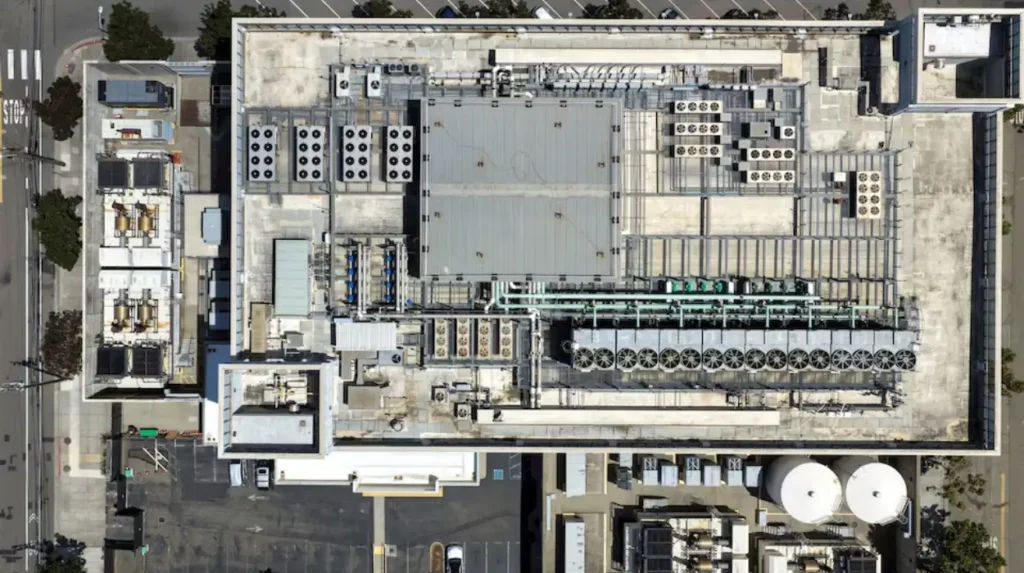
Data centers have become the physical backbone of the AI boom. Every major AI deployment depends on dense clusters of servers, chips, circuit boards, power systems, cooling equipment, and network hardware, all of which must run reliably at scale. If Beijing-linked hardware is seen as embedded in that stack, the U.S. government’s concern is not just commercial competition but potential exposure of critical infrastructure to foreign influence, cyber intrusion, sabotage, or hidden vulnerabilities.
That fear is not isolated to this single report. Reuters has previously described how the FCC has moved to bar sales of devices containing key hardware from Chinese companies deemed national-security risks, with Chair Brendan Carr saying the agency would
“fully close the component part loophole”.
That phrase captures the new U.S. approach: not only restricting finished products, but also cutting off embedded parts that could slip through earlier rules.
The broader regulatory direction
The announced data center ban comes as part of a broader security initiative being implemented by the FCC. Specifically, back in July, the FCC approved a prohibition of sales of devices that contain certain hardware components from Chinese manufacturers listed by the agency on its Covered List, which include Huawei and ZTE, saying that those rules were supposed to address the issue of possible loopholes that allowed certain device bearing such components enter the market.
Reuters has also noted that FCC has been considering a prohibition of interconnection for Chinese telecommunication companies owning any data centers or Point of Presence facilities in the US, which, in effect, will shut down the operations of these companies’ data centers. This shows how the discussion has gone beyond the realm of consumer electronics and entered the sphere of the infrastructure layer, where the question of access is just as important as that of hardware. Earlier this year, Reuters has also reported about plans of the Trump administration to put on hold some technology-related security measures, including the ban on Chinese equipment sales to US data centers.
That earlier pause suggests the administration is not inventing this issue now; rather, it appears to be returning to a policy track that was already under consideration.
What the administration is signaling
The administration’s stance, as reflected in recent FCC actions and Reuters reporting, is built around a simple message: critical technology should not depend on adversary-linked supply chains. Officials have framed the restrictions as necessary to protect U.S. national security, prevent hostile access to infrastructure, and support domestic or trusted suppliers in sectors expected to grow rapidly.
In earlier Reuters coverage of the robot and inverter bans, officials said the restrictions were aimed at protecting the U.S. AI buildout from national security threats and reshore key industries. The same underlying logic appears to apply here, but with a bigger target: not just emerging gadgets or grid-connected devices, but the ecosystem that powers AI computing itself.
The strategic stakes
It would be difficult because the data-center hardware business is certainly no niche business. There is cloud computing, artificial intelligence training, enterprise storage, telecommunication, energy infrastructure, and even government and defense infrastructure at play. In light of the above facts, a ban on Chinese hardware would likely have reverberations throughout procurement decisions, pricing decisions, vendor choices, and logistics planning. However, the U.S. already finds itself in a position where the most critical and least visible pieces of the AI infrastructure are found in China. As reported by Reuters and CNBC, printed circuit boards and associated components that are essential for AI infrastructure are produced in China, posing what the industry players describe as dependence risks. The aforementioned dependence risks are precisely the ones Washington wants to mitigate.
What is still unknown
The biggest unanswered question is the scope. Reuters’ latest report says “new models” of Chinese data-center components are under consideration, but it does not yet specify which devices are covered. It is unclear whether the proposal would affect servers, networking gear, storage appliances, power systems, circuit boards, or some narrower set of control and support components.
It is also unclear which agency would enforce the measure, how grandfathered equipment would be treated, and whether existing deployments would face future revocation or merely restrictions on new authorizations. Reuters’ recent FCC reporting shows the agency can both block new authorizations and, in some cases, revoke past approvals, so the enforcement model could matter almost as much as the ban itself.
What it means for China and the market
Should the ban come into force, Chinese manufacturers will be denied access to an important market segment in an industry that is growing rapidly along with the demand for AI products. This will increase the pressure on Chinese companies that are already being squeezed by U.S. regulations on exports, investments, and purchases in other advanced technology fields. In the short run, the policy may impose additional burdens on U.S. consumers in terms of compliance and potential delays in finding substitutes. However, in the long run, it will help move purchases to U.S., allied, or non-Chinese suppliers, which is exactly what the Trump administration aimed at.