The U.S. has entered an exceedingly perilous stage of confrontation with Iran, conducting its airstrike and missile campaign for the ninth straight night on a variety of targets throughout the country amid heightened tension surrounding the Strait of Hormuz and the rising number of American fatalities. This operation, which the U.S. government officially calls a defensive one meant to defend ships and prevent Iranian attacks, is raising concerns among world capitals that the situation is heading toward a wider war.
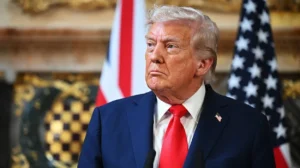
At the political level, the confrontation is marked by unusually stark rhetoric. US President Donald Trump has stressed the severity of the operation, declaring that Iran has been hit “very hard” – Donald Trump and portraying the strikes as a demonstration of American resolve in the face of perceived Iranian provocations. On the other side, Iran’s Supreme Leader Ayatollah Ali Khamenei has dismissed ceasefire proposals as “worthless” – Ayatollah Ali Khamenei, signalling that Tehran is unwilling to step back under pressure and is prepared to absorb further military blows rather than accept terms it views as humiliating or coercive.
Against this backdrop, the central narrative emerging around the US strikes Iran for ninth consecutive night is not simply one of tactical exchanges but of an escalating cycle driven by military logic, domestic politics and the strategic leverage of the Hormuz chokepoint.
Scope and Nature of the US Strikes
From single retaliation to sustained campaign
What began as a response to Iranian‑linked attacks on US forces and commercial vessels has now hardened into a sustained operational pattern. Over nine straight nights, US forces have targeted a wide array of Iranian military infrastructure. Command and control centres, air defence systems, missile and drone launch sites, coastal surveillance installations and communications networks have all reportedly been struck in what US Central Command (CENTCOM) describes as precision operations designed to degrade Iran’s capacity to threaten shipping and American personnel.
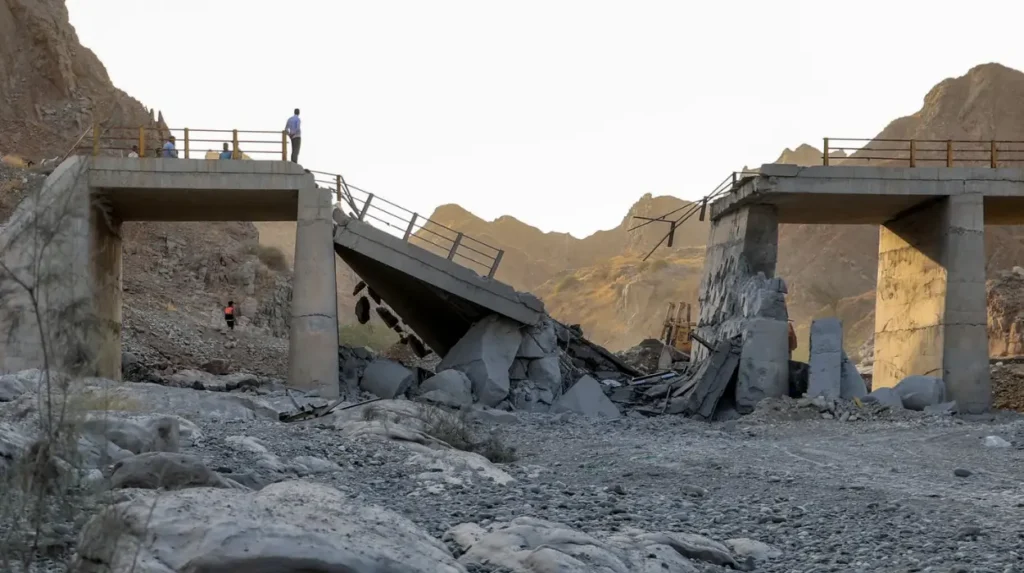
That is why it is important to emphasize this variety of target sectors. The destruction of air defense installations and radar facilities around the coast of Iran is meant to prevent the tracking of and resistance against US aircrafts and vessels, while the bombardment of missile and drone facilities directly affects the means with which Iran projects its influence in the region. Destruction of command centers and communication hubs will be aimed to hinder any coordination and coherence of the mentioned means of military influence. Explosions of different kinds have been reported by sources from the Iranian media and independent journalists in several places of the country, including large cities and strategically vital regions.
Among the recent targets have been listed facilities located in the northwestern city of Tabriz, showing that the strikes are not only concentrated on the coast of the Persian Gulf, but also reach far inside Iran. Locals report heavy explosions and fires at military bases late at night.
Official framing: limited, defensive, lawful
In all instances, US authorities have been striving to portray the action as defensive and limited. In statements by CENTCOM, the attacks are defined as targeting military targets rather than civilian targets and aiming at “continuing the degradation of Iranian military capabilities utilized in attacking commercial vessels and civilian mariners traversing the region.” This choice of words is no accident, since it seeks to ground the mission in the internationally recognized concept of freedom of navigation of civilian ships, especially when talking about the Strait of Hormuz. When addressing the press in the Pentagon, as well as in the context of comments in Congress, the appeal to self-defense and compliance with international law works for both external and domestic audiences. To its external audience, Washington wants to signal that it does not pursue an aim of waging a full-scale war against Iran or toppling its regime but responding to its provocations.
Yet the reality that the US strikes Iran for ninth consecutive night inherently stretches the notion of “limited” action. A campaign of this duration and reach carries its own escalatory weight, whatever the official framing.
Rising Casualties and Material Damage
American losses drive pressure for action
Another significant reason behind the ongoing strikes lies in the increased number of American casualties caused by Iranian or pro-Iranian forces acting within the broader geographical area. Sources from mainstream US media and corporate media reveal information on the loss of lives or injuries among servicemen involved in the incidents with bases, boats or marine patrols located in the Hormuz theater. In addition, there were damages done to the US and commercial ships due to the missiles, drones or mines belonging to either Iran or its allies. This situation adds to the political pressure in Washington to show that attacking American interests has a price. The casualties are usually not described in their entirety. Official announcements tend to refer to the increase of losses without providing detailed statistics.
Such tactics could be explained by the confidentiality of military information and the need to avoid any admissions of risks while the confrontation could be considered as developing. However, the point here is quite obvious: each attack only confirms the necessity of operations.
Iranian military losses and infrastructure degradation
The situation in Iran is similarly incomplete but revealing. Western and Iranian media point to losses of troops and the damage done to bases and command centers, as well as the damage done to air defense sites, missile installations, and coastal surveillance centers. Emphasis is frequently placed on damage done to maritime strike capabilities—the anti-ship missiles, drones, and the infrastructure required to operate them in order to threaten maritime transit in the region—in what amounts to a serious dent to Iran’s regional positioning. Official statistics out of Iran are incomplete and politically biased, but the frequent explosions reported across several Iranian provinces, along with the visible destruction of infrastructure at certain locations, show that these attacks are seriously undermining Iran’s conventional deterrent capability.
Trump and Washington: Strength, Deterrence and Conditional Diplomacy
Trump’s rhetoric: punishment and triumph
Donald Trump’s statements have provided the most vivid articulation of Washington’s political posture. In public comments, he has declared that the US “hit Iran very hard” – Donald Trump, underscoring the severity of the strikes and signalling to domestic and foreign audiences that American power is being exercised without hesitation. In earlier speeches regarding Iran and its nuclear activities, he has described operations as an “extraordinary military triumph” – Donald Trump, and labelled Iran the “foremost state sponsor of terror” – Donald Trump, language that situates the current campaign within a long‑running narrative about confronting what he sees as a uniquely dangerous regime.
Trump has also framed the confrontation in terms of coercive leverage, implying that Iran must “pursue peace” – Donald Trump or face “even more severe and significantly simpler” – Donald Trump future assaults. The phrase “significantly simpler” in this context suggests a willingness to consider more straightforward, possibly more devastating, military options if Iran does not change course, though the details are left deliberately vague.
Official and legislative messaging: pressure with a door to talks
In addition to Trump’s rhetoric, there have been attempts in the United States to reconcile pressure with a nominal readiness for diplomatic negotiations. Officials from the Centcom and Pentagon stress that the operation is aimed at certain capabilities, which are used for threats toward commercial ships and the US military. In this connection, Senator Marco Rubio says that the US is “open to diplomacy” — Marco Rubio after the ninth night of bombing but Iran has to stop its aggressive actions before any kind of talks. Thus, it appears that such policy combines maximalist rhetoric from the president, operational and legalistic approach to the operation, as well as a readiness to talk as long as Iran acts like an aggressor.
It should be stressed that such a strategy makes military pressure a condition for any diplomatic negotiation. In other words, even though the US government officially leaves open the possibility of negotiations, in reality, it means that Washington holds the handle of the door of talks, and the threshold of entering into negotiations is very high.
Tehran’s Response: Defiance, Retaliation and Proxy Theatres
Khamenei’s rejection of ceasefire and posture of resistance
In Tehran, the tone from the top has been equally uncompromising. Ayatollah Ali Khamenei has reportedly dismissed ceasefire proposals as “worthless” – Ayatollah Ali Khamenei, a loaded term suggesting that he views such offers as lacking substance, sincerity or strategic value. By publicly rejecting the notion of a halt to hostilities under current conditions, Khamenei signals that Iran prefers to absorb continued strikes rather than accept what it sees as imposed terms that would reward American pressure.
This stance fits a longstanding pattern in Iranian political discourse, where resistance to external coercion—particularly from the US—is portrayed as a foundational component of national dignity and revolutionary identity. Accepting a ceasefire framed on American terms could be domestically interpreted as capitulation, something Iran’s leadership has historically gone to great lengths to avoid.
IRGC actions and regional spillover
Iran’s response has not been purely rhetorical. The Islamic Revolutionary Guard Corps (IRGC) claims to have launched “surprise attacks” on “enemy command center” – IRGC statement targets in Syria, suggesting that Tehran is extending the confrontation into allied theatres where it believes it holds asymmetric advantages. By hitting positions associated with US or allied forces beyond Iran’s borders, the IRGC aims to show that the conflict is not confined to Iranian soil and that the US will face costs across a wider geography.
These moves highlight the role of proxies and external fronts in Iran’s strategy. Rather than matching US conventional firepower head‑on, Tehran often seeks to exploit its network of aligned militias and political groups in Iraq, Syria, Lebanon and Yemen, as well as direct actions by the IRGC itself, to impose costs on adversaries in ways that are deniable or difficult to respond to without widening the war.
Hormuz: The Chokepoint at the Heart of the Crisis
Strategic importance and economic signals
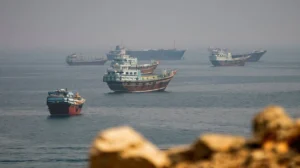
The Strait of Hormuz is both the physical and the strategic locus of the problem. A substantial proportion of the world’s oil imports pass through this crucial strait, which makes it a particularly sensitive maritime chokepoint in the world. Any threat to the shipping route quickly leads to economic repercussions felt around the globe. Over the last few days, the price of oil has risen beyond the 91-dollar-per-barrel threshold, achieving its highest point in over a month. Apart from the headline oil price increase, shipping and insurance costs of the ships passing through the Gulf are rising. Firms are evaluating the risks of missile attacks, drone strikes, and naval skirmishes, some opting to redirect or delay ships during the most dangerous periods. The possibility of a prolonged clash between the US and Iran in the Hormuz region is particularly worrisome for the energy importers in Asia and Europe.
Escalation dynamics in a confined theatre
Militarily, the concentration of advanced weaponry in and around Hormuz amplifies escalation risks. US and allied navies operate significant assets in the Gulf, while Iran deploys missiles, fast attack craft, drones and mines, all within a relatively confined geographic space. When the US strikes Iran for ninth consecutive night and Iran continues to signal its willingness to retaliate, the probability of miscalculation or unintended incident rises.
Even a single misidentification of a vessel, a mis‑read radar track or an over‑zealous local commander could produce a clash that neither side initially sought, forcing leaders to respond under intense time pressure and domestic scrutiny. That is precisely the scenario many analysts fear when they warn that both sides are inching toward “all‑out war” if the current pattern continues.
Trajectory: Containment, Stalemate or Wider War?
The logic of mutual pressure
This situation can be characterised as one of mutual pressure without obvious avenues of de-escalation. Washington is operating under the assumption that a sustained campaign of airstrikes could erode the capabilities of Iran and lead to a rethink about its methods of engagement. Meanwhile, Tehran hopes that endurance and retaliation in its proxies will convince the Americans that the price of continued confrontation does not justify the cost. Both parties face pressures from their domestic constituencies to resist concessions while showcasing their strength. As a result, every new episode – a missile attack against cargo ships, an airstrike on a command station, a fiery speech – only adds to the motivation to do something similar in response.