The US–Iran war over Strait of Hormuz has entered a dangerous new phase, with Iran retaliating against American military sites across Gulf states while Washington carries out repeated strikes that Tehran says are hitting civilian infrastructure inside Iran. As both sides escalate, the conflict is steadily disrupting one of the world’s most strategic waterways and deepening the humanitarian and economic fallout across the region.
Iran’s Retaliation Across Gulf States
The reaction of Iran to the recent wave of attacks launched by America has been quick and wide-ranging, focusing on attacking US military bases in the Gulf region instead of confining itself to directly launching an attack on US soil. Following attacks by US and Israeli forces on the southern coastal and eastern regions of Iran, IRGC announced that their forces would launch a series of missile and drone attacks on US bases in Kuwait and Bahrain. The official media of Iran as well as some semi-official sources widened the scope of attacks to include US assets in Bahrain, Kuwait, Jordan, Oman and Qatar.
Iran’s leadership has framed these moves explicitly as retaliation. Foreign Ministry spokespeople and senior officials argue that the war was initiated by the United States and Israel, and that Iran is exercising what it calls its inherent right of self‑defence under international law. In that context, one of the most telling lines from Tehran’s messaging has been the assertion that
“no action against Iran should go unanswered”
– Iranian Deputy Foreign Minister. The phrase encapsulates both a strategic calculation and a political necessity: Iran must demonstrate to domestic and regional audiences that it can impose costs on US power projection.
In practical terms, the Iranian military operations have targeted the bases and other infrastructure of the United States which make the process of surveillance, targeting, and logistics possible for the Americans. According to the Revolutionary Guard announcements, Iran conducted attacks on radars of Oman, fuel tanks and munition stores of the US military in Prince Hassan air base in Jordan, and several other facilities in Bahrain and Kuwait. Even though the impact of some of these attacks has been denied by Washington, the trend is obvious — Tehran wants to put pressure on American defense.
Politically, these retaliatory attacks are calibrated to signal resolve without triggering automatic full‑scale war with every targeted state. Iran is aiming at American military assets and enablers rather than civilian populations in the Gulf, even as its actions raise alarms in capitals such as Manama, Kuwait City and Amman. Sirens sounding repeatedly in Bahrain, missile interceptions reported by Jordan, and heightened readiness across the region underscore how quickly a bilateral confrontation has become a multi‑country crisis.
US Strikes and Iran’s Claims of Civilian Infrastructure Damage
In that context of regional reprisals, the most significant allegation made by Iran is that the nightly airstrikes conducted by the US have not only damaged military installations but civilian facilities as well. The US Central Command claims that its seventh night of airstrikes has been directed against “surveillance sites, military logistical infrastructure, underground weapons storage, and maritime capability,” and the operation was designed “to degrade Iran’s ability to threaten maritime traffic and US forces.” However, the Iranian regime and the press have been reporting more details about the civilian damage.
State media in Iran stated that the US bombing campaign targeted the electricity and desalination plant in the southern province of Hormozgan. This plant is responsible for electricity and water supply in the area. On the previous day, it was reported in Iran that US airstrikes on the highway bridges and rail bridges, which were meant to cut off any land connection between Bandar Abbas—the biggest port in southern Iran—and the center of the country, namely, Tehran, had caused serious damage. Local officials say that there has been a tendency among US bombings to target bridges cutting off vital arteries for commercial and passenger traffic. The death toll reported by Iran is high.
According to Iranian officials, at least 46 people have died and around 400 others have been injured in US airstrikes, with eight killed in an attack on one of the bridges. There have been casualties in other provinces of Iran as well, with at least 14 people killed and others injured in strikes over two days.
In public messaging, Iranian officials portray these figures as evidence that the United States has crossed a line from military confrontation into what they describe as
“aggression carried out by the United States”
– Iranian submission to UN agency.
Washington strongly rejects that framing. US officials underscore that their campaign is designed around military targets, with one senior commander stressing that strikes are intended “to persist in diminishing Iranian military capabilities,” not to destroy civilian life support systems. The Pentagon’s argument, echoed by political spokespeople, is that an adversary’s logistics, communications and transport nodes are legitimate targets under the laws of war when they are directly supporting military operations. But the reality on the ground, where railways, bridges and power plants serve both troops and civilians, complicates any clean distinction between military and civilian infrastructure.
For Iran, highlighting civilian damage serves several purposes beyond documenting harm. It bolsters the legal case Tehran is building in international forums, reinforces domestic narratives of victimhood and resistance, and aims to erode diplomatic support for Washington among non‑Western states. By pushing images and casualty numbers into the global information space, Iranian officials hope to recast the US role in the Strait of Hormuz dispute from guardian of global commerce to aggressor against civilian life.
A War Centered on the Strait of Hormuz
At the center of the conflict is the strategically important and extremely narrow Strait of Hormuz, a water passage through which passes a considerable portion of the planet’s marine oil exports. The current wave of hostility stems from the discrepancy of interpretation of the memorandum on controlling relations in the strait area. According to Iran’s vision, the country should exercise control over transit in the Strait of Hormuz; however, the US supported creation of a southern passage off the shore of Oman with the US escort of tankers exiting the Strait of Hormuz without asking for Iran’s consent. The enforcement of the Iran’s vision of the situation involved attacks on the tankers transiting through the US-controlled passage and targeting three cargo vessels despite the signed truce agreement of 17 June.
These acts, described as defending of sovereignty by Iran and illegal armed interdiction of ships by the US, have driven both states into the renewed war of attrition. In response to the attacks, the US launched wide-scale strikes on the Iranian coastline facilities and military equipment, and in return, Iran targeted American facilities in the Gulf region and blocked the strait’s passage.
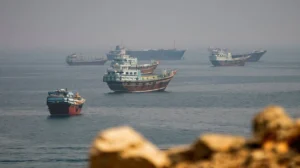
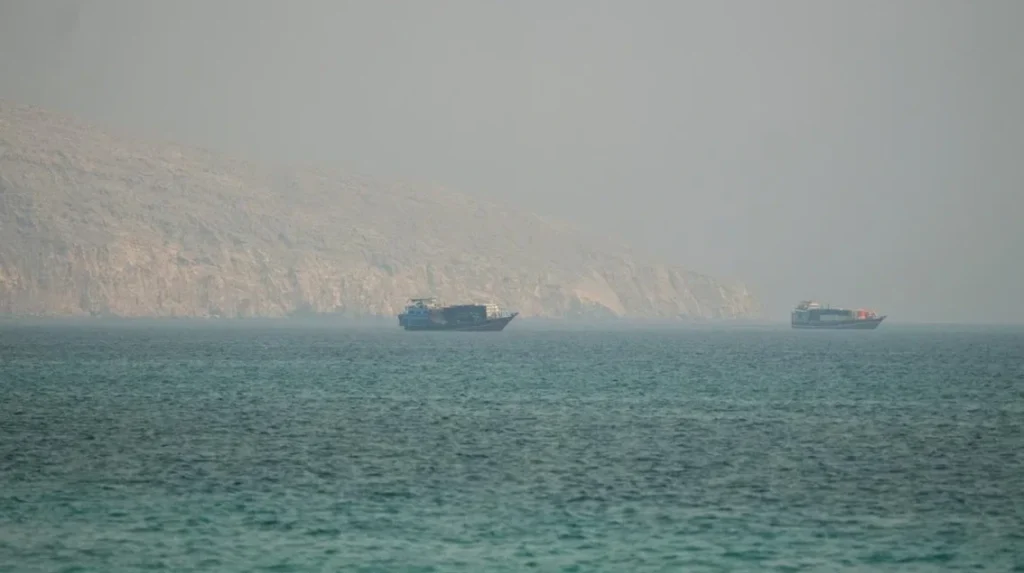
The economic and humanitarian impact has been immediate. Iran effectively shut down the Strait of Hormuz to shipping traffic after the war began on 28 February, using closure as leverage in negotiations and as a tool of pressure on global markets. Shipping data cited by international agencies show crossings falling to a three‑week low of just eight vessels in one day, leaving crews stranded aboard hundreds of ships. The head of the International Maritime Organization insisted that
“all transit through the Strait should be avoided ‘until the necessary safety conditions are in place’”
– Arsenio Dominguez, IMO Secretary‑General. According to IMO figures, 136 ships have been evacuated and 2,900 seafarers removed from the war zone so far, but thousands remain in limbo.
As could be expected, energy markets have been responding rather predictably to this chaos. In particular, oil prices have gone up, with the likes of Brent surpassing 86 dollars per barrel, reaching almost one-month highs, due to lower crossings and the perception of longer risks associated with Gulf oil. During earlier stages of this crisis, there were occasional hikes in crude prices to about 77 dollars, which are still quite high compared to the pre-war period. In such a situation, Iran can only gain from its leverage tactics – as long as this US-Iran war over the Strait of Hormuz goes on, Iran can pose a threat to global energy supplies, using it for negotiations. At the same time, for the US administration, the calculations are not that straightforward. So far, President Donald Trump talked about imposing a naval blockade of Iranian ports to stop the shipments of their crude.
Legal Narratives, Escalation Risks and Regional Fallout
Beneath the immediate military exchanges lies a contest over legal narrative and international legitimacy. Iran’s formal submissions to international bodies describe US and Israeli actions as aggression and armed interference with Iranian shipping, anchored in claims of civilian casualty and infrastructure damage. American officials, by contrast, frame their campaign as defensive, aimed at safeguarding international shipping lanes and deterring further Iranian attacks on tankers and bases. Both sides invoke self‑defence, but they do so from fundamentally different starting points: Iran as a state whose territory and sovereignty have been violated, the United States as a security provider to allies and a guardian of commerce.
The risk is that this war of legal framing and retaliatory logic could slide into a wider regional conflict. Iran’s strikes on US bases and radar systems in multiple Gulf states, along with ongoing attacks and interceptions reported by Jordan and others, have already drawn a broader map of potential flashpoints. Gulf governments publicly condemn Iranian attacks but also find themselves exposed to the consequences of a war they do not fully control. Meanwhile, US nightly strike waves—now into a seventh straight night—keep adding to the tally of damage inside Iran, fuelling domestic pressure on Tehran to respond in kind.
For the Strait of Hormuz itself, the ramifications are far reaching. What has been a dispute between countries regarding control and passage through the strait has evolved into one involving war. This demonstrates just how fragile the arrangements involving the strait actually are. While there is a possibility that some kind of truce can be achieved in the end, the reality of sustained attacks on infrastructure and ship attacks in the area would serve to underscore the vulnerability of Hormuz as a critical link in world commerce.