President Donald Trump has signalled a tactical shift in the United States’ Iran strategy, moving the emphasis from immediate military escalation towards sanctions, maritime pressure and Iran’s worsening economic condition. The change follows months of American strikes, a naval blockade and repeated threats to attack again if Tehran refuses Washington’s demands.
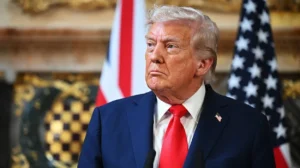
In an interview reported on August 9, Trump said the United States was “low-keying it” with Iran and was
“only semi-negotiating with them”.
He added that Washington was watching Iran’s “huge inflation” and the fact that the country had “no money”.
It can be assumed that now the US administration thinks that economic sanctions can produce more effects than yet another bombing operation. Instead of starting immediate military actions, it seems that President Trump is ready to let economic sanctions and limitations on Iranian oil and sea trade continue in order to increase pressure on Iran. This is not a statement about giving up the military option.
Trump has always left himself the possibility of conducting more bombings, while his government keeps requesting Iran to stop attacking merchant ships, to agree with free movement through the Strait of Hormuz and to enter into negotiations concerning the comprehensive deal including nuclear and regional issues. So, this is not a settlement but just a break in escalation. The US is trying to transform economic losses from the war and blockade into bargaining chips before deciding whether to conduct another military strike or not.
From “maximum pressure” to economic warfare
The current strategy builds on Trump’s earlier “maximum pressure” campaign but has expanded beyond conventional sanctions. The United States is targeting Iranian oil exports, banks, shipping companies, maritime insurers, procurement networks and intermediaries that help Tehran bypass restrictions.
The administration has sanctioned more than 1,000 individuals, vessels and aircraft, according to reporting on its campaign against Iran. The targets include oil traders, shadow-banking channels, weapons procurement networks and shipping operators.
On July 29, the U.S. Treasury Department issued sanctions against the Iranian-linked maritime insurance companies and eight ships. The Treasury alleged that the group was facilitating Iran in earning money from its dominance and influence in the maritime shipping channels of the Strait of Hormuz.ofac. It added that OFAC had sanctioned more than 100 vessels associated with the shadow fleet of Iran since the beginning of 2026. These vessels belong to the secret logistics and trade network responsible for transporting oil from Iran and hiding ownership details. Moreover, Treasury also charged the Persian Gulf Marine Insurance Company and HormuzSafe Marine Services Authority with running an insurance network related to the Iran’s Islamic Revolutionary Guard Corps.
As per the Treasury Department, the vessels had to purchase insurance or other services to pass through the channel with some fees paid in digital currencies. The Treasury Secretary, Scott Bessent, has contended that Washington would not let Iran use maritime shipping to fund the Islamic Revolutionary Guard Corps or to blackmail the global commerce. The sanctions were said to be part of President Trump’s overall efforts to stop Tehran from monetizing its maritime influence.
The administration has also threatened secondary sanctions against companies and financial institutions that continue doing business with Iran. Such measures are particularly important because Iran’s oil exports have continued despite U.S. restrictions, with China-linked traders and shipping networks remaining central to Tehran’s ability to earn foreign currency.
Why the military option has paused
The apparent shift follows an intense period of U.S. military operations. American attacks have reportedly struck Iranian air-defence systems, coastal surveillance sites, drone facilities, missile storage areas and other military infrastructure.
However, the US is now temporarily holding back from another major escalation that follows a series of strikes in the country. According to the reporting cited in Axios, it was a 13-day series of attacks, whereas the casualty list from the Pentagon provided statistics of casualties during the war. As reported by The Guardian, the official number of casualties among the US military forces included 18 dead and 624 wounded soldiers. There are several reasons for why the US is hesitant about starting another major assault.
A long-term attack can lead to more casualties, increased financial burden and increased pressure on weapon supplies. Furthermore, it can result in a wider assault on US military bases and commercial vessels operating in the region. However, the economic side of the situation creates its own political problem. Increased price of oil and fuel poses threat to Americans as well as may be exploited against Republicans if it continues high until domestic elections. According to CNBC, the average price of gasoline in the US reached $4.06 per gallon, up from $3.89 per gallon a week ago.
For Trump, economic pressure offers a way to continue confronting Iran without accepting the immediate costs of a new bombing campaign. It also gives Washington an opportunity to claim that Tehran is being weakened while diplomatic channels remain technically open.
Iran’s economy under strain
Iran’s economy was already vulnerable before the latest escalation. The war, sanctions and disruption of maritime commerce have intensified pressure on the currency, banking system, energy distribution and household incomes.
Reports have indicated severe shortages of fuels, despite the country being a significant producer of oil. The shortages of fuel and power outages coupled with disruption of banking services have impacted civilians and businesses alike. There have been reports of subsidies for gasoline that has been cut back from 70 liters per person per month to 50 liters. Iranian banks have also been rendered paralyzed, and thus some people have not been able to access salaries or other financial services through the banks.
Increasing inflation rates have made it difficult for the country to buy goods and even pay subsidies. An estimate quoted in reporting put daily economic loss to Iran due to the blockade at about $435 million. Although this figure is based on the estimate by an analyst and not a verified official number, it helps to indicate the extent of the pressure built up through such measures. However, such a pressure campaign has not managed to isolate Iran completely from the world market. As indicated by the analysis provided in reporting, Iran earned more than $23 billion from its oil exports in the first six months of 2026.
That figure is important because it challenges the assumption that sanctions automatically translate into financial collapse. Iran may be suffering serious domestic economic damage while continuing to sell enough oil to support military operations, pay parts of the state apparatus and sustain its negotiating position.
Hormuz remains the central dispute
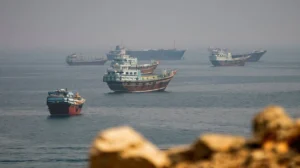
The Strait of Hormuz is at the centre of the confrontation. Before the war, the waterway handled roughly one-fifth of global oil and liquefied natural gas trade. Any prolonged restriction on shipping through the strait immediately affects energy prices, insurance costs, freight routes and the economic outlook of importing countries.
Washington wants Iran to guarantee free and secure passage for commercial vessels, stop attacks on ships and allow all lanes to remain open without tolls. Iran, by contrast, is seeking recognition of its authority over shipping arrangements and wants the reopening of the waterway linked to U.S. concessions.
Reuters reported that a proposed arrangement involving Iran and Oman could give Tehran control over ships entering the Gulf through the strait. Iranian sources reportedly discussed charging fees of between 5 and 7 per cent of cargo values, while Oman was discussing a fee of about 3 per cent. Washington wants no tolls at all.
The disagreement is not merely commercial. Control over Hormuz would give Iran a powerful source of political and economic leverage. It would allow Tehran to influence shipping, collect revenue and demonstrate that military pressure has not removed its ability to shape regional trade.
The United States fears that accepting such a system would legitimise Iran’s control over an international energy artery. Iran, meanwhile, views the waterway as a strategic bargaining asset and insists that it cannot be reopened while American forces maintain a blockade or continue attacks.
Tehran’s demands
Iranian authorities have dismissed the idea that any kind of negotiations with the US government are going well. Iran has been trying to conduct talks with Oman concerning the transit of cargo while setting certain political requirements for an agreement to be made. In particular, Iran has demanded the cessation of any military threats by the US, the lifting of oil sanctions, the elimination of the naval blockade, compensation for any damage during the war and the freeing of any Iranian money assets.
Furthermore, Iran has required the withdrawal of any US naval and air troops from the zones near Iran. These demands exceed the issue of the nuclear problem which used to play the leading role in US-Iran negotiations. Iran has started to ask for security and economic guarantees while trying to make the opening of the Strait of Hormuz an issue of a political solution.
This creates a fundamental gap between the two governments. Trump wants Iran to reopen Hormuz and make concessions before receiving major relief. Iran wants the United States to end the blockade and remove sanctions before surrendering its principal source of leverage.
The diplomatic calculation
Trump’s strategy rests on the belief that economic pain will eventually make Iran more flexible. The White House appears to calculate that inflation, fuel shortages, disrupted banking and declining revenues will weaken Tehran’s capacity to sustain the confrontation.
The risk is that economic pressure may produce the opposite result. Iranian leaders could conclude that compromise under blockade would be interpreted as surrender. They may therefore maintain a hard line, use Hormuz as leverage and seek to outlast the Trump administration.
Iran also has reasons to believe that time may work in its favour. Despite heavy pressure, it has continued to export oil, influence maritime traffic and demand compensation. The government can present resistance as proof that the United States has failed to impose decisive control.
The strategy also carries humanitarian consequences. Restrictions on banking, fuel and imports can affect civilians even when sanctions are formally directed at state institutions, military networks or oil companies. A prolonged economic squeeze could deepen shortages and inflation without producing a political agreement.
What happens next
The coming period will be determined either by whether Oman is able to negotiate a viable shipping solution or whether the U.S. accepts any compromise that grants Iran some formal say in managing maritime traffic. Any such deal that facilitates limited passage of ships, while excluding American and Israeli ships from such passage, would undoubtedly be unacceptable to the U.S. administration. In case talks progress, the U.S. could utilize sanctions relief, access to frozen funds or oil concessions as means of coaxing Iran into agreement. Should talks break down, the U.S. could ramp up secondary sanctions, extend seizures of tankers and put pressure on firms purchasing Iranian crude. Military action would certainly be the most drastic option. Further strikes would not only shut off all remaining diplomatic options, but would invite Iranian response and escalate the conflict beyond the Gulf region.
Trump’s latest statements therefore signal a change in method rather than a change in objective. The United States still wants Iran to surrender control over maritime traffic, accept restrictions on its regional power and negotiate from a position of weakness. Iran still wants sanctions relief, compensation, security guarantees and recognition of its influence over Hormuz.
The central question is whether economic pressure can compel Tehran to compromise before the costs of blockade and high energy prices become politically unacceptable in Washington. For now, Trump is betting that Iran’s economic crisis will do the work that another round of strikes might not.