The latest phase of the U.S.-Iran confrontation has moved far beyond a warning shot. According to the information provided, U.S. forces have expanded strikes into northern Iran while also disabling a ship accused of trying to break a blockade, signaling a sharper and more geographically broad military campaign than earlier rounds focused mainly on coastal and maritime assets.
This development matters because it suggests Washington is no longer limiting its response to the Strait of Hormuz corridor alone. By striking further inland, the U.S. appears to be broadening the military pressure on Iran’s command, missile, and support infrastructure, while the blockade action shows that maritime enforcement has become part of the same strategy.
What happened
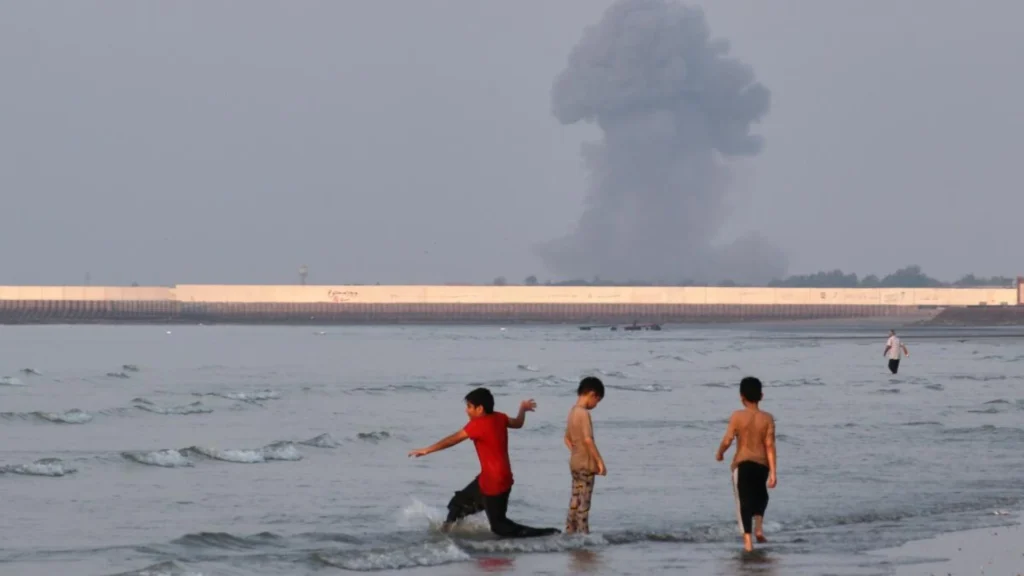
This series of incidents appears to be a dual effort involving increased strikes by the US against Iran, targeting not only the south but also regions in the north, and an independent action whereby a ship was neutralized after it supposedly tried to breach the blockade. It appears that both actions have been justified by the US as being a response to Iranian attacks on commercial shipping in the Strait of Hormuz. What is important about this latest effort is the expansion of the target list. Previous attacks focused mostly on coastal radar, missiles, drone bases, and naval infrastructure. The current news suggests that the efforts have now penetrated into Iranian territory even further, making it much more serious since attacks inland are usually seen as a sign of more aggressive intentions.
For Iran, this is not just a tactical issue but a sovereignty crisis. A strike campaign that reaches northern areas changes the political meaning of the conflict and makes de-escalation harder, because it shows the U.S. is willing to hit beyond immediate maritime defenses.
U.S. position and stated goals
The U.S. Central Command has described its strikes as defensive and punitive, aimed at degrading Iran’s ability to threaten commercial shipping and at imposing costs for attacks on merchant traffic. In earlier publicly reported rounds, CENTCOM said roughly 80 to 90 Iranian military targets had been hit, including air-defense systems, coastal radar, anti-ship missiles, drone and missile storage sites, command-and-control facilities, and more than 60 IRGC small boats.
This list of targets is significant because it illustrates an intentional attempt to undermine both the conventional defensive infrastructure of Iran and its asymmetric naval capabilities. By attacking the radar systems, missiles, and boats in one go, Washington tries not only to lower the possibility of further attacks but also complicates the ability of Iran to harass the shipping lines effectively. Moreover, it appears that the United States has combined military escalations with economic pressures. It seems that the United States decided to re-impose or reinforce sanctions on the sale of oil by Iran while conducting strikes against it.
Iran’s response
The Iranian government and its state-run media have criticized the attacks as an assault on the sovereignty of Iran and part of an overall strategy of hostility. Furthermore, Iran has stated that there have been strikes on civilian areas and strategic locations, while the country’s health authorities have documented cases of casualties and injuries due to the renewed conflict. Among the key features of the Iranian response strategy is the fact that it claims that Iran is being subjected to aggression rather than being an aggressor itself. This factor will play a crucial role in justifying the retaliation of Iran regionally, should the conflict escalate further.
Iranian media has also emphasized that the strikes have expanded in scope and location, with reported attacks in the south and further north. That matters politically because it supports Iran’s argument that the U.S. is no longer simply intercepting maritime threats but is actively waging a broader offensive on Iranian soil.
Military scale and target geography
The magnitude of the reported attacks shows that this was a large-scale operation and not just a small-scale raid. The number of strikes reported by the US and carried out in multiple waves against several dozen targets implies that this was a campaign aimed at reducing layered military capabilities. According to reports, the targets involved include the air defense systems, missile capabilities, drone hangars, naval logistics, coastal surveillance systems, and command centers. Geography is also crucial. Initial reports emphasized the Strait of Hormuz and the southern coastline of Iran associated with naval and missile activity. The recent reports of attacks on northern Iran imply that the US is trying to widen its operations to other areas that may serve as bases for planning and logistics purposes.
This change also creates new risks. Coastal strikes can be presented as directly linked to shipping security, but inland strikes are harder to justify as purely defensive. They invite a broader Iranian response and may trigger more intense debate among allies, rivals, and legal observers about the limits of U.S. action.
The ship incident
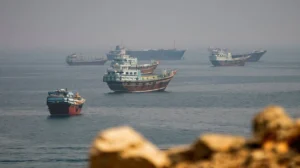
The disabling of the ship accused of trying to run the blockade adds a crucial maritime dimension to the story. It shows the U.S. is not only striking land-based assets but also actively enforcing a maritime cordon. That action reinforces the message that Washington intends to control the operational environment around Iranian waters and prevent vessels from challenging the blockade.
Despite some confusion in initial reports, the point is very clear. Not only does it have strategic importance, but also symbolic. It shows that the blockade is not a hypothetical concept, but something that the US is ready to implement physically against ships that it considers to be attempting to break the blockade. The broader implications are that any time a ship is intercepted like that, there will be repercussions for insurance, shipping rates, and even the routing of vessels. For a place as crucial as the Strait of Hormuz, even a single incident can cause more strain on a precarious system.
Casualties and damage
Casualty reports are flexible because it is common practice in reporting during a time of conflict. Iranian authorities have stated that hundreds have died and well over 300 have been injured since the conflict began again, but these figures cover the entirety of the surge in violence, not just one particular attack. It can be seen that these numbers could still be fluctuating as additional information comes to light. The extent of damage is also unknown. Reports from the Americans center around the destruction of their military systems, but Iran reports on the loss of life and the destruction of civilian infrastructure.
Even without fully verified independent counts, the scale of reported injuries and strikes suggests a conflict that is already producing measurable humanitarian pressure. If the conflict continues to spread, civilian exposure will likely increase, especially if strikes move further inland or if maritime retaliation disrupts access to ports and trade routes.
Strategic and regional implications
This escalation carries consequences far beyond Iran and the United States. The Strait of Hormuz is one of the world’s most sensitive energy chokepoints, and any sustained military action there threatens shipping, insurance markets, and energy prices. Even the perception that blockade enforcement is tightening can have immediate effects on oil markets and vessel traffic. There is also a regional dimension. Iran has previously shown a willingness to respond through proxies, allied groups, and strikes linked to broader regional theaters. If the U.S. campaign continues to widen, neighboring states may face increased pressure from missile, drone, or maritime spillover.
Diplomatically, the strikes make negotiations harder. Once military operations expand into northern Iran, the conflict becomes more politically loaded and more difficult to contain. Any future talks will have to account not just for maritime security but also for sovereignty claims, sanctions, and the legal basis for the U.S. campaign.