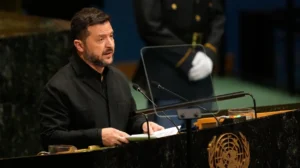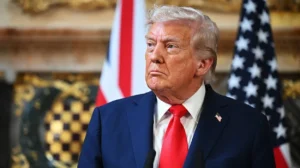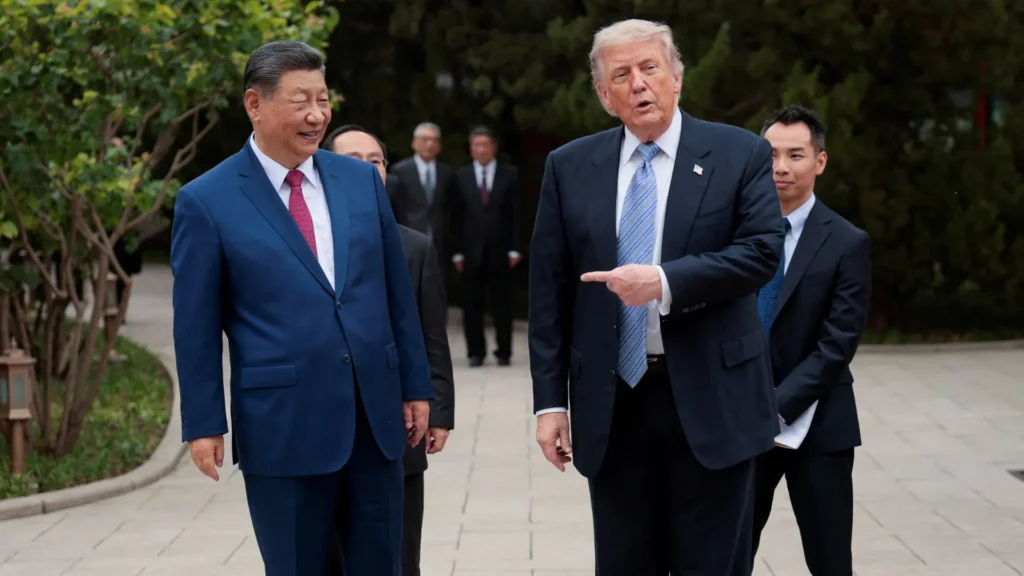
A new Pew Research Center survey points to a notable shift in global opinion: China and Xi Jinping are now viewed more favorably than the United States and Donald Trump in many major countries. The findings do not show universal admiration for Beijing, but they do show a clear relative decline in how the U.S. is being seen abroad, especially under Trump’s leadership. In practical terms, the data suggest that China’s image is improving at the same time that American credibility is weakening in the eyes of many publics.
Timing of this poll is quite relevant as the geopolitical landscape continues to be influenced by various factors such as trade issues, security rivalry, concerns about democratic decline and increasing mistrust among the leading states. It is important that the Pew data is particularly noteworthy since it reflects international trends due to being based on wide-scale polls conducted across many countries.
What the poll found
In its 2026 global attitudes study, Pew took surveys from tens of thousands of adults in dozens of countries around the world. The China and Xi poll involved 37 countries and 45,658 respondents, whereas the U.S. and Trump poll was taken from 36 countries and 42,151 respondents. Such large numbers make it uniquely broad and useful when assessing global attitudes toward competing nations. The simple result of the poll should be mentioned first: China is perceived more positively than the U.S. in 25 countries, and Xi Jinping is perceived more positively than Donald Trump in 22 countries. It doesn’t necessarily mean that any of these leaders is popular around the globe; indeed, confidence in them is quite limited in many regions. However, the comparison still matters because it proves that the U.S. has lost some advantage over China which it had previously enjoyed in global polls.
Pew also found that the median favorable view of China across the 37 surveyed countries was 51%, compared with 39% unfavorable. By contrast, the median favorable view of the United States across 36 countries was 37%, while 57% held unfavorable views. On leadership, the median confidence in Xi was 35%, while confidence in Trump was only 23%. Those are not small differences; they point to a major gap in how global audiences evaluate the two countries and their leaders.
Why the shift matters
The most important takeaway is that this is not simply a story of China becoming beloved. Rather, it is a story of China improving at the same time the United States deteriorates. Pew’s own reporting makes that dynamic clear, saying China is seen more positively than the U.S. partly because of China’s improving image, but especially because of worsening opinions of the U.S. and Trump.
This is important to note for any kind of analysis. A growing number of favorable views about China in the polls does not necessarily mean that people are trusting the political structure, policies, and the human rights record of China. However, the survey indicates that many people do not trust Xi Jinping, and China is still unpopular in many parts of the world. However, unlike the US, Beijing has the benefit of relative advantage. When it comes to international relations, what counts is the relative standing and not just the approval ratings. It is quite worrying for the US, which has always been presenting itself as the defender of the liberal international order. The current poll results indicate dissatisfaction not only with Trump but also with US inconsistency and unpredictability.
Regional patterns and contrasts
The results are not evenly spread throughout the world. China’s best position is found in several middle-income countries like Pakistan, Kenya, Nigeria and Sri Lanka. In these countries, it seems that the economic involvement, financial contribution to infrastructure projects, and developmental cooperation have created more favorable perceptions. However, this does not necessarily mean that there is political affinity, but rather the people see China as a partner and not as a threat. On the other hand, the most negative views towards China come from Japan, South Korea, Sweden, Australia and the United States. These countries have more security worries regarding China, they know more about authoritarian regime in China, and/or compete with Beijing strategically. Therefore, the contrast is quite understandable but it carries significant political meaning.
The same pattern appears in attitudes toward Trump. Pew found the highest confidence levels in the Philippines, Israel, Nigeria, Kenya and Ghana. Even there, however, support was not necessarily overwhelming or uniform. In several of those countries, views were sharply divided by age, ideology, or political alignment. So while Trump may retain pockets of support, the broader global picture is still negative.
What the U.S. is losing
One of the strongest themes in the Pew data is the erosion of the U.S. image as a reliable partner. That point is crucial because America’s international influence has never rested only on military power. It has also depended on the belief that it is a predictable, rules-based actor that allies can trust. Pew’s 2026 findings suggest that belief has weakened in many countries.
According to the survey conducted in the U.S., the percentage of people who had a favorable view of America decreased in 15 out of 24 countries with trends. People’s trust in President Trump dropped in 16 out of 24 nations. In addition, Pew reported that
“there was no country in the survey in which the attitude toward the American president became more positive over the course of the year.”
It is a very negative tendency for a US president who is trying to project power on the international arena. The decrease in favorability is not just symbolic since in diplomacy perception makes leverage. When citizens of other countries think that the U.S. is unstable and unpredictable, then governments of allied nations feel pressure and have to distance themselves from the U.S. government.
China’s image is improving
However, gains have been made by China, although in some regions only to a limited extent. According to Pew, opinions about China were more positive in a third of all surveyed countries, while confidence in President Xi has risen in many countries too. Furthermore, there has been an increasing tendency among people in many surveyed countries to consider China to be the leading economic country in the world. Such an attitude is very significant since economic dominance is one of the main instruments used by Beijing in order to exert influence on other states. This means that Chinese public diplomacy seems to benefit from various circumstances such as the economic role of China, selectivity of its diplomatic approach in the Global South and the comparison with a much more polarizing image of the United States. In addition, it becomes easier for Beijing to appear to be pragmatic in case of Washington’s political division and inconsistent diplomacy.
At the same time, China should not overread the numbers. A median favorable view of 51% does not mean overwhelming enthusiasm. In many surveyed countries, skepticism remains high, and confidence in Xi still lags behind the share who lack confidence. So the story is not that China has won global opinion outright. It is that China has improved enough, and the U.S. has slipped enough, for the balance to tilt.
Trump’s international standing
Trump’s global ratings remain one of the most striking parts of the story. Across 36 countries, only a median of 23% expressed confidence in him to do the right thing in world affairs. That is a very low figure for a U.S. president in a period when global crises require visible leadership. Pew’s separate reporting also says the U.S. is being viewed with “negative – and often overwhelmingly negative – views” in many places.
The political meaning of those numbers is significant. Trump’s style, which appeals strongly to some domestic supporters, appears to be a liability in many foreign publics. His transactional approach, criticism of allies, and willingness to disrupt established norms can be framed at home as strength, but abroad they often read as instability. That helps explain why his personal ratings trail Xi’s in so many countries, even though China’s government itself remains widely criticized on democratic and human rights grounds.
The poll also highlights an awkward reality for U.S. foreign policy: leadership image and national image are now tightly intertwined. For many respondents, Trump is not just an individual politician but a symbol of the U.S. direction. When his confidence ratings fall, the reputational cost extends to America as a whole.
What the numbers say
It makes sense to repeat the key data from the survey since they tell the story rather well. China had 51% of favorability and 39% of unfavorability. The figure for the USA was 37% of favorability and 57% of unfavorability. There was 35% of trust in Xi Jinping and 23% of trust in Donald Trump. In 25 countries, China was more favorable compared to the USA, while in 22 countries, Xi Jinping was seen more favorably than Donald Trump. According to Pew Research Center, the USA saw decline in the number of favorable opinions in the majority of those countries where there were possible trends comparisons. Trust in Trump declined in most of the comparable countries as well, with none of the surveyed countries showing any improvement.
The wider geopolitical message
The broader message from the poll is that global public opinion is becoming more fluid and more competitive. In earlier eras, the U.S. often enjoyed a reputational edge that China could not easily challenge. That edge has narrowed. If the trend continues, it could affect how governments frame their partnerships, how businesses assess political risk, and how international institutions navigate rivalry between the two powers.
This does not mean China’s rise in opinion will translate automatically into geopolitical victory. Public sentiment is only one factor among military capacity, economic strength, alliances, and institutional legitimacy. Still, soft power matters. If Beijing can continue improving perceptions while Washington keeps losing trust, then China’s strategic room for maneuver will expand.
The Pew survey therefore reads less like a passing opinion poll and more like a warning sign. It suggests that the reputational contest between China and the U.S. is no longer one-sided. China is not universally admired, but it is now more favorably positioned than the U.S. in many countries, and that alone marks a meaningful shift in the global balance of perception.