The reported collapse of the US-Iran truce marks a dangerous turn from fragile restraint to active confrontation, with fresh strikes, renewed naval pressure, and a widening threat to maritime traffic in the Strait of Hormuz. What had been described as an interim peace now appears to be breaking down under the weight of repeated military actions, competing claims, and rising fears that the conflict could spill deeper into the Gulf and beyond.
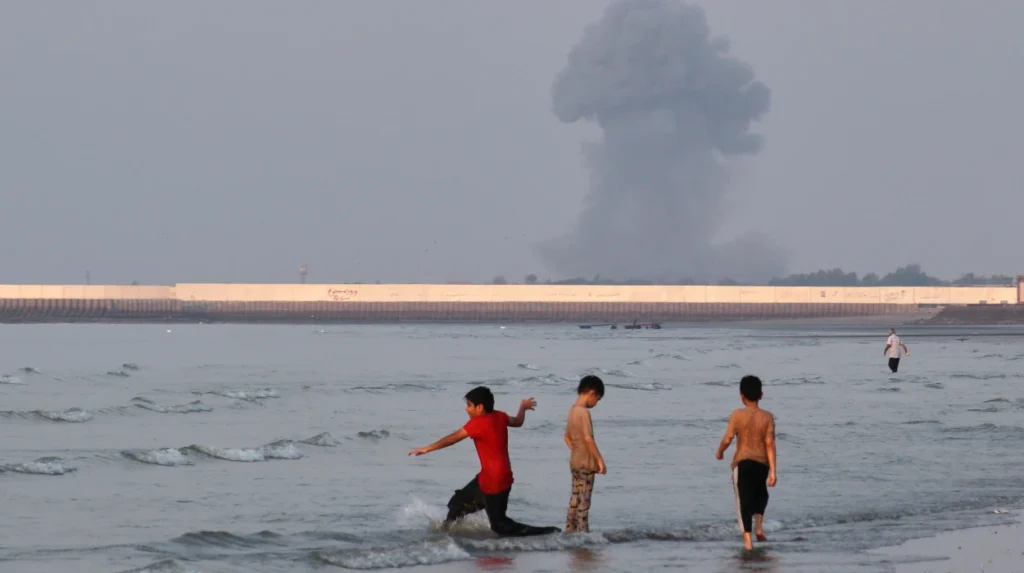
According to recent accounts, however, this event appears to be a part of an escalating pattern that has developed over the past few days. Indeed, it seems that US troops have re-established the naval blockade as well as initiated another attack against Iran – something that Bloomberg called the moment when the temporary ceasefire agreement between Washington and Tehran was broken. On the other hand, there are previous reports that speak about a string of ship attacks, missile strikes, and military operations leading to the breakdown of the fragile ceasefire agreement.
A truce under strain
The fragile state of the ceasefire is due to the fact that it relied more on the belief that neither side had much at stake in pursuing a greater conflict than mutual trust. That belief is now coming under severe strain. The news reports during the last several days have shown a vicious circle of one side attacking, another retaliating, issuing a warning, and each act making diplomacy more difficult. By July 14, Bloomberg had used very pointed language stating that the interim peace had “effectively collapsed” due to yet another attack by the Americans and a blockade.
The importance of that collapse does not lie solely in the military action but in the failure of deterrence. It seems that neither side can afford to show weakness by pausing without having the other do the same thing. That is why all of these attacks, interceptions, and blockades have taken on a much larger meaning than just a tactical move.
Hormuz becomes the center
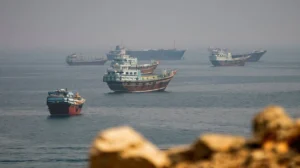
In essence, the Strait of Hormuz has become the focal point of the narrative once again due to its position within the confluence of the two elements of the military pressure and international economic threats. Any action taken in relation to the channel will immediately influence oil transport, insurance, cargo, and economic expectations. That is why both analysts and news sources referred to the channel as more than just a strategic choke point for the region but also the pivot on which the whole conflict revolves around.
Previously reported was the possibility of a possible breach of the ceasefire due to a disagreement over the control of the channel with tit-for-tat strikes that indicated a re-escalation into the high-level confrontation in the region. Additionally, reports emerged about the attack on three ships which proved the concern regarding the involvement of civilian shipping as an object of routine targeting or collateral damage in the ongoing dispute.
A broader battlefield
This expansion of the confrontation is not merely maritime. There have been allegations of attacks on strategic infrastructure, such as the strike against an Iran rail bridge that connects regions in which Russia and China operate. The truth or falsity of those allegations aside, what is significant about them is that if true, they signify that the confrontational parties are expanding the strategic canvas of the confrontation. An attack on the infrastructure has not only tactical value but also symbolic value since it signifies that the confrontation is not limited merely to border tensions, ship confrontations, or retaliatory actions of some kind. It is crucial to grasp this point when considering the breakdown of the ceasefire.
A truce can endure occasional incidents, but it becomes much more difficult to endure when attacks are beginning to impact logistics, transportation infrastructure, and the region itself. In this case, there is a multi-channel confrontation – a naval one, a missile one, an infrastructure one, and a political one.
What Washington is signaling
US messaging in the available reporting suggests a posture of response and deterrence rather than compromise. Coverage from mid-June described the US strikes as the gravest test yet of the fragile truce, while later reports said the regional conflict had hardened into a stalemate because the ceasefire had failed to turn into a lasting peace deal. That framing matters because it shows Washington does not appear to be treating the situation as a temporary flare-up. Instead, it is being presented as a security problem requiring continued pressure.
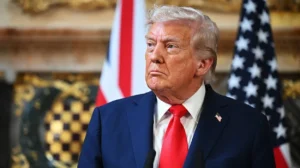
President Donald Trump’s warnings of fresh military action have further sharpened that posture. In practical terms, such warnings function as both a deterrent and a threat. They signal to Tehran that continued maritime or missile activity could trigger additional strikes, but they also risk reducing the space for negotiation. When leaders publicly emphasize escalation, it can box both governments into positions that are difficult to reverse without political cost.
A Washington-centered reading of the crisis is therefore shaped by two aims: protecting shipping and proving that attacks will not go unanswered. That stance may satisfy short-term deterrence goals, but it also raises the danger that every retaliatory measure will invite another round. The result is a conflict pattern that increasingly resembles controlled escalation until control is lost.
Tehran’s framing
The public position of the country, based on the analysis of the media coverage, seems to be centered on resistance, sovereignty, and control over the sea route. As it has been reported, Iran claimed that the Strait of Hormuz is restored to its previous state and became subject to “strict management and control” by the Iranian military forces. This rhetoric is important in the sense that it does not interpret the action as an attack but rather as a measure of defense and enforcement. Also, it indicates that Iran is treating Hormuz as an arena for imposing costs and demonstrating its leverage. This rhetoric has several objectives. First, it emphasizes that the intention of Iran is to maintain the pressure on the shipping industry as a tool of strategy. Second, it helps to convey the message that the state will not surrender to coercion coming from abroad. Third, it shows that the Iranian leadership attempts to frame control over the strait as a question of sovereignty and not a crisis.
Still, the contradiction is obvious. A claim of orderly control in Hormuz sits uneasily beside reports of ship attacks, blockade pressure, and worsening military exchanges. That tension highlights the propaganda value of official statements in a conflict where both sides are fighting over perception as much as territory. Control of the narrative is now part of the contest.
Economic and strategic risk
The most immediate external impact is on energy and trade. The Strait of Hormuz is central to global oil movement, so any perceived blockade or serious security threat can move markets quickly. Even when ships are not stopped outright, the fear of disruption can be enough to raise costs and slow traffic. That makes the situation an international economic issue, not only a regional military one.
There is an element of strategy here too that goes beyond the oil. By threatening or hindering the transport through Hormuz, Iran increases its power over those powers who rely on Gulf transport routes. By retaliating in a military fashion, the US tries to demonstrate that there is a price to pay for such leverage. It leads to a vicious circle where both parties can talk about deterrence when, in reality, they increase the level of instability. The danger here is that they will both make a point tactically while failing to control strategically. The recent attacks on the infrastructure that are associated with regional connectivity indicate that the confrontation is beginning to become a part of the global geopolitical struggle. If the strategic channels linking Iran to Russia and China are under threat, then the fight will have to do with more than just Gulf security.
At this stage, the most likely near-term outcome is continued volatility rather than a clean break toward peace or full war. The reports point to a situation where attacks, warnings, and maritime restrictions keep feeding one another. That means the next major indicator will not be a formal declaration but whether commercial traffic in Hormuz normalizes or remains under threat.
The diplomatic path may still be open, but time is running out quickly. Once a truce breaks down in such an environment, its restoration will need more than just a ceasefire. It will need to have some credible process in which both parties can back down without looking like they are retreating. As of now, neither party seems prepared to offer such an exit. Which is why the situation is better explained as a failure of political will just as much as a military failure. Stated plainly, the truce between the US and Iran has gone from fragile to effectively broken. The new blockade, the new attacks, and the maritime incidents all indicate that the conflict is picking up steam again, and that Hormuz has once again become the stage on which regional politics and economics come into play.