The Trump administration has launched a sweeping campaign against the International Criminal Court, marking one of the sharpest U.S. confrontations with the tribunal in recent years. The move is not a symbolic gesture or a narrow diplomatic protest; it is being framed by Washington as a whole-of-government effort to weaken the court’s ability to act against Americans and their allies. At the center of the campaign is the administration’s claim that the ICC poses an “intolerable threat” to U.S. sovereignty and should not claim authority over U.S. servicemen, officials or citizens.
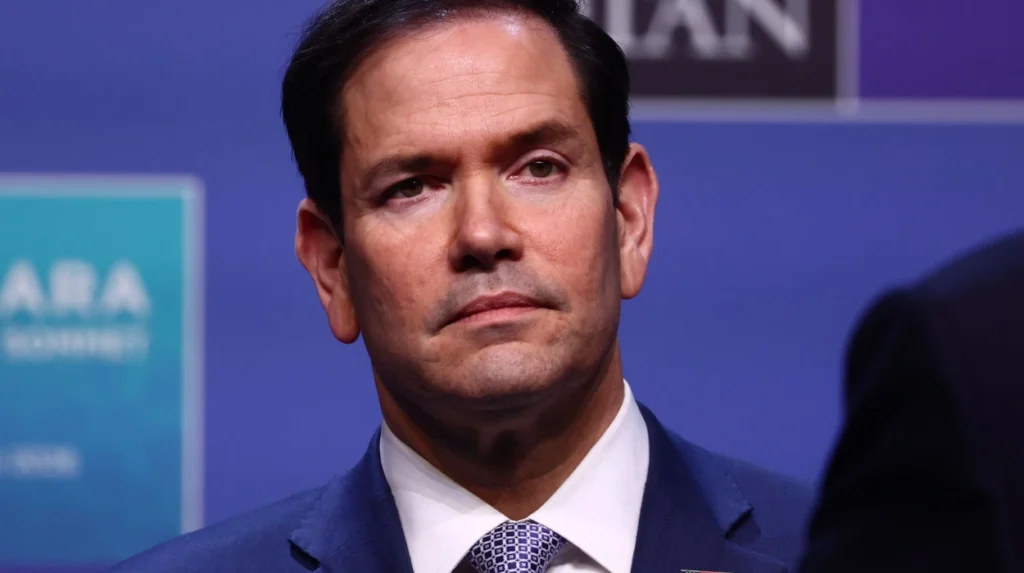
Marco Rubio, the Secretary of State, revealed the new strategy and left no doubt in the minds of people that the administration is going to press several fronts at once. It entails diplomatic and punitive efforts, along with the need for broader coordination within the U.S. government. The signal from the State Department is unambiguous: the United States is ready to battle the ICC not in courts but on the geopolitical front.
What Washington Says the ICC Represents
The logic behind the administration’s stance lies in a rather straightforward yet effective argument, which says that the ICC has no grounds to conduct investigations or try Americans that were not party to the creation of that treaty at the beginning. As per Washington, the court has stepped out of its jurisdiction and is now trying to become an international authority superior to individual nations.
This is hardly a novel argument, although the Trump administration has now taken it up as one of the cornerstones of its foreign policy strategy. According to the State Department, the court claims that it has the right to try American soldiers and officials, and this amounts to an unacceptable breach of U.S. sovereignty. Moreover, this action can undermine the idea of national sovereignty overall, as the ICC threatens the ability of national governments to define their legal jurisdiction.
Rubio’s language reflects that ideological posture. In the administration’s telling, the ICC is not simply an international legal body with controversial jurisdictional claims. It is being cast as a political instrument capable of constraining U.S. power, especially in conflict zones where American personnel operate overseas. That argument is likely to resonate strongly inside the Trump administration, where skepticism toward multilateral institutions remains one of the defining features of foreign policy.
The Tools Washington Plans to Use
The campaign is broad because the instruments under consideration are broad. The State Department said
“no diplomatic option will be off-limits,”
signaling that the White House is prepared to use pressure at several levels, from direct diplomacy to economic and visa-related penalties. The stated goal is to systematically disable the court’s ability to operate against Americans.
Such measures include visa cancellations, travel restrictions, imposition of additional sanctions and increased diplomatic pressure on states that assist the ICC’s activities. The purpose of such actions is not only to punish the court but also to deter its allies and supporters from providing assistance to it. Thus, not only does the campaign become not only the bilateral conflict between the U.S. and ICC but also the attempt to influence the policy of third parties that come under the diplomatic influence of Washington. Also, it can be concluded that the support of the court will bring certain implications in the general foreign policy of the country, which means that the states cooperating with the U.S. in different spheres will face pressure to separate from the court.
The Timing Behind the Escalation
The campaign comes after ICC judges filed a complaint, according to reports, suggesting that the administration’s escalation was triggered by fresh judicial developments. That timing matters because it shows the Trump team is not merely restating a longstanding objection. Instead, it is responding to a legal and institutional moment with a coordinated political counteroffensive.
The move also fits a broader pattern in the Trump administration’s approach to international institutions. Rather than allowing legal disputes to remain technical or procedural, the White House tends to recast them as tests of national sovereignty and political strength. That is precisely what appears to be happening here. The ICC is being treated less as a court and more as a strategic opponent.
This escalation also gives the administration a chance to rally its domestic political base around a familiar theme: the idea that global institutions overreach at the expense of American interests. By making the ICC the target of a sweeping campaign, the White House can present itself as defending U.S. power against foreign interference. That political logic is central to understanding why the language around this issue has become so forceful.
What the Court Means for International Justice
The ICC was created to prosecute the most serious crimes when national courts cannot or will not act. That mandate has always made it controversial, especially among major powers that do not want external scrutiny over their military or political decisions. The United States is not a member of the Rome Statute, and Washington has long questioned the court’s reach, but the Trump administration’s new campaign goes further than simple noncooperation.
The importance of this move stems from its wide scope. Rather than merely challenging the jurisdiction of the court over Americans, the administration is attempting to cripple the operations of the entire institution. This means that rather than impacting the relationship of the United States with the ICC, it could impact the ability of the court to prosecute cases involving other states or other actors. Leveraging its power to discourage the partners of the United States to use the tribunal would have a far-reaching practical implication than the conflict itself. This explains why the topic is more than legal in its nature. The ICC is an example of how the international system attempts to bring individual responsibility for war crimes, crimes against humanity and genocide. The U.S. effort to undermine it leads to broader issues of whether global justice systems could survive in opposition of the powerful countries.
International Reaction and Diplomatic Fallout
Initial response from the outside world has already proved that the U.S. stance might not find universal acceptance. For instance, Japan expressed some worries over the campaign, implying that the country is concerned over the level of forcefulness used by the United States. This is important because Japan is a good friend of the United States, and its reaction proves that at least some of the U.S. allies will view the step as destabilizing rather than a protective one. This point becomes even more critical considering the international character of the ICC, and the number of states involved in investigations conducted by the court. In case the Trump administration asks its allies to make a choice between the U.S. and the ICC, the result will be strained relations in many areas of diplomacy.
There is also the possibility of a chilling effect. Governments, legal institutions and organizations that cooperate with the ICC may become more cautious if they believe Washington is prepared to retaliate. That would not necessarily stop the court from working, but it could complicate investigations, slow cooperation and deepen political polarization around international law.
Rubio’s Message and the Administration’s Politics
Rubio’s announcement was more than a policy statement; it was a political message. By framing the campaign as a defense of sovereignty, the administration is appealing to a core Trump-era argument that international bodies often constrain the United States unfairly. The message is designed to sound assertive, uncompromising and nationally protective.
The State Department’s phrasing also matters. Describing the ICC as an “intolerable threat” and committing to a “whole-of-government response” communicates that this is not a niche legal fight. It is a coordinated administration priority with backing across the foreign policy apparatus. That gives the campaign greater weight and suggests it may continue beyond a single announcement.
Rubio’s position also reflects the administration’s preference for blunt diplomatic language rather than cautious legal nuance. The rhetoric is intended to draw a clear line: the United States will not accept an outside tribunal trying to extend authority over its people. In political terms, that is a highly usable message for supporters who see sovereignty as under siege.
The next step will most probably take the form of pressure and deterrence measures. The administration will start pressuring ICC staff members, as well as organizations and countries who collaborate with the Court. Diplomatic efforts will most probably also be directed at sending warning signals to countries not to get involved with the Court any further. In each of these actions, the message is going to be strengthened that collaboration with the Court comes with some price tag attached to it. Meanwhile, the court itself and all of those who defend it will be framing the campaign as an assault on accountability.
In essence, the Trump ICC offensive is a test of how far the United States is willing to go in rejecting multilateral legal authority. The administration is not simply defending a jurisdictional position; it is trying to weaken the court’s legitimacy, disrupt its operations and warn other governments against cooperation. That makes the campaign significant both as a policy move and as a statement about the Trump-era view of global governance.
The wider implication is clear. If Washington succeeds in mobilizing allies, sanctions and diplomatic pressure against the ICC, the court’s ability to function could be constrained in ways that matter for future war crimes and human rights cases. If the backlash grows instead, the campaign may deepen skepticism about U.S. commitment to international justice. Either way, the clash underscores a growing tension between sovereign power and global accountability.