U.S. President Donald Trump has again revived his call for the United States to “control” Greenland, turning a long-simmering geopolitical argument back into an open dispute at a moment when NATO unity is already under strain.
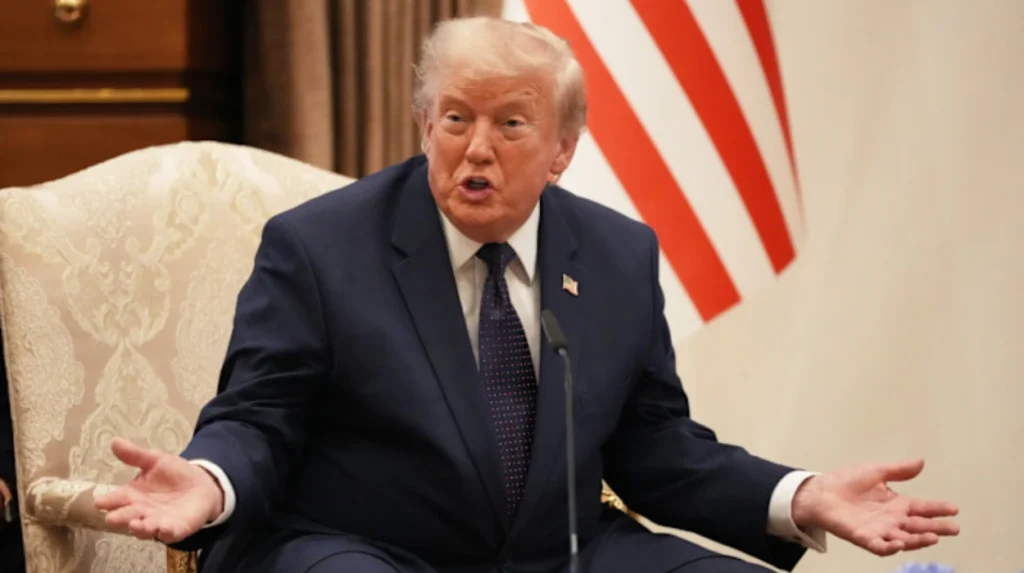
His recent statements, which were made at the 2026 NATO summit in Ankara, were accompanied by a mixture of security concerns, diplomacy, and fiery rhetoric directed at Denmark, the sovereign state controlling the territory. This renewed effort is important since Greenland is more than just an outpost for symbolism; it is situated in one of the world’s most strategically critical areas and represents the key to the larger strategic contest between Russia, China, and the United States.
Trump’s Latest Remarks
Trump again framed Greenland as a U.S. security issue, saying the island is important because of its location and what he described as weak Danish investment in its defense. During remarks reported by USA Today, he said,
“That’s what hurt my relationship with NATO,”
according to the outlet’s account of his exchange with reporters.
He added,
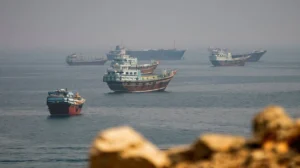
“Because Greenland doesn’t help Denmark. Denmark doesn’t spend money to really help Greenland, but it’s an important part for the United States, and it’s surrounded by China ships and Russian ships, and that’s not going to happen,”
USA Today reported. He then repeated his core position, saying,
“That should be controlled by the United States, not by Denmark.”
That wording is important. Trump did not present the issue as a hypothetical policy debate. He used the language of control, which signals a harder line than traditional alliance diplomacy and reinforces the sense that Greenland has become a recurring personal and political fixation for him.
Why Greenland Matters
The importance of Greenland to the United States lies in geographical location, military strategy and future competition for resources. First, it lies at the crossroads of North America, Europe and the Arctic, thus it can be seen as a strategically vital place to observe sea routes and missiles. In addition, the Council on Foreign Relations highlights that the importance of Greenland strategically is associated with Arctic security and with its strategic importance in relation to the Greenland-Iceland-United Kingdom gap. Moreover, it stresses that Greenland has a lot of infrastructure facilities used by the US military, such as Pituffik Space Base, which monitors the missiles and the space area. All this accounts for the constant presence of Greenland in US strategic considerations. The melting of the ice in the Arctic opens up new perspectives for shipping and surveillance.
The Russia-China Angle
Once again, Trump’s statements dwelled on the issue of vulnerability of Greenland to Russian and Chinese pressure because of the presence of their vessels surrounding the island. That has become a key point in his more general discourse on the necessity of increased U.S. dominance over the region. It is not a new way of presenting the problem. The Arctic region is perceived as a sphere of rivalry, where Russia possesses a larger number of icebreakers, while China develops an increasing interest in polar passages and resources. According to the report by CFR,
“The US can deploy only one icebreaker compared to about four deployed by China and about forty by Russia”.
Thus, in this respect, the statements made by Trump do not relate to Greenland exclusively but reflect the new trends in developing the Arctic strategy within the framework of great power rivalry.
Denmark’s Response
Denmark has consistently rejected any notion that Greenland can be taken, transferred, or pressured into U.S. control. Greenland itself also pushes back strongly against any suggestion that its future is being decided by Washington or Copenhagen alone.
That resistance is rooted in sovereignty. Greenland is a self-governing territory within the Kingdom of Denmark, but it remains politically and legally distinct enough that any change in status would require consent, negotiation, and likely a political process involving Greenlanders themselves. Danish officials have made clear they view the territory’s status as non-negotiable, and that any U.S. attempt to override that would be unacceptable. The clash, then, is not simply between Trump and Denmark. It is between a transactional American approach to security and a sovereignty-based European view of international order.
A History Of Escalation
Trump’s latest comments are part of a pattern that has stretched across months and has repeatedly generated backlash. Earlier in 2026, he had suggested that a framework or future deal could give the United States extensive access or control in Greenland, even while claiming he was pursuing negotiation rather than force.pbs+2
Reporting from NBC News and ABC News in January said Trump had said he would not use military force, but still insisted that only the United States could properly defend Greenland and that he wanted negotiations over its future. The AP’s fact-checking coverage also noted that Trump repeated misleading claims about Greenland’s security and the need for U.S. control.
The result is a recurring cycle: Trump raises the issue, Denmark and Greenland reject it, allies express concern, and the Arctic debate briefly becomes a global flashpoint again.
The NATO Dimension
Timing is just as significant as content. The purpose of NATO summits is to display unity within the alliance, yet Greenland has consistently served as a point of contention because it directly relates to the security of the North in NATO policy. Based on information reported by USA Today and others, Trump made his statements in conjunction with threats that if his demands regarding Greenland were not met, he would withdraw U.S. soldiers from other European countries. The threat serves to increase the significance of the situation because it indicates that Trump is ready to tie the politics of the Arctic to the broader commitment of the United States to the defense of Europe. This is part of why this situation has gotten so much attention.
The Numbers Behind The Debate
The facts and figures surrounding Greenland help explain why it is so often described as strategically indispensable.
- Greenland has a population of roughly 57,000 people.
- Around 80 percent of the island is covered by ice.
- Denmark provides Greenland with an annual subsidy of about $600 million.
- The U.S. maintains the Pituffik Space Base there, with around 200 active-duty personnel.
- Greenland has been under Danish rule for more than 300 years.
These figures matter because they show how small Greenland is in terms of population, yet how large it looms in military and geopolitical calculations. That contrast is one reason the island keeps drawing global attention far beyond what its size might suggest.
Legal And Political Reality
Any serious attempt towards U.S. possession of Greenland would entail the concurrence of both Denmark and Greenland’s own institutions of self-government. It cannot just be proclaimed by the U.S. administration. This explains why Trump’s statements are politically charged but bound legally. According to the CFR, other possible agreements, for example Compact of Free Association and defense arrangement, have been suggested as well but none of them can happen without the consent of the parties involved. The most important point here is that control, access, basing rights and sovereignty are not equal concepts. From this perspective, Trump’s stance on the issue cannot be regarded as anything but political pressure tool.
What Trump Is Really Signaling
Trump’s Greenland remarks should be read on three levels at once. First, they are a national security argument about Arctic defense and surveillance. Second, they are a political signal to his base that he is willing to challenge foreign governments in the name of U.S. strength. Third, they are a bargaining tactic designed to keep Greenland in play as a strategic asset rather than a closed diplomatic question. That mix makes the story bigger than one headline. It reflects a worldview in which geography, power, and leverage matter more than diplomatic niceties, and in which Greenland becomes a symbol of America’s willingness to dominate critical territory rather than merely cooperate with allies