The revelation that U.S. officials believed Israel was plotting to kill Iranian negotiators adds a new and volatile layer to already fragile regional diplomacy. The report, first published by The New York Times and echoed by several international outlets, suggests that Washington not only feared a direct attack on key Iranian figures but also acted quietly to prevent escalation at a moment when diplomatic channels were already under severe strain.
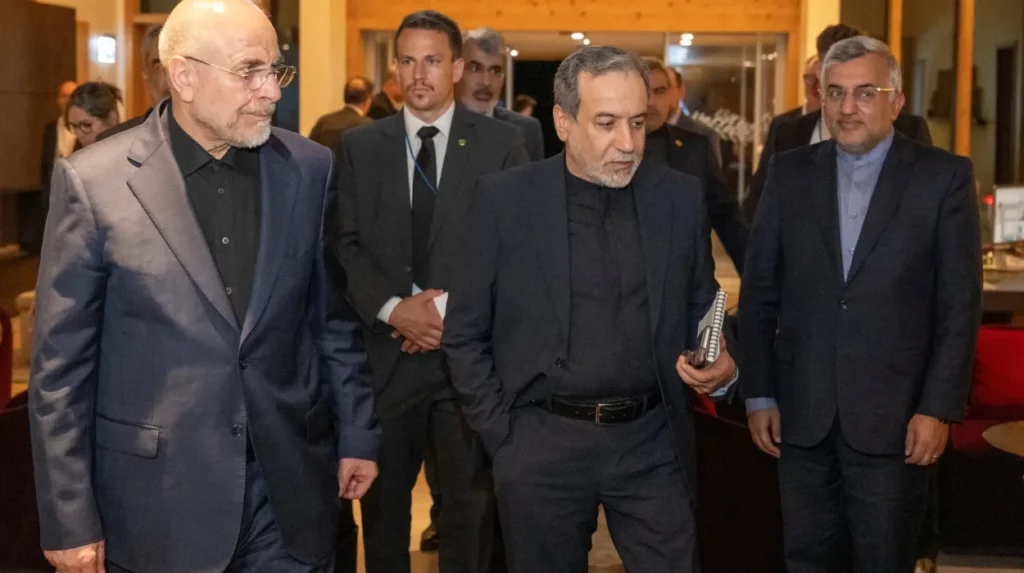
This incident is noteworthy due to the fact that it lies at the crossroads of intelligence evaluation, back-channel warning, and high-level negotiations concerning ceasefire and regional security. In the case in question, there are two high-ranking officials from Iran who play an important role – the country’s foreign minister, Abbas Araghchi, and the Speaker of the Parliament, Mohammad Bagher Ghalibaf. As reported in the news, U.S. authorities saw these officials as potential targets for assassination by Israel during delicate negotiations due to the fact that they played an active role in political signaling on behalf of Iran.
Why the Report Matters
This document is important due to the implication that the United States conducted its actions on two different levels. On the one hand, there was diplomacy, while, on the other hand, it had a response ready for the potential danger that could appear. In other words, the United States may have been seeking to keep up the negotiations and respond to the potential action of a regional friend, which could lead to a serious shift in the situation. This aspect is very important when considering this story. It should be noted that if the US government really considered the possibility of this event, the warning could be a political message as well.
The report also underscores how dangerous the current regional environment has become. Negotiations involving Iran, Israel, and U.S.-linked regional diplomacy are already shaped by mistrust, military pressure, and competing strategic goals. In that context, even an unconfirmed belief that senior Iranian negotiators might be targeted can alter the tone of diplomacy, harden positions, and create new layers of suspicion. The story therefore goes beyond a single alleged plot and speaks to the deeper instability surrounding Middle East negotiations.
Who Was Reported At Risk
Two individuals who appear more prominently in the news include Abbas Araghchi and Mohammad Bagher Ghalibaf. Abbas Araghchi is reported to be a senior diplomat for Iran and an Iranian foreign minister. On the other hand, Mohammad Bagher Ghalibaf is the speaker of Iran’s Parliament. The reason why their names are important here is because they do not just have an official designation in the process of negotiations but also because they are the kinds of people who can make the talks fall through.
The reporting suggests that U.S. officials were especially concerned because these figures were visible, central, and politically symbolic. Targeting them would not only have created a security crisis, but also sent a signal that any diplomatic engagement with Iran could be punished by force. That would have widened the conflict far beyond an intelligence matter. It would have made the negotiation process itself appear vulnerable to assassination politics.
What Washington Did
According to these reports, the American reaction was not loud and direct but subtle. The American officials did not announce their problem and did not publicly accuse Israel; instead, they tried to send a warning message through their regional allies to the Iranians. This strategy demonstrates the sensitive nature of the situation, for in either case – making a public accusation or keeping silent – there could be consequences.
That is an important detail because it shows the U.S. was not merely observing events from a distance. It was actively trying to manage the risk without igniting a larger crisis. In the logic of diplomacy, a private warning can serve several purposes at once. It can protect lives, preserve deniability, and keep negotiations alive. But it can also reflect the limits of U.S. influence, especially if Washington feared it could not openly challenge a partner without undermining other strategic goals.
The Reporting Basis
The story rests on reporting by The New York Times and the statements or assessments of current and former U.S. officials cited in that coverage. That matters because the account is framed as an official belief or concern, not a public courtroom-level proof of an operational plan. In national security reporting, that distinction is crucial.
The decision of officials to take action can be based on intelligence information, intercepted communications, or warnings from allies and their own side that are not released into the public domain as proof. The document thus shows us what officials in the United States thought about the issue and their actions in response, and does not prove all the operational details beyond doubt. However, the fact that several news sources have separately reported the same basic facts adds credibility to the story. Where a sensitive story is told across several major news sources, it often points to widespread circulation of the reporting itself within informed circles.
Israeli Silence And Iranian Reaction
A notable part of the story is what is not present: a public Israeli admission. There was no open acknowledgment that such a plot existed, and no public statement in the reporting confirming an intention to target Iranian negotiators. That silence does not prove innocence or guilt, but it does mean the story remains anchored in reported U.S. concern rather than a confirmed public confession. In sensitive intelligence matters, silence is often the default response, especially when allegations touch covert action or cross-border targeting.
The Iranian reaction, on the other hand, was clearly politicized. By using the report as an excuse to highlight their previous claims about the Israeli regime conducting itself via clandestine acts of aggression against Iran and working to undermine diplomacy, Iranian politicians and state media outlets gained some advantage from the report. The report helped Tehran portray itself as an embattled state in the face of the conspiracy and as someone who faces difficulties in diplomacy due to outside sabotage.
Diplomatic Stakes And Regional Impact
The broader diplomatic stakes are substantial. If the U.S. really believed that Israel might strike at senior Iranian negotiators, then the warning was not only about personal security but about the survival of a negotiation framework. Assassination threats can derail talks by making one side feel that dialogue is a trap rather than a path to de-escalation. They also force mediators to spend more energy on protection and signaling than on actual compromise.
The regional impact would not be any less severe. The trust and expectation of confidentiality that characterize the middlemen and allies in the Middle East are based on discretion and the presumption that private communications will always be kept in confidence. A document of this nature would have the effect of shaking that presumption. It may lead to a reduction in contact, an increase in protection, or a postponement of meetings.
The report also highlights the contradiction in modern conflict management. States often negotiate while simultaneously preparing for conflict, and intelligence services often operate in the shadow of those same talks. That means diplomatic progress and covert threat assessments can coexist in the same hour. The result is a fragile system in which one alarming intelligence read can threaten to undo days or weeks of engagement.
What Can Be Said With Confidence
What can be said confidently is more limited than what the headline might suggest. The available reporting indicates that U.S. officials believed there was a real risk to two major Iranian negotiators, that Washington passed warnings through indirect channels, and that the concern surfaced during highly sensitive diplomatic discussions. The coverage also shows that the story has been treated seriously enough to generate international reporting and commentary.
What cannot be said with equal confidence, based only on the public reporting, is that a finalized and operational Israeli assassination plot was definitively proven. The report describes belief, fear, and warning; it does not present declassified proof of execution or a public Israeli confirmation. That distinction matters for responsible journalism. The truth of the story, as currently available, lies in the seriousness of the U.S. assessment and the diplomatic response it triggered.
This is why the report should be understood not as gossip or speculation, but as a window into the hidden mechanics of crisis diplomacy. It shows how intelligence, suspicion, deterrence, and negotiation can overlap in ways that are invisible to the public until a major report brings them into view. It also reveals how quickly a single threat assessment can reshape regional politics.
The most important lesson from this story is that diplomacy in the Middle East often happens under the shadow of violence, and that shadow can reach even the most senior negotiators. If U.S. officials truly believed Israel might target Abbas Araghchi and Mohammad Bagher Ghalibaf, then Washington’s quiet warning to Tehran was an attempt to prevent a wider rupture, not merely a protective gesture. The report paints a picture of a region where talks, threats, and covert fears coexist in tense balance.
It also reminds readers that in intelligence-driven conflicts, the line between warning and confirmation is always important. The public record currently supports the fact that U.S. officials believed a threat existed and acted accordingly. It does not, at least from the cited reporting alone, establish every claimed detail as a completed or publicly verified operation. Even so, the implications are severe: the story suggests that senior negotiators may have been operating under the possibility of assassination while diplomacy was still unfolding.