The protracted war-like standoff between Iran and the United States has morphed into more than just a regional security situation; it has become a barometer for how effective the use of economic sanctions is as part of US foreign policy. Following the re-imposition of economic sanctions following the withdrawal of the US from the Joint Comprehensive Plan of Action (JCPOA) in 2018, the United States has applied pressure on Iran to not only capitulate on its nuclear programme but also on its regional posture through financial isolation.
The current war between Iran and the United States demonstrates that
“the sanctions that the US placed on Iran and the current economic blockades being imposed against Iranian-affiliated vessels will only consolidate Iran’s determination against the US”,
as noted by The Independent on April 30, 2026. What was formerly seen as a very powerful tool of global economic leverage is now becoming increasingly fragile and indicative of the decline in US power of economic coercion.
A New Phase of US–Iran Hostilities
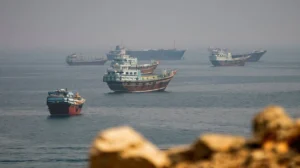
Tensions between the U.S. and Iran have escalated since 2025, when attacks were made on Iranian-linked sites. This prompted Iran’s closure of the Strait of Hormuz, and missile and drone strikes on U.S. and coalition forces in the Gulf.
In response, the U.S. has conducted extensive air raids against Iran, blockaded Iranian oil tankers from reaching other nations via sea, and imposed economic sanctions against Iranian energy production and its banking sector. The U.S. has deployed hundreds of thousands of troops to the Middle East and is spending around $900 million per day due to increased war expenditures.
The current escalation has increased the risk that the two nations could engage in direct, conventional military action and further fueled the contest for control of energy resources, global inflation, and legitimacy of U.S.-led sanctions. The subject matter of both of these developments is considered a prime example for a think tank analyzing U.S. foreign policy; the example of the Iranian War exemplifies the challenges of Washington’s reliance on economic pressure to achieve its foreign policy ends and illustrates the potential for this type of approach to produce unanticipated results and preclude a viable foreign policy.
The Relentless Use of Economic Sanctions
From the 1980s onward, the United States has leaned heavily on sanctions as a way to penalize and isolate Iran without full‑scale military invasion. After the 1979 Islamic Revolution, Washington progressively expanded trade and financial restrictions, culminating in a dense web of primary and secondary sanctions that block U.S. persons and institutions from dealing with Tehran and threaten third‑country entities that do so. The JCPOA provided a brief interlude of reduced sanctions in exchange for nuclear‑related limits, but President Donald Trump’s 2018 withdrawal and the reimposition of what the administration called the “maximum pressure” campaign shattered that framework.
Under the renewed sanctions regime, Iranian oil exports reportedly fell from around 2.5 million barrels per day (bpd) before 2018 to roughly 300,000–500,000 bpd by 2024–2025, according to research and policy assessments. The U.S. also blocked Iran from SWIFT and the global dollar‑based payment system, blacklisted key banking and insurance entities, and targeted Iranian‑linked vessels through a maritime coalition designed to intercept and seize suspicious oil cargoes.
How the Iran War Undermines That Power
Yet the current Iran war reveals the limits of that model. Sanctions have not forced Iran to abandon its nuclear ambitions or dramatically roll back its regional activities. Instead, analysts argue that punitive measures have reinforced Iranian claims of siege and resistance, and pushed Tehran toward alternative partners and survival mechanisms.
The Independent noted that the “blockade of Iranian‑linked ships” has not broken Iran’s will but has instead hardened its resolve, suggesting that Washington’s economic tools are no longer as coercive as they once were.
Iran has responded by deepening strategic ties with China and Russia, using barter, swap deals, and alternative currencies to keep oil exports flowing despite Western restrictions. Chinese ports and Russian refineries now absorb a growing share of Iranian crude, often through opaque shipping‑fleet arrangements that skirt U.S. interdictions.
Blunt Instruments and Strategic Whiplash
Scholars and policy reviewers have long warned that blunt, catch‑all sanctions often produce “strategic whiplash”: repeated cycles of pressure, partial relief, and renewed threats that confuse allies and embolden adversaries. A 2026 policy analysis titled
“Why Economic Pressure Against Iran Continues Despite Policy Failures”
argues that Washington’s sanctions have repeatedly failed to deliver the promised political outcomes, yet the U.S. continues to deploy them as if they were inherently effective.
This pattern has become even more visible in the context of the current war. Instead of producing a quick capitulation, the combination of sanctions and military pressure has led to prolonged instability, with risk of a protracted “frozen conflict” in the Persian Gulf. Iran has signaled that it may raise the stakes by demanding tolls on ships passing through the Strait of Hormuz if the Strait fully reopens, a move that would turn a traditional chokepoint into a tool of revenue and leverage rather than a point of vulnerability. Such a pivot would mark a symbolic reversal of the U.S. strategy: instead of Washington using the Strait to pressure Iran, Tehran could attempt to use it to extract concessions from the global economy.
Sanctions’ Cost to the United States and Allies
Perhaps the most telling sign of the decline of US economic coercion power is how the Iran war has hurt the very economies that rely on U.S. leadership. The partial closure and ongoing disruption of the Strait of Hormuz have driven global oil prices sharply higher, contributing to elevated inflation and energy‑cost pressures in the U.S., Europe, and emerging markets. Analysts at the Council on Foreign Relations and the Center for Strategic and International Studies (CSIS) warn that prolonged disruption could push the U.S. toward stagflation, combining high inflation with sluggish growth and rising unemployment.
The U.S. government’s own projections suggest that the Iran‑related war effort could shave “a few tenths of a percentage point” or more from GDP growth if the conflict persists, even as defense spending balloons. The International Monetary Fund has also highlighted heightened global‑recession risk if Hormuz disruptions continue, underscoring that the costs of Washington’s economic‑coercion strategy are increasingly shared across the international system.
For a critical observer of U.S. foreign policy, this outcome suggests that sanctions are becoming less a one‑sided tool of American power and more a mutually damaging instrument that punishes Washington and its allies as much as the intended target.
Erosion of Secondary‑Sanctions Leverage
A key pillar of U.S. economic coercion has long been secondary sanctions: threats to punish non‑U.S. companies, banks, and governments that continue to deal with sanctioned entities. Under the Trump administration and beyond, Washington repeatedly used this tool against Iran, arguing that any firm that did business with Tehran risked exclusion from the dollar‑based financial system. Yet the Iran war has revealed that many countries and firms now treat these threats as high‑cost but manageable risks rather than absolute prohibitions.
China, India, and parts of Southeast Asia have increasingly turned to alternative payment channels, local currencies, and informal trade networks to keep Iranian oil flowing. Even some European‑linked firms have found ways to route transactions through intermediaries or insurance‑free arrangements, weakening the precision and credibility of U.S. financial pressure.
The Limits of “Maximum Pressure”
The Iran case is part of a broader pattern in which U.S. sanctions have produced economic pain but not decisive political change. Research on sanctions against Russia, North Korea, and Venezuela shows similar dynamics: targeted economies suffer income losses and inflation, but regimes often use nationalist narratives and alternative alliances to survive and adapt. A 2021 study on the efficiency of international sanctions concluded that only a minority of such measures achieve clear political objectives, and that many instead entrench existing rulers and push targets into non‑Western blocs.
In the case of Iran, this has meant that sanctions have become tools of attrition rather than leverage. Iranian leaders publicly dismiss U.S. restrictions as “economic war crimes” and argue that their “resistance economy” has withstood repeated pressure.
What the Iran War Means for U.S. Strategy
The Iran war does not mean that U.S. sanctions are irrelevant. They still constrain Iran’s growth, complicate its access to technology, and raise the cost of aggressive behavior. But the conflict suggests that Washington’s ability to use economic pressure as a decisive, low‑risk lever of power is eroding. The decline of US economic coercion power is visible in three respects: the resilience of Iranian adaptation, the growing readiness of non‑U.S. actors to bypass sanctions, and the rising domestic and allied costs of Washington’s own coercive measures.
Moving forward, critics argue, the United States will need to pair sanctions with credible diplomatic pathways and realistic expectations, rather than relying on the threat of permanent economic siege. As one analyst put it, “maximum pressure” without the promise of meaningful engagement risks becoming “maximum frustration” both for Washington and its partners.