On April 28, 2026, the government’s arrest of Governor Rubén Rocha Moya put the US and Mexico on a collision course, as Rocha is accused along with nine other former and present officials of having colluded with the Sinaloa Cartel in receiving millions of dollars in bribes, assisting in planning and carrying out cartel activities, facilitating violence and kidnapping, and ultimately causing death as a result of these acts.
This indictment from US Assistant Attorney Jay Clayton laid out evidence suggesting Rocha promised to protect the Chapitos (members of the Sinaloa Cartel) after the election by using Sinaloa Cartel intimidation against his rivals while he campaigned to become governor.
One official, Deputy Attorney General Dámaso Castro Zaavedra, reportedly accepted $11,000 monthly to ignore Sinaloa Cartel activity while Culiacán Police Commander Juan Valenzuela (aka Juanito) allegedly facilitated the abduction of individuals resulting in their murder. The alleged conformance to the Sinaloa Cartel’s request or order will result in draconian punishments of life sentences with a minimum of 40 years for most of the accused, with a mandatory life sentence for Valenzuela when the murder charge basis is considered.
Mexico’s Defiant Investigation Stance
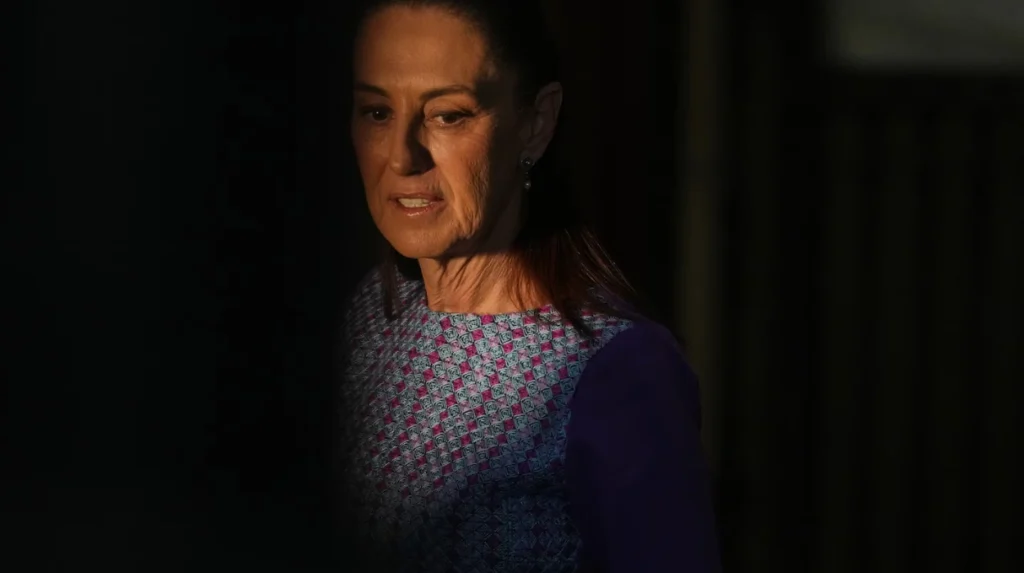
Claudia Sheinbaum took office as the president of Mexico in December 2017, inheriting the ‘”hugs not bullets”‘ philosophy of her predecessor, Andrés Manuel López Obrador or AMLO. On April 30, 2026, following the unsealing of the Sinaloa Cartel indictment in federal court in New York by the United States, President Sheinbaum quickly announced that the Federal Government of Mexico’s office of the Attorney General (FGR) would initiate an independent investigation regarding these allegations made by the United States.
President Sheinbaum views the Mexico’s Sinaloa Cartel indictment as a potential violation of Mexico’s sovereignty and has called for verifiable evidence prior to the consideration of any extradition requests that have gone through the Ministry of Foreign Affairs. “My position…is clear: the truth, the justice, and the preservation of our sovereignty,” she stated, asking how the United States was able to provide any evidence to support their allegations when that evidence is likely derived from interviews with captured cartel leaders, such as Ismael “El Mayo” Zambada.
This response from the President of Mexico demonstrates a fundamental divide between the execution of United States foreign policy and the execution of Mexican foreign policy. The unsealing of the indictment is a breach of the bilateral agreements between Mexico and the United States that require confidentiality during the extradition process. The breach of these agreements has been characterized by many Mexican officials as interfering in Mexican sovereignty.
Indicted Officials and Their Alleged Cartel Roles
Delving into the roster, the Mexico US Sinaloa Indictment paints a web of complicity spanning Sinaloa’s power structure. Senator Enrique Inzunza Cazarez, 53, and former Secretary of Administration and Finance Enrique Díaz Vega, 50, face narcotics and weapons charges for their roles in the conspiracy.
Former Investigative Police heads Marco Antonio Almanza Avilés, 54, and Alberto Jorge Contreras Núñez (“Cholo”), 45, allegedly facilitated cartel protections. Gerardo Merida Sanchez, 66, ex-Public Security Secretary, and Jose Antonio Dionisio Hipólito (“Tornado”), 55, former State Police Deputy Director, stand accused similarly. Culiacán Mayor Juan de Dios Gámez Mendívil, 41, rounds out the group tied to the same core offenses.
Each defendant’s profile underscores the cartel’s grip on local institutions in Sinaloa, the narco-state’s birthplace. The Chapitos’ influence, per the indictment, involved not just bribes but active shielding from arrests and enabling violence to maintain dominance. This level of detail, sourced from US intelligence and cooperating witnesses, positions the case as one of the most damning against sitting Mexican officials, surpassing prior indictments of over 30 Sinaloa figures since 2023.
Trump-Era Foreign Policy: Fentanyl as Leverage
Under President Trump’s return, the Mexico US Sinaloa Indictment emerges as a cornerstone of his “America First” pivot on foreign policy, weaponizing fentanyl crisis rhetoric to demand accountability south of the border. With over 100,000 annual US overdose deaths linked to synthetic opioids predominantly from Sinaloa labs, the administration has escalated pressure, blending indictments with tariff threats and border security ultimatums.
Critics within policy circles argue this approach—publicly naming allies of Mexico’s ruling Morena party—aims to destabilize Sheinbaum’s government, forcing concessions on migration and drugs. Yet, it risks alienating a key partner, as Mexico’s extradition of 29 top cartel bosses last year demonstrates prior cooperation now strained by perceived overreach.
Sheinbaum’s dilemma intensifies the political stakes: Rocha Moya’s arrest could fracture Morena unity in Sinaloa, a cartel epicenter vital to her base.
“Sheinbaum’s Dilemma in Mexico: Defy the U.S. or Arrest an Ally,”
as The New York Times framed it, captures the bind. US disclosures, including alleged cartel meeting transcripts, challenge Mexico’s judicial independence, prompting FGR vows of thorough review.
Broader Bilateral Tensions and Cartel Context
The Mexico US Sinaloa Indictment builds on a fraught history, from Trump’s 2025 inauguration vows of military action against cartels to Mexico’s rejection of foreign meddling. Sinaloa’s governance, long cartel-influenced, sees the Chapitos vying for control post-El Chapo’s US imprisonment.
Prior US successes, like Zambada’s 2024 capture, fed this intelligence windfall. However, Mexico’s insistence on sovereignty—rooted in AMLO-era reforms limiting military autonomy—clashes with Trump’s impatience, evident in Fox News reports of Mexico “firing back” demanding proof.
Media coverage amplifies divides: Al Jazeera noted Sheinbaum “questions US claims,” while CNN detailed the
“governor of Mexico’s Sinaloa state and 9”
charged. Reuters reported Sheinbaum’s proof demand post-extradition requests, and AP tallied
“10 current and former Mexican officials.”
BBC highlighted weapons offenses, underscoring the multifaceted charges.
Implications for US Foreign Policy Critique
Zooming out, the Mexico US Sinaloa Indictment exemplifies US foreign policy’s high-wire act in the Americas: combating transnational crime without igniting sovereignty wars. Trump’s strategy—indict first, negotiate later—yields headlines but invites Mexican defiance, as Sheinbaum’s probe could drag months, stalling justice. Think tank analysis reveals pitfalls: over-reliance on public pressure may embolden cartels exploiting diplomatic rifts, while fentanyl flows persist amid stalled cooperation.
Economically, Sinaloa’s instability threatens US-Mexico trade under USMCA, with cartel violence deterring investment. Politically, targeting Morena figures positions the indictments as partisan, though evidence from El Mayo’s debriefs suggests otherwise. Success hinges on evidence-sharing diplomacy, absent thus far. Washington’s calculus must balance justice imperatives against blowback, lest indictments fortify rather than dismantle narco-corruption.
Path Forward Amid Uncertainty
As May 1, 2026, dawns, extradition remains elusive without FGR greenlight. Sheinbaum’s measured tone—prioritizing investigation—signals pragmatism, but Rocha’s denials rally nationalists. US policymakers face a litmus test: can indictments translate to accountability without alienating Mexico? The Mexico US Sinaloa Indictment, rich in stats like $11,000 bribes and life sentences, demands nuanced engagement over bravado.