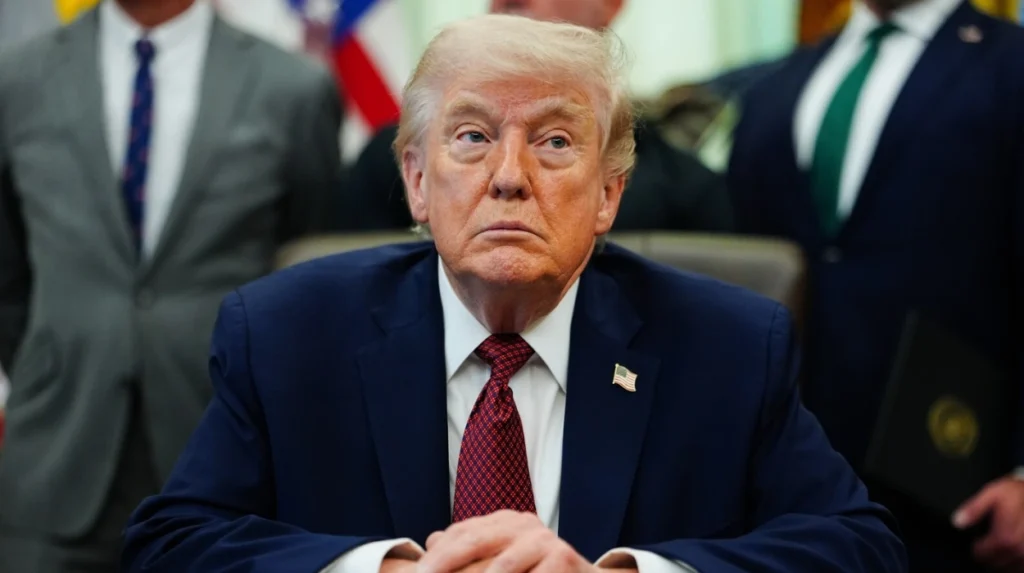
The intersection of US foreign policy and regional stability in the Middle East has come to a critical inflection point as President Donald Trump indicates that the time for a new ceasefire with Iran may be approaching.
Since the start of April 2026, the implemented ceasefire has avoided an escalation of conflict at an immediate high level of large scale military hostilities. The White House has characterized this pause as a conditional pause and not as a solution.
Sixteen months into the ceasefire, as of May 1, 2026, the US military forces that were put in place to implement the campaign of reaching all military objectives are still in place and ready for operational resumption should the United States request that Iran meet specific military demands associated with the Strait of Hormuz and nuclear restrictions put forth in any agreement reached between the US and Iran.
The Fragile Architecture of the Iran Truce
The ceasefire in mid-April 2026, brokered through Pakistani mediation, was described by the Trump administration primarily as an opportunity for diplomacy, but the tensions that led to the 2026 Iran War are still present, and both parties are using the ceasefire to reinforce their positions.
President Trump stated through a direct message on Truth Social that the U.S. had temporarily halted aerial bombardments at that time because it felt Iran’s proposal could serve as a “workable basis” for a larger agreement.
Subsequently, there has developed a stalemate in which the U.S. is continuing to enforce its naval blockade against Iran in an attempt at compliance, while also labeling Iran’s ongoing U.S. pressure as a violation of sovereignty, thus failing in its diplomatic effort.
Coercive Diplomacy and the Threat of Escalation
Central to this standoff is the administration’s reliance on coercive diplomacy as a pillar of its Middle East strategy. Throughout April, the White House consistently tied the continuation of the ceasefire to immediate, verifiable concessions from Tehran.
President Trump has issued direct warnings that the lack of a permanent deal would inevitably lead to a resumption of force, stating in a pointed social media post that
“if for any reason this doesn’t occur… then the ‘Shootin’ Starts'”.
This rhetoric is emblematic of a broader foreign policy shift under the current administration, which prioritizes the direct exertion of military and economic pressure over the traditional multi-lateral frameworks that previously governed regional engagements.
The Expanding Friction with European Allies
The geopolitical implications of this strategy extend well beyond the Middle East, reaching into the heart of the Transatlantic alliance. The administration’s aggressive approach toward Iran has sparked notable dissent within NATO, particularly from German leadership.
Following critical remarks from German Chancellor Friedrich Merz regarding the U.S. conduct in the Middle East, President Trump threatened a significant reduction in the number of U.S. troops stationed in Germany. By linking the U.S. security footprint in Europe to the willingness of allies to align with his Iran policy, the President is effectively utilizing military presence as a tool of political discipline, creating profound uncertainty regarding the future of European security cohesion.
Structural Implications for Regional Power
For thinktanks and policy observers, the current trajectory raises critical questions regarding the long-term effectiveness of unilateral U.S. action. By failing to secure a permanent political settlement, the administration risks being trapped in a cycle of intermittent conflict that provides only temporary tactical victories at the cost of long-term regional stability.
The ongoing stalemate has led to broader market instability, including energy sector volatility and threats from regional actors, such as the United Arab Emirates, to withdraw from major energy agreements like OPEC. This underscores the danger of a foreign policy approach that isolates the U.S. from its traditional partners while simultaneously hardening the resolve of its adversaries.
The Path Toward Potential Conflict Resumption
As the expiration of the current ceasefire cycle approaches, the window for meaningful diplomacy appears to be narrowing. The administration has explicitly stated that it is prepared to move beyond the current impasse if its demands remain unmet, with military leadership kept on alert for the deployment of “short, powerful” strike options.
This environment of constant brinkmanship leaves little room for de-escalation, as both Washington and Tehran appear locked in a signaling game where any perceived concession is viewed as a vulnerability. As the U.S. continues to demand unconditional compliance, the prospect of a renewed, and potentially more destructive, phase of the conflict remains a primary risk factor for the coming months.