The Trump Iran Ceasefire Extension is the height of a spiral of escalation in 2015. The build-up was in response to the proxy attacks by Iran, which the US responded to and undermined the conventional military of Iran. Exhaustion, economic interests and the international community interested in energy security led to an uneasy ceasefire by the end of 2025.
However, during the ceasefire, there were still strategic tensions, especially in the Strait of Hormuz. This was the great battle ground on which the US and Iran battled using naval and economic measures to sway without necessarily going to war. Thus, the decision to announce an extension to the contract in April 2026 must be considered an extension of this process and not a decisive step.
2025 Escalation And Military balancing.
In 2015 the US still conducted air and naval operations to restrict the capabilities of Iran. This further constrained the Iranian abilities, but not to the extent that it could be said that the threat is nullified. The commentators reported that Iran had retained most of its missile and drone stocks and retained its deterrent capability.
This led to a draw in which neither party was able to gain a military advantage. This was enshrined in the following ceasefire which was more of a break during the war.
Strait of Hormuz As Strategic Center.
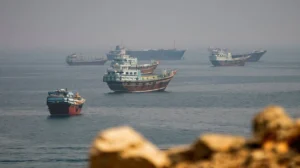
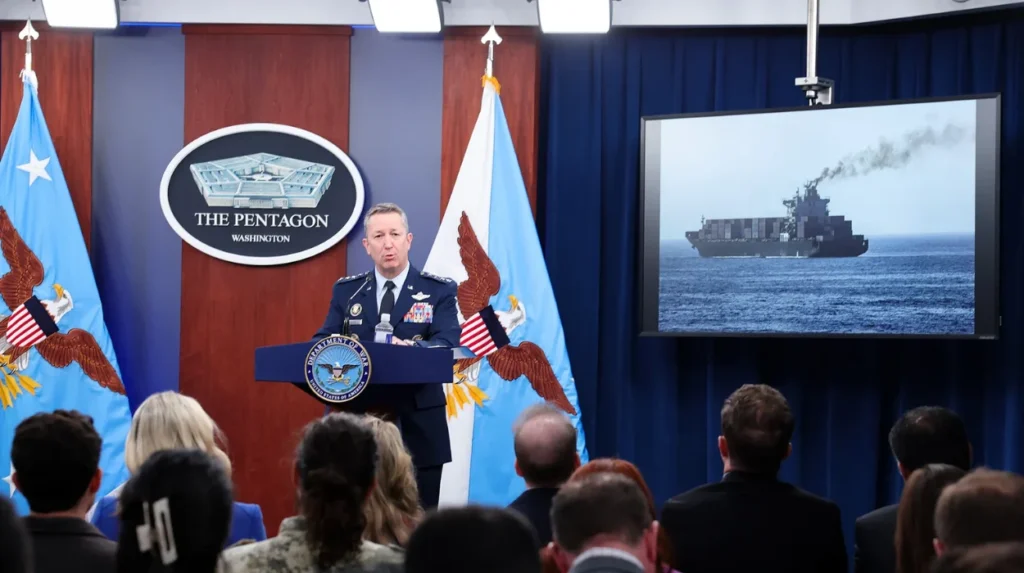
An important part of the situation was the Strait of Hormuz. The maritime patrols of the U.S. and the seizure and fees of the ships by the Iranians turned the strait into a battlefield economically.
The international consequences were already experienced in late 2015, as global oil prices were on the rise because of the impacts of shipping delays. This is the same tactic that is being played out by the ceasefire extension but the strait is a bargaining chip.
Extension Announcement And Immediate Diplomatic Context.
This announcement of April 2026 is a shift in the U.S. approach, as President Donald Trump has shifted his hawkish approach to accepting an open-ended extension of the ceasefire. He presented it as a chance to allow Iran to come up with a unified proposal, which he is open to negotiation although he remains sceptical.
This reversal is in alignment with the international and domestic interests of the U.S. The action does not lift sanctions or troops but it does create a possibility of negotiating on the terms of the U.S.
Change In the U.S. Standing.
The decision to extend the ceasefire follows a reluctance to extend it to continue putting pressure on Iran. The following flip-flop indicates a recognition of the fact that running up may be too expensive without some returns.
A diplomatic hiatus has allowed the US to hold ground, and at the same time reduce the possibility of escalation. The ongoing diplomatic process exemplifies the challenges of coercive diplomacy in a crucial geopolitical area.
Inter-Iranian Political Division.
Revelations of opposing groups in the Iranian leadership have also made negotiations difficult. Lack of a clear negotiator has made negotiations difficult with various sides of the regime pushing different interests.
According to analysts, such divisions may be an asset or a liability during negotiations. It renders collective bargaining less likely, but also possibly creates points of vulnerability to external forces on internal disparities, which influence negotiations.
Implications of Trump Iran Ceasefire Extension Strategically.
The extension keeps the conflict at the sleeping stage. The relationship is still viewed in terms of relative gains by both sides and thus sustaining a status quo of stability and conflict.
The ceasefire is a risk-avoidance strategy in terms of strategy. The pressure will be included in the mix because of the continued naval presence and sanctions.
Economic Pressure And Energy Market Impact.
The behaviour of both parties is dependent on economic considerations. Iran will have problems with storage and export whereas the US will have problems with the energy market on a global scale.
The extension keeps these dynamics and provides incentives to de-escalation and negotiations. However, the ongoing development of unrests may bring an altered reality, which may eventually affect international trade and investment.
War Position And Distribution Of Resources.
It is costly to keep the Gulf well armed. It is expensive to the US, and has to be weighed against other commitments, such as in the Indo-Pacific.
Meanwhile the weakened, yet not lost, capabilities of Iran imply that war is perilous. The extension of ceasefire is therefore an acknowledgement of the pointlessness of military force in achieving political goals.
Local Aftershocks in Middle East alliances.
The Trump Iran Ceasefire Extension has been a major factor to the ripple effects on the Middle East where diplomatic and security relations and strategies have been affected. As an example, there has been the need by the Gulf states to adapt to uncertainty in their security planning.
These changes are not only reactive but also a part of a wider change in the geopolitics of the region, where alliances are more adaptable in response to threats.
Security Calculations of the Gulf States.
Saudi Arabia and the United Arab Emirates are some of the countries that have responded to the conflict by becoming more militarily prepared and diplomatically to minimize the vulnerability. Possible vulnerabilities have been uncovered by the existing missile and drone threats.
The extended ceasefire is not the answer. In consequence, states in the region, are left in a strategic dilemma, to weigh between US engagement and domestic security policy.
Wider Regional Patterns of Instability.
Other regional flashpoints, including maritime disputes in neighbouring seas, have also experienced their spillovers in the conflict. These wars add to the problem of stability, and conflicts can escalate into war.
The violence has ceased with the ceasefire, but little is done in terms of tackling these sources of instability, and this is a false stability.
Diplomatic Routes And Limits In The Future.
Therefore, a way to long-term stability is obscure, as there is a clash of interests and mistrust. There have been other efforts in the past, which have been marred with maximalist demands hence incrementalism might be paramount.
The extension provides an opportunity of an incremental approach, but not an assurance. The success of the negotiations will be determined by the parties considering both short- and long-term concerns.
United States Strategic Priorities
For the United States, the extension aligns with a broader effort to manage multiple global commitments without overextension. Balancing Middle Eastern engagements with other strategic theaters remains a central concern.
The decision to extend the ceasefire reflects an attempt to maintain influence while reducing immediate risks, illustrating the complexities of contemporary U.S. foreign policy.
The Trump Iran Ceasefire Extension ultimately represents a moment suspended between conflict and compromise, where both sides test the limits of endurance and negotiation without committing fully to either path, leaving open the possibility that what appears as a pause today may either solidify into a fragile equilibrium or unravel into renewed confrontation shaped by the same unresolved tensions that made the extension necessary in the first place.