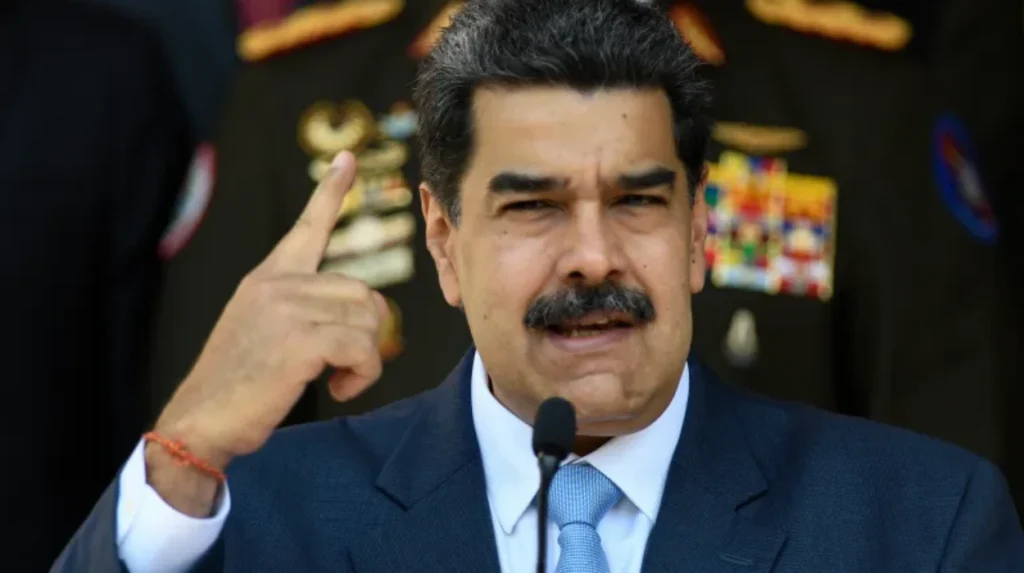
The court case involving the defense funding of Nicolás Maduro in the United States, has proved to be an exceptionally rare instance of the sanctions policy hitting upon constitutional criminal procedure head-on.
The key one is the right to counsel, a safeguarded right under the Sixth Amendment, which is now put to the test against the practicality of economic sanctions against Venezuela. The 2026 case in New York has revealed how the use of the instruments of foreign policy can inadvertently influence the facts of the courtroom to compel U.S. institutions to respond in real-time to maintain the procedural fairness without compromising the enforcement of sanctions.
Sanctions enforcement and courtroom realities
OFAC has found itself in an indirect, yet decisive role in the case as a result of the sanctions regime against Venezuela. Due to the wide-spread limitation of state funds in Venezuela, any transfer that might be used to pay Maduro his legal bills must be specially authorized. This provided a scenario whereby administrative licensing rulings had the effect of deciding whether a foreign government had the ability to finance its own defense in a criminal trial in the U.S.
The issuance and the quick revocation of a temporary license in the first place demonstrated the lack of stability in using tools of sanctions in a judicial setting. Defense attorneys held that this uncertainty jeopardized the continuity of the process of representation, and prosecutors argued that the need to comply with sanctions and to ensure national security were appropriate to impose very strict financial regulations. The outcome was a procedural space in which access to legal funding was not just based on court regulations but on executive-branch licensing discretion.
Judicial intervention in procedural fairness
As the fight intensified, Judge Alvin Hellerstein expressed some concerns as to whether the imposition of sanctions was having an unintentional effect on the fairness of the trial process. Although he did not raise any issue about the validity of the sanctions policy per se, the court was concerned that limiting the state-funded legal representation may compromise the capacity of the defendant to put forward a sufficient defense.
This judicial review failed to destroy the enforcement of sanctions but brought about a point of correctional pressure. The ruling by the court practically compelled the executive branch to review its licensing structure to determine its constitutional expectations in ongoing prosecutions. The question was not so much of foreign policy as it was of making sure that the sanctions do not tamper with the basic rights of a trial.
Reconciling sanctions with constitutional protections
In reaction to court and defense pressure, U.S. officials changed the OFAC instructions to permit restricted Venezuelan government funding to be spent on legal defense. This was a modification that saved the general sanctions regime and incorporated a controlled exception that was to meet constitutional demands.
The new framework was developed in the form of a measured response: sanctions will be fully operational, but their implementation will be divided to ensure that they do not directly affect the right to counsel. The release of funds is also strictly regulated and there are conditions whereby blocked funds cannot be accessed at all, yet there are legal avenues that enable a minimum amount of money to be used in the process of legal representation. This trade-off explains the way the policy of sanctions needs to change occasionally when it conflicts with domestic legal requirements.
Defining “untainted” funding in practice
One of the key points in the case is whether the financing of defense should be devoid of any restrictions concerning sanctions to be considered a constitutional right. Defense lawyers have underscored that the right to have an attorney is not a right that must be subject to politically filtered financial avenues and more so when the accused does not have independent means.
Even though a broad-based doctrine of untainted funds has not been completely approved by courts, the debate represents an increased understanding that sanctions will indirectly influence legal results. The Maduro case illustrates how the procedures which are intended to be used as financial constraints to create leverage in foreign-policy can have unintended procedural impacts within domestic courts.
Institutional tensions between branches of government
A structural tension between the executive power over foreign policy and judicial accountability to provide fair trials is brought out in the case. The implementation of sanctions takes place in the Treasury Department and the State Department, and the constitutional rights are protected in the criminal proceedings by federal courts. In the event of overlapping of these roles as in the case, friction is inevitable.
In 2025-related precedents that featured sanctions-related prosecutions, the courts started indicating that they were willing to consider the possibility that executive actions have an impact on due process. The Maduro case accelerated this tendency indicating that the enforcement of sanctions could not work completely without constitutional review when the case was active in the litigation process.
National security framing and legal limits
Prosecutors always put the process of imposing sanctions in a larger national security approach that could restrict the resources of foreign political regimes that committed major crimes. In this view, limiting the financial flows is not a punitive measure, but a preventive measure.
Nevertheless, the judiciary was concerned only with a more limited scope: whether this kind of restriction undermines the possibility of the defendant to be represented properly. This deviation is an example of how difficult it can be to apply foreign-policy tools where there are procedural rights that are strictly observed. The tension created is indicative of an even larger institutional issue concerning the extent to which the consideration of national security can be extended into the courtroom process.
Broader implications for sanctions-linked litigation
The case of Maduro is an indication that hybrid legal conflicts in which sanctions regimes collide with constitutional guarantees are on the increase. With the growth of sanctions worldwide among states, individuals and financial networks, the occurrence of similar conflicts is also expected to grow.
There is a risk that courts will be called upon to decide whether enforcement procedures are inadvertently biased by unfair procedures. It is no longer the question of whether sanctions are legally permissible, but their application has collateral effects that disrupt the fundamental rights, including the right to counsel.
Incremental adaptation over structural reform
Rather than triggering sweeping reform, the current resolution suggests that the U.S. system will continue adapting through targeted licensing adjustments and case-specific judicial oversight. OFAC retains broad authority, but must now consider constitutional implications when its decisions intersect with active prosecutions.
This incremental approach preserves the integrity of sanctions policy while acknowledging its limits inside domestic legal systems. It also places courts in a reactive role, addressing constitutional concerns as they arise rather than through preemptive structural redesign.
The Maduro funding dispute ultimately illustrates how foreign-policy instruments can extend into unexpected areas of domestic law, reshaping procedural dynamics inside the courtroom. As sanctions regimes grow more complex and interconnected with global enforcement strategies, the interaction between economic restrictions and constitutional protections is likely to become more frequent. What remains unresolved is whether this evolving balance will stabilize into a predictable framework or continue producing case-by-case adjustments that redefine the boundaries of the right to counsel under conditions of sustained geopolitical pressure.