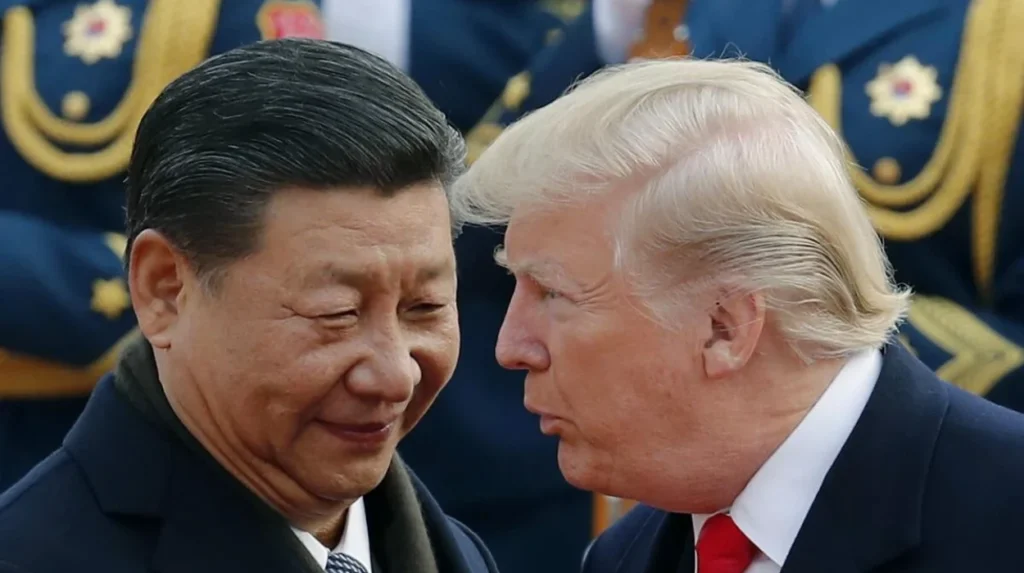
Tariff escalation with negotiated pauses is a systematic approach that incorporates pressure and de-escalation. The Donald Trump policy of 2025 policy direction saw an abrupt increase in tariffs on Chinese imports in a few months to the point of approaching the conditions of the trade embargo. But these actions were always accompanied by provisional ceasefires, such as the November 2025 agreement on the suspension that prevented further build-up.
This two-pronged strategy was aired as an attempt to gain concession and retain leverage in economics. The authorities surrounding the negotiations termed the tariffs as a forcing mechanism, which would bring China to the table without permanently cutting economic links. The swinging between confrontation and compromise, however, formed a pattern in which structural adjustments took time to come through, which enabled each side to recalibrate without fully settling the underlying tensions.
Escalation as Leverage
The tariffs that had soared well beyond the baseline to levels of over 100 percent in a short time, were an indication of a willingness to bear internal economic resources in the name of geopolitical benefit. By mid 2025, the trade between the two economies had reduced drastically, exports had reduced and supply chains were disintegrated. This contraction was contextualized as a needed disturbance in order to decrease reliance on Chinese production.
Simultaneously, the escalation stage showed boundaries. The domestic industries that depended on intermediate goods were experiencing increased costs, and the international markets responded by diverting the supply chains to third countries. Its intended shock effect was therefore spread over a wider network as opposed to focusing on China alone.
The Role of Negotiated Pauses
Introduction of tariff truces enabled both governments to stabilize markets without compromising strategic positions. Discussions in 2025 in several cities showed a uniform pattern: a surge would be succeeded by a conversation, resulting in the creation of a temporary relief rather than a permanent solution.
These pauses were also political in nature. They allowed both sides of leadership to boast of progress and keep domestic narratives of strength. However, due to the cyclical character of the intensification and de-escalation there was a setting in which the mark of uncertainty was the characteristic of bilateral trade relations.
Economic Pressure and Adaptive Resilience
The economic confrontation has created quantifiable pressure on both economies yet the asymmetry of the strain distribution has indicated significant asymmetries. As the United States shouldered more of the consumer expenses and supply chain disruptions, China reacted with focused countermeasures, which focused on resilience over instant retaliation efforts.
Supply Chain Fragmentation
Tariffs hastened the process of diversification of supply chains, where production was moved to Southeast Asia and other emerging markets. This shift made them less directly dependent on China, although not completely. Rather, it caused more complexity, cost, and logistical problems to multinational companies.
China responded by strengthening its position in the regional production networks. Instead of losing its role it re-positioned as a core node in a more networked system, still having a role in major manufacturing processes.
Resource Leverage and Export Controls
Among the measures Beijing took in response was the exportation of major materials, especially the rare earth elements, which are needed in high-level production. These actions showed that pressure could be applied without it turning into a complete trade blockade.
These controls were selective and this enabled China to communicate competence but at the same time leave some room to negotiate. Analysts remarked that these calculated responses would not cause total collapse in the economic relations, but would strengthen the position of China as an irreplaceable supplier in strategic areas.
Diplomatic Realignment in 2025
In addition to economic indicators, tariff policies resulted in important diplomatic implications. The extensive use of tariffs on various trading partners caused tension between the United States and its allies that left room to enable China to extend its influence.
Outreach to Regional Partners
China increased its interactions with surrounding economies, with a focus on stability and continuity of trade. In 2025, high level visits to Asia highlighted how the region could be reinforced in terms of its ties amid global uncertainty.
This was not a strictly reactive outreach. It embodied a more sustained change in the direction of regional integration, in which economic interdependence acts as a shock absorber to external pressure. With the reinforcement of such relationships, China established itself as a stable partner against the uncertainty of tariff policies.
Managing Relations with Europe
Contact with the European states was more wary. As the dialogue continued with key economies, China did not overcommit to it because it was clear that there was a complicated political landscape in Europe.
This was exemplified by the few results of big summits over 2025. There were frequent agreements that were restricted to certain regions like climate cooperation, and the bigger questions of trade remained unrestricted. This selective interaction enabled China to keep things open without facing open conflict.
The Illusion of Bilateral Control
The focus on bilateral agreements as the foundation of the tariff policy implied the shift towards multilateral regimes. But this transition presented new challenges making it difficult to continue to have a consistent influence.
Fragmentation of Alliances
The United States shifted the course of alliances by focusing on individual trade deals. Couples had to bargain individually, which resulted in different outcomes and less unity in concerted economic policies.
This disintegration brought about possibilities for China to relate to countries on its own terms. As the alliances were adapting to the new surroundings, Beijing could establish itself as a dependable partner in comparison to the changing priorities of bilateral talks.
Strategic Patience in Beijing
The reaction of China gave more importance to the long term positioning and not short term profits. Domestic policies aimed at enhancing domestic demand and technological potential, decreasing the exposure to external shocks.
The rhetoric of leadership was always about self reliance and the economic issues were simply a segment of a longer transition. This strategy enabled China to absorb the short term shocks whilst making a consistent path towards strategic goals.
Power Shifts and Global Perception
The economic pressure and maneuvering of policies and diplomacy had a compounding effect on a perception of power worldwide. In early 2026, surveys and policy analysis showed a trend in which there was increased perception of China as a resilient and adaptive actor in the international system.
Influence Beyond Trade
The way China managed to maneuver the tariff pressure without any serious internal instability made it more credible to the developing economies. Efforts to develop infrastructure and local integration started receiving new interest as substitutes to the old Western led models.
Meanwhile, the United States had questions on long term sustainability of its approach. Although tariffs proved effective in exerting short-term leverage, their extended impact on alliances and world markets brought about some uncertainties that went beyond bilateral ties.
The Emerging Balance of Power
As the cycle of escalation and truce continues, the broader implications of tariff policies remain unresolved. The interplay between economic measures and diplomatic strategy has reshaped the landscape of global competition, creating new dynamics that extend beyond traditional trade disputes.
The evolving balance suggests that power is no longer defined solely by immediate economic leverage but by the ability to sustain influence across multiple domains. The events of 2025 demonstrate that while tariffs can disrupt, they also create openings for adaptation and realignment. The question that now lingers is whether future phases of this rivalry will be shaped by continued cycles of pressure and pause, or by a deeper shift toward strategies that redefine how influence is exercised in a changing global order.