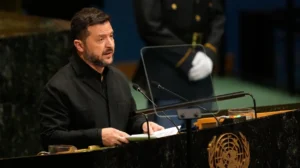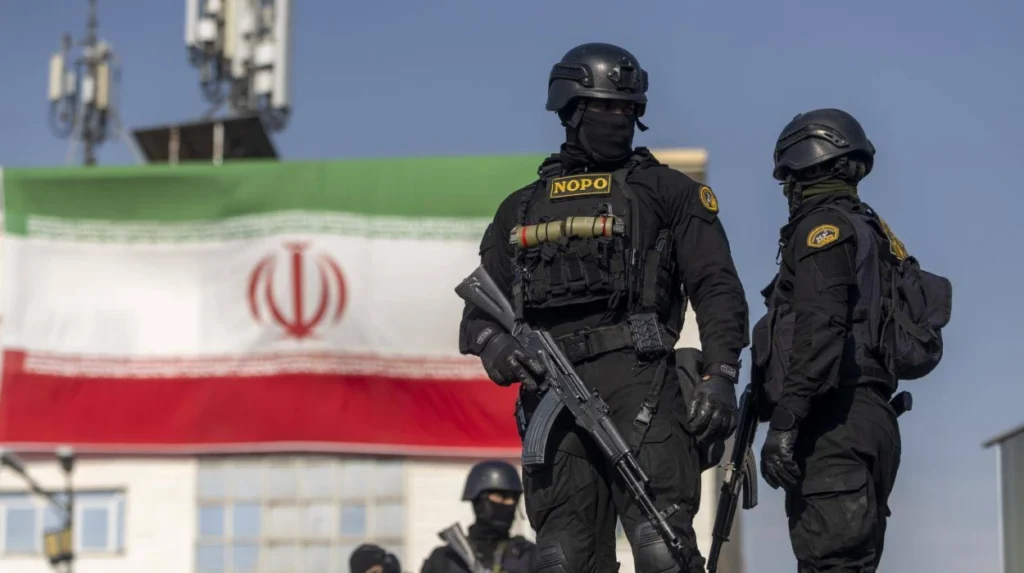
The strategic environment facing the United States has shifted markedly since 2024, evolving into what many defense planners increasingly describe as a dual-theater challenge. One front remains anchored in Eastern Europe around the war in Ukraine, while another centers on Iran’s regional posture and its confrontation with Israel and the United States across the Middle East. By 2025, policy discussions in Washington and European capitals began framing these crises not as isolated events but as interconnected elements of a broader geopolitical contest involving Russia, China, and Western alliances.
This evolving linkage is less about formal coordination between the conflicts and more about how U.S. resources, diplomatic bandwidth, and political priorities are distributed. Officials across NATO acknowledged in late 2025 that decisions regarding military deployments or sanctions policy in the Persian Gulf were increasingly evaluated alongside their potential effects on Ukraine. A European defense official summarized the dynamic succinctly when noting that the strategic calculus now requires policymakers to consider how developments involving Iran could influence the pace and scale of assistance flowing to Kyiv.
Mechanisms linking the two theaters
At the operational level, the linkage between Iran and Ukraine emerges through the practical limits of defense resources. The U.S. and its allies maintain extensive commitments worldwide, yet the industrial base producing precision munitions, air-defense interceptors, and surveillance systems continues to face constraints that became particularly evident throughout 2025. When additional systems are directed toward Middle Eastern contingencies, the effects ripple across planning cycles for Ukraine.
Military analysts observing procurement patterns noted that overlapping demand for advanced air-defense systems highlighted the issue clearly. In several NATO consultations during 2025, European officials privately warned that urgent requirements tied to tensions involving Iran had slowed the anticipated delivery timelines of certain Western systems pledged to Ukraine. Such trade-offs do not signal a withdrawal of support but demonstrate the reality of finite capacity within the defense supply chain.
Alliance cohesion under strain
Another dimension of the linkage lies in alliance management. NATO’s unity around Ukraine has remained strong since the beginning of the conflict, but Middle Eastern escalation introduces a new layer of complexity. European states find themselves balancing expectations to support Ukraine while also contributing intelligence, logistics, or naval assets to stability operations in the Middle East.
Throughout 2025, policymakers across Brussels, Paris, and Berlin expressed concern that sustained crises in two regions could test the political endurance of European electorates. Governments must simultaneously justify continued support for Ukraine and address rising security costs tied to maritime routes and regional deterrence around Iran. The result is a more delicate alliance equation in which decisions in one theater resonate across the broader coalition.
Strategic messaging and deterrence
The linkage between Iran and Ukraine also influences how deterrence messages are interpreted by rivals. Russia closely observes U.S. and NATO responses to Middle Eastern developments, assessing whether Western focus may be diluted. China similarly monitors the situation as it evaluates long-term power balances and diplomatic opportunities.
By late 2025, analysts within several policy institutions suggested that the perception of divided attention could alter strategic signaling. If adversaries interpret the United States as simultaneously stretched across two major security challenges, they may test boundaries in ways that reshape crisis management dynamics. This perception factor has become part of the broader analytical framework guiding U.S. strategic planning.
Energy markets and geopolitical feedback loops
Oil volatility and strategic effects
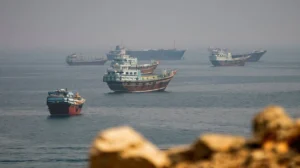
Energy markets form another channel through which the Iran-Ukraine connection becomes evident. Periods of heightened tension in the Persian Gulf tend to disrupt shipping confidence and influence global oil prices. During episodes of instability in 2025, insurance costs for tankers increased, and some shipping routes were temporarily adjusted, contributing to market volatility.
Higher energy prices have broader geopolitical consequences, particularly for Russia. Despite sanctions pressure linked to the Ukraine conflict, Moscow continues to derive significant revenue from energy exports. Analysts across several financial institutions observed in 2025 that prolonged uncertainty around Iran-related tensions could indirectly stabilize Russian fiscal inflows, complicating Western efforts to constrain the Kremlin’s war economy.
Strategic supply calculations
For Washington and its allies, energy stability remains intertwined with security planning. When Middle Eastern tensions intensify, policymakers must account for the economic implications not only domestically but also across Europe. European economies remain sensitive to shifts in energy costs, which can affect public support for continued military assistance to Ukraine.
This dynamic underscores how developments involving Iran can produce secondary effects that influence the resilience of the coalition supporting Kyiv. The strategic calculus therefore extends beyond battlefield considerations to include economic stability and global supply chains.
European security institutions adapting to dual pressure
Expanding defense planning horizons
European security institutions have gradually adapted to the emerging two-front reality. Defense ministries across the continent spent much of 2025 revising strategic planning documents to account for the possibility that crises in Eastern Europe and the Middle East may persist simultaneously for years rather than months.
These updates emphasize logistics capacity, intelligence integration, and industrial production resilience. European officials increasingly argue that long-term security requires strengthening domestic manufacturing and improving coordination among NATO members. The aim is to ensure that assistance to Ukraine remains sustainable even if Middle Eastern tensions demand additional resources.
Political consensus under review
Domestic political dynamics within Europe have also evolved as governments attempt to maintain consensus on security priorities. Parliamentary debates in several countries during 2025 reflected concerns that dual-front commitments could place growing pressure on national budgets. While support for Ukraine remains strong, policymakers recognize that economic stability and public confidence must be maintained for sustained engagement.
As a result, European leaders have emphasized burden-sharing and deeper integration of defense industries. These initiatives are designed to ensure that Europe can continue supporting Ukraine even as regional stability missions linked to Iran require attention.
Diplomacy and great-power maneuvering
The diplomatic arena reveals another layer of interaction between the two theaters. Russia has used Middle Eastern developments to argue in international forums that Western policy lacks focus, while China has positioned itself as a mediator in regional disputes. Throughout 2025, diplomats noted subtle shifts in negotiation dynamics at global institutions where discussions about Ukraine sometimes intersected with debates on Middle Eastern security.
American officials, meanwhile, have attempted to maintain a clear narrative emphasizing the distinct legal and strategic contexts of the two crises. Nevertheless, the simultaneous management of both challenges inevitably shapes how allies and competitors interpret U.S. priorities. In diplomatic terms, the interconnected perception of Iran and Ukraine has become part of the evolving geopolitical narrative.
Strategic discipline and long-term implications
From a long-term perspective, the most significant issue may not be the existence of two concurrent crises but how effectively policymakers manage the relationship between them. Defense planners increasingly emphasize the importance of clearly defined objectives in each theater. When policy goals become overly expansive, the risk of strategic diffusion grows.
During 2025 discussions within U.S. policy circles frequently highlighted the need for disciplined prioritization. Analysts argued that maintaining credibility in Ukraine while managing tensions involving Iran requires clarity about limits, timelines, and expected outcomes. Without such structure, overlapping crises could gradually reshape resource allocation in unpredictable ways.
What emerges from this evolving landscape is a broader transformation in how American power is exercised globally. The United States now operates within a network of interconnected security challenges rather than discrete regional conflicts. Decisions made in the Middle East reverberate through Europe, just as developments in Ukraine influence deterrence calculations elsewhere. As policymakers continue adjusting to this reality, the interplay between these theaters will likely remain one of the defining features of international security discussions through the latter half of the decade.