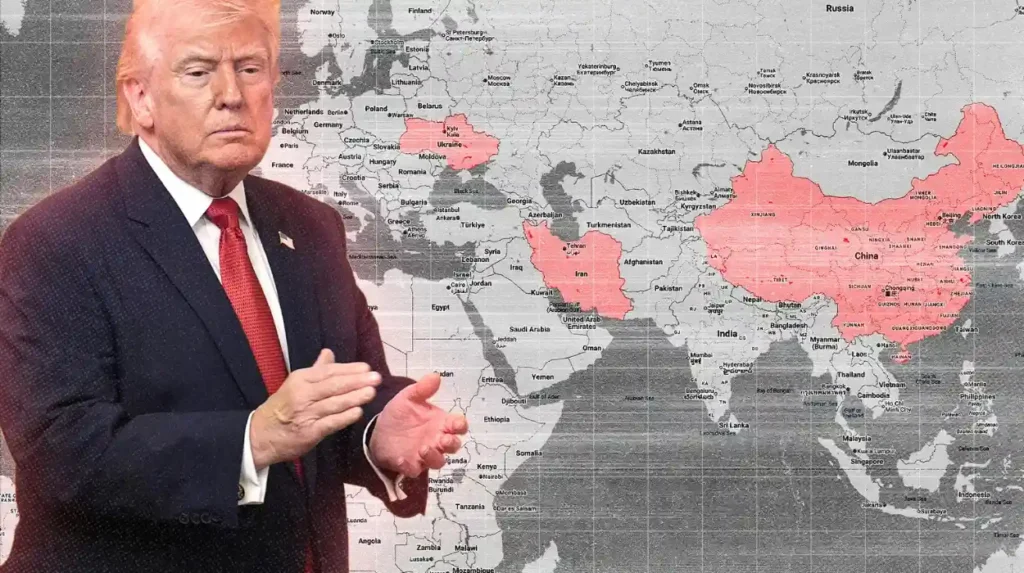
The US-led war against Iran, was initially framed as a time-limited operation aimed at neutralizing Iran’s missile and proxy networks. Within weeks, however, the campaign has revealed broader implications for American foreign policy, highlighting the ripple effects that one high-intensity conflict can produce across multiple theaters. The war’s rapid escalation has diverted political attention, military resources, and diplomatic bandwidth away from Kyiv, undermining the coherence of the Trump administration’s “America First” agenda, which prioritized national security and economic interests while pledging to reduce open-ended engagements abroad.
Former National Security Council analysts have remarked that managing simultaneous conflicts in Tehran and Eastern Europe strains both intelligence and command structures, suggesting that Washington’s attempt to juggle dual crises exposes structural vulnerabilities in decision-making. “The administration is facing a classic strategic overextension problem,” one retired senior officer noted in March 2026, pointing to the concentration of military assets in the Gulf as a driver of operational bottlenecks elsewhere.
Strategic implications for global credibility
The Iran war’s immediate operational demands: air deployments, logistics hubs, and surveillance operations have not only reallocated U.S. forces but also signaled to allies and adversaries alike that American attention may be divided. European partners in NATO, observing the U.S. pivot, have privately expressed concern that Washington’s capacity to provide robust backing to Kyiv is diminishing, potentially emboldening Russia to consolidate gains in contested eastern territories. This dynamic underscores the fragility of perceived U.S. reliability when simultaneous conflicts compete for finite resources.
Domestic political reverberations
Domestically, the conflict has tested the administration’s narrative of restraint. With oil prices spiking due to Iranian retaliation against shipping in the Strait of Hormuz, inflationary pressures have compounded public scrutiny over foreign engagements. Congressional observers note that the dual pressures of energy-market instability and overseas military commitments have intensified debates over fiscal and strategic priorities, creating political friction for a president who campaigned on limiting American exposure abroad.
Ukraine: the mediating promise that slips away
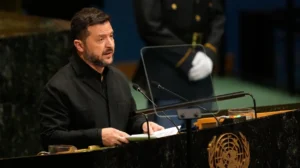
Before the outbreak of the Iran war, President Trump positioned himself as a potential U.S.-led mediator in Ukraine, advocating for a negotiated settlement and framing American aid as conditional and strategically targeted. The administration argued that Washington could facilitate dialogue between Kyiv and Moscow, potentially reducing the risk of protracted conflict while controlling financial exposure.
The sudden Iran escalation, however, undercut this mediating effort. European allies reported that senior U.S. diplomats were increasingly preoccupied with Gulf operations, producing inconsistent messaging on security guarantees for Ukraine. Kyiv observers noted that U.S. commitment signals appeared fragmented, creating openings for Russian forces to exploit perceived American distraction. Analysts now argue that Trump’s credibility as a broker in Eastern Europe has been compromised by the simultaneous management of two high-stakes theaters.
Operational constraints on support
The diversion of assets to the Middle East has constrained training, intelligence-sharing, and logistical support for Ukraine. Contractors and specialized units previously dedicated to European operations were reassigned to Gulf deployments, reducing capacity for rapid response in Eastern Europe. European defense officials, speaking on background in March 2026, warned that this reallocation risks weakening NATO’s integrated planning mechanisms and could exacerbate operational gaps on the Eastern front.
Diplomatic bandwidth and signaling
The war’s political consequences extend beyond military assets. U.S. diplomats report having less capacity to engage directly with European partners on nuanced policy issues, complicating efforts to sustain a coherent strategy toward Kyiv. Analysts caution that in high-stakes negotiations, inconsistent signaling can be interpreted by adversaries as strategic indecision, eroding the administration’s leverage and amplifying risks for regional allies.
Military and economic ripple effects
The Gulf campaign has placed unprecedented demand on the U.S. military. Deployments include the largest concentration of U.S. air and naval assets in the region since the 2003 Iraq war, straining logistics, maintenance cycles, and personnel rotations. Strategic planners caution that these operational pressures risk diminishing responsiveness in other theaters, including Eastern Europe and the Indo-Pacific.
Economically, Iranian disruptions to oil exports have driven energy-market volatility not seen in decades. The International Energy Agency projected potential shortfalls of up to 8 million barrels per day at peak conflict, intensifying inflationary pressures in Europe and the United States. These developments complicate Washington’s ability to fund international initiatives and maintain foreign-aid commitments, including ongoing support for Ukraine’s defense.
Implications for transatlantic cooperation
European governments are recalibrating expectations for U.S. engagement. NATO officials note that the combination of Middle Eastern escalation and the ongoing Ukraine war could stretch U.S. commitments thinner than anticipated. The transatlantic alliance may now be forced to assume greater operational responsibility, raising questions about equitable burden-sharing and the limits of American unilateral influence.
Industrial and logistical stress
The dual deployment has highlighted constraints within the U.S. defense-industrial base. Analysts warn that simultaneous high-tempo operations could delay maintenance, production, and supply-chain responsiveness, affecting long-term readiness across multiple theaters. The challenge of sustaining a dual-front posture illustrates the practical limits of operational flexibility even for a globally capable military.
China and the Indo-Pacific distraction
While the Iran war has not drawn Chinese forces directly into combat, Beijing benefits strategically from U.S. attention being partially diverted. Analysts argue that Washington’s focus on Tehran has provided China with a window to test U.S. resolve in the Indo-Pacific, including in the South China Sea and near Taiwan.
Senior strategists indicate that U.S. Pacific Command operations must now compete for resources, political bandwidth, and planning capacity with Gulf-centric operations. The dispersion of focus has implications for deterrence, as adversaries perceive a temporary softening in the consistency of U.S. strategic messaging, potentially emboldening regional assertiveness.
Reprioritization challenges
Commanders report that operational planning for the Indo-Pacific is now constrained by simultaneous demands in the Gulf. Resource allocation, intelligence-sharing, and rapid-deployment options are all affected, forcing planners to make difficult trade-offs that risk delaying response times to emergent contingencies in Asia.
Strategic perception and signaling
From a geopolitical perspective, the impression of a divided U.S. focus is significant. Analysts warn that credibility is as much about perception as capability; if rivals believe American attention is overstretched, deterrence may be weakened, complicating the administration’s ability to shape outcomes without escalation.
The unraveling of “America First” coherence
Trump’s “America First” doctrine promised to focus on core national interests while reducing extraneous military entanglements. Yet the Iran war has demonstrated the difficulty of simultaneously limiting overseas engagements while confronting multiple crises that demand high-intensity intervention. The simultaneous management of Iran, Ukraine, and Indo-Pacific priorities has exposed the tension between campaign promises and operational reality.
Critics argue that this dual-front strain risks entrenching precisely the type of global overreach the doctrine was meant to prevent. Proponents maintain that the Iran operation is aligned with U.S. strategic interests and can be managed alongside other commitments. Nevertheless, the ongoing complications illustrate the practical challenges of enforcing policy coherence under multiple pressures.
Broader questions of priority
The Iran campaign functions as a stress test for defining strategic priorities. Its cascading effects on Ukraine, the Indo-Pacific, and domestic energy stability underscore how one conflict can recalibrate attention, resources, and influence in ways that fundamentally reshape foreign-policy execution.
Legacy implications
As the war progresses, its impact on the administration’s broader agenda will likely shape perceptions of Trump’s foreign-policy legacy. Beyond battlefield outcomes, the campaign may leave enduring questions about the limits of simultaneous engagement, the effectiveness of dual-theater management, and the credibility of U.S. leadership when stretched across multiple, high-stakes crises.
Ultimately, the unfolding events demonstrate that even a presidency emphasizing restraint and prioritization cannot insulate itself from the cascading consequences of a major military intervention. The Iran conflict is reshaping not only the Middle East but the very architecture of U.S. foreign-policy engagement, with effects that will reverberate across Europe, Asia, and Washington’s domestic political landscape for years to come.