The ongoing US–Iran conflict that began has intensified debate over how closely Washington’s strategy aligns with Israeli priorities. Reports indicate the military campaign was launched as a coordinated U.S.–Israeli operation aimed at dismantling Iran’s missile, naval, and air capabilities.
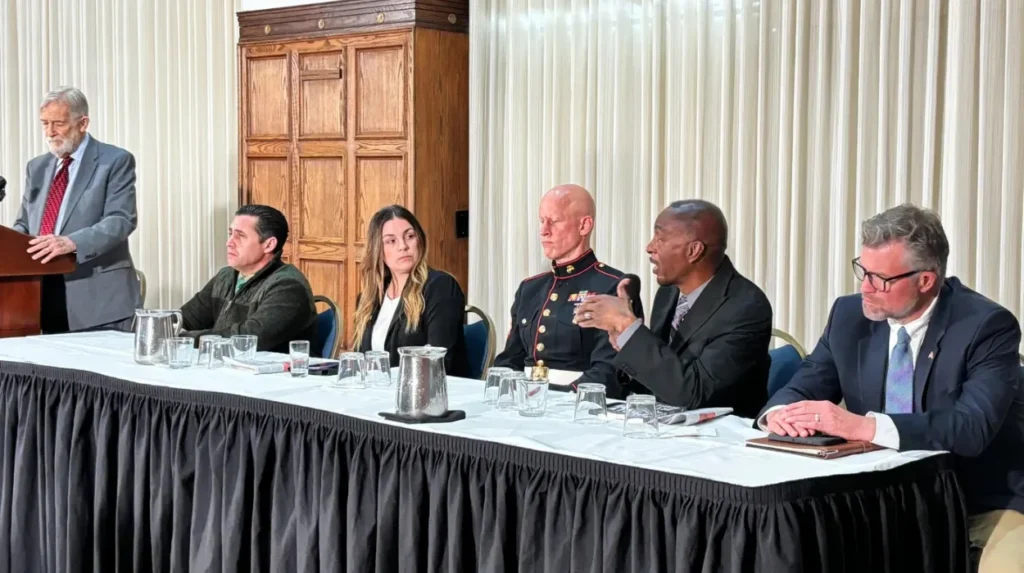
For many American veterans who previously supported overseas interventions, the war has triggered a reassessment of U.S. strategic independence. Their concerns are rooted in the belief that decades of cooperation with Israel particularly in intelligence and military planning have blurred the line between partnership and policy convergence. The perception has been amplified as casualties mount and the regional conflict expands, raising questions about whose security objectives ultimately define the mission.
Veterans voicing criticism have framed the issue in stark terms. Some argue that the strategic rationale presented to the public does not fully explain the scale of involvement, while others say the political consensus supporting Israel has narrowed debate about alternative approaches to Middle East policy. These perspectives do not necessarily oppose the alliance itself; rather, they question whether the United States retains clear autonomy when entering a major regional conflict alongside a close ally.
Why are veterans speaking out now?
The timing of the criticism reflects both the war’s intensity and a broader shift in public opinion regarding Middle East policy. Advocacy campaigns in Washington during 2025 already showed veterans and activists urging policymakers to reconsider unconditional support for Israel, arguing that American involvement had humanitarian and strategic consequences.
Those earlier demonstrations laid the groundwork for the current debate, which has grown louder as military operations continue and domestic political divisions deepen.
The emotional weight of combat experience
Veterans’ reactions carry particular weight because they come from individuals who have participated directly in previous conflicts in Iraq, Afghanistan, and other operations. Their experiences often shape a pragmatic approach to evaluating military objectives, casualties, and long-term outcomes. As a result, their criticism tends to focus less on ideology and more on the question of whether the war serves clearly defined American interests.
From alliance to apparent subordination
The U.S.–Israel alliance has long been characterized by extensive military cooperation, intelligence sharing, and diplomatic coordination. However, the scale of coordination surrounding the 2026 campaign against Iran has intensified perceptions that Israeli priorities play a central role in shaping operational decisions. Analysts note that joint planning and intelligence integration were key factors leading up to the initial strikes on Iranian targets.
Some veterans argue that this level of integration can make it difficult for the public to distinguish between U.S. and Israeli strategic goals. In their view, when military campaigns are conducted jointly, accountability and decision-making appear less transparent to citizens observing from outside the defense establishment.
Intelligence cooperation and targeting debates
A recurring theme in veteran commentary involves how intelligence flows influence battlefield decisions. Israel’s regional expertise and surveillance networks are widely recognized within U.S. defense circles. Critics, however, say that heavy reliance on partner intelligence can create the perception that American forces are executing strategies designed elsewhere.
Supporters of the alliance counter that intelligence sharing is standard practice among allies and that the United States retains final authority over its operations. Yet the debate illustrates how wartime coordination can alter public perceptions of sovereignty in military planning.
Military integration shaping strategy
Decades of joint exercises and interoperability agreements mean that American and Israeli forces often train and operate using compatible doctrines and technologies. This integration has been praised by some policymakers as a force multiplier in complex regional conflicts. At the same time, skeptics argue that such close alignment may reduce the visibility of independent U.S. strategic thinking when conflicts escalate.
Domestic influence and political dynamics
Veterans’ concerns are also linked to domestic political factors shaping foreign policy decisions. Advocacy groups, lobbying networks, and long-standing congressional support for Israel have historically played a role in shaping the parameters of U.S. Middle East strategy. Analysts note that the United States has provided consistent military aid and diplomatic backing to Israel for decades, often framing its security as closely tied to American interests.
This framework has created a bipartisan consensus that can be difficult to challenge publicly, even when conflicts raise new strategic dilemmas. Critics argue that such consensus may limit the range of policy options debated in Washington, particularly during wartime.
The role of lobbying and policy networks
Organizations advocating strong U.S.–Israel ties have long been influential in shaping congressional debates. Veterans raising concerns often cite this influence as evidence that foreign policy decisions may be shaped by domestic political incentives as much as strategic calculations. Their argument is not universally accepted, but it reflects a broader national conversation about how alliances interact with domestic policymaking.
Changing public opinion in the United States
Public attitudes toward Israel have shown signs of evolving over recent years, particularly among younger voters and segments of the electorate skeptical of prolonged military engagement abroad. Analysts have noted that shifts in public opinion could eventually influence future policy debates, even if institutional alliances remain strong in the near term.
For veterans speaking out, this shift suggests that the debate over U.S. autonomy in foreign policy may intensify as the war continues.
Supporters argue the alliance serves U.S. interests
While critics highlight concerns about dependence, many policymakers and defense experts emphasize that the U.S.–Israel alliance is built on mutual security objectives rather than subordination. They argue that both countries face common threats from Iran and regional proxy groups, making coordinated action strategically logical.
Officials defending the campaign say the objective is to reduce Iran’s military capabilities and stabilize vital global trade routes such as the Strait of Hormuz. Recent statements from U.S. leadership emphasize that operations aim to neutralize threats without committing to a prolonged ground war.
Supporters also note that alliances historically function through shared planning and resources, particularly in conflicts involving advanced weapons systems and intelligence networks. From this perspective, coordination does not diminish sovereignty but rather reflects modern coalition warfare.
Strategic logic behind joint operations
Military analysts frequently point out that no major regional campaign in the Middle East can succeed without cooperation among allies. Israel’s geographic proximity and intelligence capabilities provide operational advantages that complement American global military reach. Advocates of the alliance argue that combining these strengths enhances deterrence and reduces the risk of prolonged conflict.
Political leaders defending policy decisions
Within Washington, policymakers continue to defend the partnership as consistent with long-standing U.S. foreign policy. Some officials argue that supporting Israel also strengthens broader regional alliances and signals commitment to partners facing similar threats.
The political cost of perceived dependence
Even as policymakers defend the alliance, the perception among some veterans that the United States is acting primarily on behalf of another country carries significant political implications. Public trust in military decision-making often depends on the belief that wars serve clear national interests. When that perception weakens, support for foreign interventions can erode quickly.
The debate is already intersecting with domestic politics. Disagreements over the Iran conflict have exposed divisions among U.S. allies and within political institutions. Reports of tensions with NATO partners and questions about international support illustrate how the war is reshaping diplomatic relationships as well as domestic opinion.
For veterans who have served in earlier wars, the concern is less about the alliance itself and more about transparency in defining the objectives that justify military risk.
A deeper identity question for U.S. global strategy
The discussion sparked by veterans ultimately raises a broader question about the nature of American leadership in international alliances. Throughout modern history, the United States has relied on partnerships to project power and maintain stability in contested regions. Yet alliances inevitably influence how strategies are designed and executed.
The current conflict has intensified scrutiny of that balance, particularly as analysts debate whether the campaign will achieve its goals or reshape regional power dynamics in unpredictable ways. Some observers warn that prolonged conflict could have lasting geopolitical consequences for the United States and its allies alike.
As the war evolves, the voices of veterans supportive or critical continue to shape the national conversation about responsibility, partnership, and autonomy in foreign policy. Their perspectives highlight a deeper tension at the heart of American strategy: how to maintain strong alliances while ensuring that decisions to fight remain firmly grounded in the interests and judgment of the United States itself.