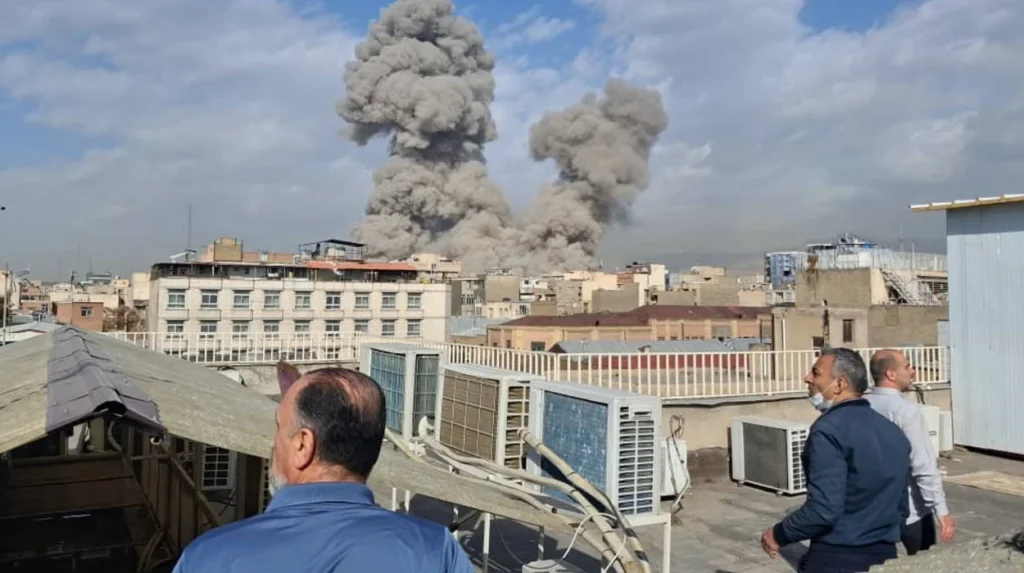
Trump Epic Fury: Iran Decapitation and Dangers of Long-term U.S. Strikes started with the commencing operation, Epic Fury on February 28, 2026. The U.S. and Israeli air and cyber operation against Iranian nuclear facilities, ballistic missile, Revolutionary Guard facilities, naval ships, and integrated air defense systems coordinated the attacks. The magnitude and conduciveness of the strikes were the largest American military initiative against Iran in decades.
The operation was preceded by months of bad deterrence politics. Intelligence testing revealed that Iran was willing to mount attacks on U.S. assets in the Gulf, which will be a replica of proxy escalation done in Yemen and Syria throughout the year 2025. Washington positioned the strikes as preemptive and a need to avoid a wider regional conflagration.
During the initial stage, three members of U.S. service were killed, which highlights the immediate costs of the operation. President Donald Trump cautioned that more casualties might occur but told the troops that they were accomplishing more than they had planned to accomplish, which also supports the emphasis on high-tempo operations instilled by the administration.
Strategic Targeting And Operational Scope
The attacks were reported to have rendered several naval platforms in the Persian Gulf and damaged missile production plants. Commanding AI-supported targeting systems were implemented to shrink the decision-making timelines and get the most accurate information. The authorities termed the operation as in line with the update of the 2025 National Defense Strategy, which focused on the rapid dominance over extended stabilization missions.
By referring to decades of proxy warfare, Trump described the leadership of Iran as having caused the blood of hundreds, even thousands of Americans, and used this to justify the action. The rhetoric was an indicator of deterrence and domestic political coding.
Immediate Regional Repercussions
Oil markets responded promptly, and the prices shot nearly 15 percent at the start of the trade. The gulf states increased the security alerts, and the airspace blocked expanded in the Middle East. Diplomatic lines were not shut and the pace of operations prevailed over the de-escalation moves during the first week of the campaign.
Decapitation Strategy And Leadership Vacuum
The main focus of Trump in his book Epic Fury: Iran (Decapitation) and (Risks) of Prolonged U.S. Strikes was the verified death of the Supreme Leader Ali Khamenei. The state media in Iran accepted the defeat, and so did a number of senior commanders of the Islamic Revolutionary Guard Corps. The strikes therefore passed a mark between reprisal activity and disruption on the regime.
Decapitation strategies are based on breaking command coherence and speeding up internal disarray. By attacking the top of the Iranian theocracy, Washington was creating an indication that deterrence had changed to take a form of systemic risk to Tehran.
Command Structure Disruption
These shifts in top leadership overthrew authoritative lines. Iran also declared the establishment of a temporary leadership board led by the clergy and there is still a question mark on whether there will be competition between the hardliners and the pragmatic factors.
There are historical factors that decapitation may result in fragmentation instead of capitulating. Decentralized command models are common two-way networks of militia. Washington taking the leadership as a risk is assuming that taking away leadership is the same as collapsing strategically.
Proxy Network Resilience
The country has been based on asymmetric relationships throughout Iranian regional influence. Though production facilities have been damaged greatly, some leftover abilities are still present. Proxy groups in Iraq, Syria and Yemen still have functional autonomy, which could allow them to take revenge despite domestic unrest in Tehran.
The extent of the impact that decapitation has on funding and even coordination is a key variable in estimating the duration of the conflict.
Risks Of Prolonged U.S. Engagement
Trump estimated the operations to be over in four to five weeks, which is in line with the desire of the administration to have compressed campaigns. Nevertheless, the strategic risk is brought about by the uncertainty regarding ultimate goals. Statements have been made as far as deterring the acquisition of nuclear arms to general erosion of the military capabilities.
The preventive logic was supported by Secretary of State Marco Rubio who wrote that Iran was a threat close at hand. However, according to analysts, open-ended standards of success can run timelines longer than anticipated.
Casualty And Resource Calculations
Three U.S. workers have been killed, thereby increasing force protection scrutiny. The existence of missiles and drones in Iran continue to threaten the American bases in the Gulf. The long-term aerial operations need logistical commitments which could pull resources which could be used in Indo-Pacific priorities as highlighted in the 2025 planning documents.
The force readiness was already threatened by recruitment shortages that were already being recorded in 2025. The long-term campaign might strain the pressure on the workforce and supply chains.
Escalation Pathways
The vow of retaliation given by Tehran brings in uncertainty. Nationalist feeling may be able to bring domestic acceptance of asymmetric retaliation even in the face of losses in leadership. Shipping lane attacks, hacks on U.S. infrastructure or proxy attacks on allied facilities are all still possible scenarios.
Every retaliation step has a possibility of escalation. The lack of diplomatic off-ramps is more likely to make miscalculation a possibility.
Global Economic And Diplomatic Reverberations
The nearest channel of transmission is energy markets. Persistent Strait of Hormuz interruptions would increase inflationary pressures that would threaten world central banks in 2026. The economies that rely on the Gulf imports are particularly vulnerable.
There are strategic supply chains that are beyond oil. The perception of economic risk increases because Iran is a hub in regional transport networks and it is close to the main maritime routes.
Major Power Reactions
Russia and China criticized the strikes in word, but measured their reaction in order to avoid a full-scale conflict. Their 2025 defense and energy deals with Tehran are now operationally in doubt. Burden-sharing and diplomatic mediation were discussed, but the European governments were terrified of escalation.
And in its delicate balancing of energy dependence and strategic partnerships, India has been an even-handed neutral. New discussions with Washington indicate more Indo Pacific thinking that crosses with stability in the Middle East.
Normative And Legal Dimensions
The operation brings back the debate on the powers of anticipatory self-defense and executive wars. The administration claims to have inherent powers to counter threats that are looming yet congressional consultations do not seem to be much. The researchers of international law doubt the pre-emptation level in the absence of clear indications of the imminent planning of attack.
These arguments do not just limit themselves to legal theory. They define the unity of alliances and international views of American strategic self-restraint.
Strategic Crossroads In 2026
Trump Epic Fury: Iran Decapitation and Dangers of Prolonged Strikes by the United States is the summary of a characteristic ordeal of modern deterrence philosophy. The decapitation of the supreme leadership of Iran is an unprecedented determination but the sustainability of deterrence lies in the ability to control the second-order effects. The command structures can be broken through the use of military superiority but despite this, political end states are still subject to changes based on adversary adjustments.
With operation Epic Fury on its way up, the question of the balance between rapid dominance and strategic patience will dictate its course. The way the interim authorities in Iran consolidate power or disintegrate under pressure, the extent to which Washington proceeds with built-up pressure or the momentum will not only determine the stability in the region, but also define how American power is projected to other parts of the globe. The subsequent weeks might tell us whether decapitation can bring compression of conflict or start a longer-lasting struggle marked by some resilience on both sides.