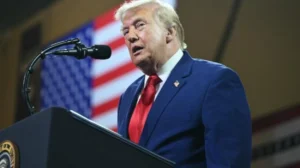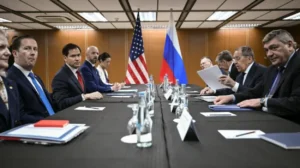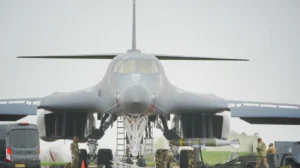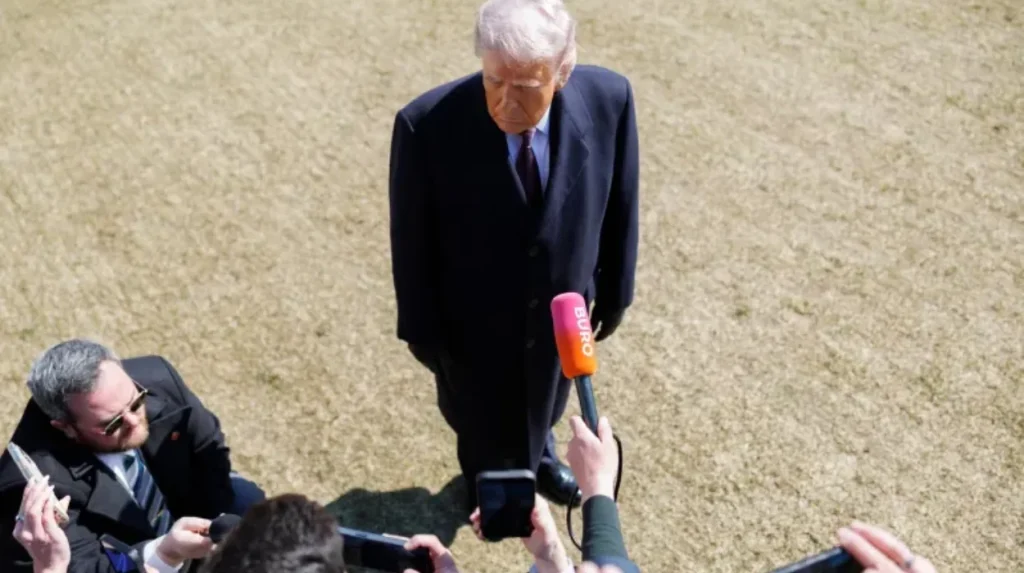
The term “We can reach you” is now a shortcut to the foreign policy stance of Donald Trump. It is an indication of not just military strength, but of being willing to exert sudden and discriminating pressure in seeking negotiated results. The doctrine is based on the assumption that the American power is best exercised when it is positioned as instant, personalized and conditional.
In contrast to the traditional alliance based deterrence, this one views international relationships as high stakes transactions. Leaders are placed as opposing partners in an agreement, as opposed to custodianship of institutional relationships. Sanctions relief, military restraint and diplomatic recognition are fronted as bargaining commodities, based on performance. The unspoken message here is that no actor is safe by geographical location, political affiliation or past association to the U.S. reach.
This positioning has changed the perceptions of both allies and enemies. Governments now not only react to what the U.S. policy states, but to how the presidential leadership is perceived to be willing to go to an escalation in search of leverage.
Venezuela and Iran as Strategic Demonstrations
At the beginning of 2026, Venezuela and Iran have become the visible test cases of the doctrine. The United States has indicated in both theaters that it is capable of degrading capabilities or using targeted pressure without having to campaign over an extended period.
Pressure on Caracas
U.S actions against the government of Nicolas Maduro have gone beyond sanctions to specifically scoped operational measures against security related assets. The officials characterize these steps as reversing and limited to change the negotiating incentives and not to compel the collapse of the regime.
The strategic computation takes its foundation on the display of vulnerability in the top leadership. Washington sends out a message that protective buffers are porous by attacking the assets that are near to the ruling elite. The deal is non-verbal: the cooperation in political reforms or energy talks may be a way to relieve the pressure; otherwise, a confrontation may lead to additional disruptions.
This stance, regional observers say, drives home the view that the Western Hemisphere is facing direct U.S. enforcement, and it brings up the issues of sovereignty and intervention.
Capability Degradation in Iran
A more sophisticated scenario is Iran due to the regional power it possesses and defense infrastructure. In late 2025 and early 2026, the U.S. attacks on nuclear-related targets were packaged as capability-degrading, as opposed to regime-attack operations. The message of the administration stressed that this was aimed at not changing the calculations of Tehran in order to engage in a full-scale war.
The sequencing is displayed in terms of the transactional aspect. Coercive action in the military is coupled with indicators that may curb escalation in case of noncompliance on enrichment or regional militia presence. The strategy presupposes that bargaining power is enhanced by force which is measured.
The tolerance to error is low, however. The web of regional allies that Iran enjoys creates avenues of escalation other than direct state against state confrontation, making it difficult to contain pressure.
Calibrating Threats Across Nuclear and Non-Nuclear States
The doctrine acknowledges the difference between nuclear equipped competitors and those who are not armed. Overt violence supported by sanctions and political speech over non-nuclear countries strengthens weakness. In the case of nuclear-capable actors, the threats are less explicit, as they are based on economic pressure, cyber weapons, and positioning of the alliances.
Managing North Korea and Strategic Ambiguity
When handling Kim Jong Un, Washington has not taken any massive kinetic moves but has continued to demonstrate occasionally the ability to do so. Sanctions and diplomatic signals prevail, and are interspersed with warnings of U.S. presence.
It seems that the intention is to maintain bargaining preparedness as opposed to melodramatic confrontation. The administration can maintain the level of ambiguity by leaving it to the discretion of escalation by keeping Pyongyang conscious of possible consequences without taking red lines that might provoke a deep escalation.
Great-Power Competitors
In the case of greater forces like China and Russia, the doctrine is more of economic and geopolitical influence rather than actual military pressure. The additional reminder of the broader message that U.S. scopes are penetrating into supply chains and financial systems is reinforced by tariffs, export controls, and strategic technology restrictions.
In this case, the trade negotiation and security assurances are the causes of the transactional logic instead of the missile attacks. It is focused on proving that the American influence can be enlisted in a short amount of time to compensate for obedience or punish disobedience.
NATO and the Conditional Alliance Model
The “We can reach you” message is not limited to adversaries. It has reshaped engagement with NATO allies by linking security guarantees to measurable financial commitments.
Defense Spending as a Bargaining Metric
During the second Trump term, the European governments have become under pressure to boost their defense spending. Some of the NATO members were reporting substantial increases in 2025 and early 2026, partly due to direct threats that U.S. pledges would also be re-examined in case spending targets would not be achieved.
The transactional form can be seen through the official declarations of praise to compliant states and criticism to laggards. Security assurances are packaged as less of an unconditional promise and more of a give and take agreement.
Strategic Hedging in Europe
The European policymakers have reacted with complacency accompanied by contingency planning. Defense spending has increased but there has been a low profile of strategic autonomy discussion. The illusion that U.S. assistance might vary with the resultant bargaining in the short term has fostered the diversification of security policies.
This dynamism brings in uncertainty in the long term. An institutional trust may be destroyed in the long run as partners may view the relationship as conditional when there is a doctrine to make short-term concessions.
Domestic Incentives and Political Signaling
The doctrine has a domestic political value. Advocates interpret aggressive behavior as a sign of strong leadership especially when it is presented in the context of not getting involved into extended military commitments. The image of the occupation-free control is supported by short-term strikes and by economic sanctions that can be observed.
The polling patterns in late 2025 showed that a greater part of the Republican core constituencies were approving a stronger global stance, although this was restricted in scope. The rhetoric of the administration emphasizes that the threats are the means of a deal and not the preconditions of endless warfare.
The critics claim that transactional coercion is dangerous to normalizing volatility in the foreign policy. But advocates argue that uncertainty is an effective deterring factor because it makes planning difficult for the opponent.
Strategic Durability and Potential Limits
Credibility and restraint is what will make the phrase “We can reach you” durable. Provided that threats do have a pay off regularly, perceptions of American leverage may be reinforced by the doctrine. When they elicit escalation or disintegration of coalitions, the cost may be more than tactical benefits.
The opponents can respond either by decentralizing resources, strengthening substitute alliances or speeding up asymmetric capabilities. When they consider guarantees to be subject to contingency on compliance with transactions, allies can hedge more aggressively.
Calibration is thus the key to the future of the doctrine. The coercive diplomacy demands that the threat should be plausible but limited, strong but retractable. With 2026 unfolding in several theaters, it is not a question of how far the United States can go to reach out to others, but the repetitions of such a strategy only find its way to intensification of negotiating power or restricting the margin of sustainable compromise in an ever more multipolar environment.