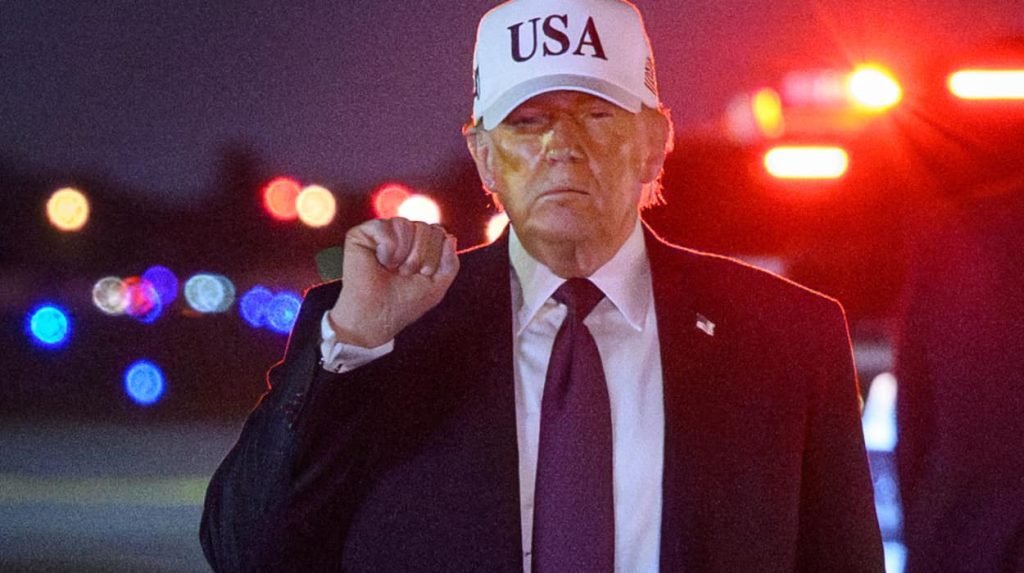
President Donald Trump issued a 8-minute speech, indicating that he declared what he termed as major combat operations against Iran. Published by Mar-a-Lago and released through Truth Social, the Iran video by Trump had proclaimed that the U.S. forces were targeting the Iran missile industry, naval forces and components of its leadership. The announcement was preceded by reports of Tehran explosions and was a dramatic increase in the involvement of the U.S. military in the region.
Trump made the campaign defensive by referring to the historic activities of Iran which do not favor American interests in the past such as the hostage crisis in 1979 and the bombing of the barracks of Beirut in 1983. He described Iran as the number one state sponsor of terror and invited the members of the Islamic Revolutionary Guard Corps to surrender to be granted immunity. He called on the civilians to take shelter as he opined that the Iranians would finally bring change themselves.
Operational Scope and Strategic Framing
The administration officials believe there is an emphasis on the strikes to destroy the ballistic missile infrastructure and naval capability of Iran in the Persian Gulf. This phase was declared as lasting as opposed to symbolic unlike other past actions of retaliation, which were limited. Trump said that it would be operating full force until threats were neutralized without a set timeline or exit strategy.
The speech was preceded by several months of increasing pressure in 2025, such as more sanctions and the forward placement of naval forces. Increased preparedness had already been indicated by the fact that the USS Gerald R. Ford carrier strike group was already in the territory. The video solidified a progressive escalation of what had been a covert military campaign into an overt military campaign.
Congressional and International Dimensions
The unilateral announcement made by Trump sparked the discussion of presidential war powers. In contrast to the Iraq invasion of 2003, with the congress authorization, there has been no Authorization of Use of Military Force. The 1973 War Powers Resolution which demands consultation and limitation of time to allow prolonged hostilities has been cited by critics.
Diplomatically, the lack of previous consultations with the United Nations Security Council is a contrast to previous diplomatic negotiations with the nuclear agreement in 2015. European governments have encouraged moderation with the threat of destabilization of regions being highlighted. This unilaterality of the decision has come to dominate diplomatic debates in Brussels and other like-minded capitals.
Echoes of the Iraq Invasion
The video made by Trump about Iran has been compared by observers to the invasion of Iraq in 2003 under George W. Bush. The two episodes bore statements of an imminent danger besides presenting such military action as a necessary step to bar destabilizing regimes. In the case of Iraq, the reason was based on the purported weapons of mass destruction schemes which were never proven.
Similarities in Regime Change Rhetoric
The use of words by Trump to refer to the leadership of Iran as a wicked, radical dictatorship reminds the language used in the early 2000s that focused on the liberation of dictatorship. Although he has long been a critic of nation-building, the appeal of regime change makes the present campaign a part of the longer tradition of U.S.-sponsored regime change programs.
In both instances, the advocates maintained that bold military intervention would trigger domestic political changes. The extended insurgency and sectarian division in Iraq, however, is a demonstration of how unpredictable post-regime settings can be. According to analysts, the internal unity of Iran and developed security agencies are not similar to the structure of Iraq before 2003.
Operational Differences From Iraq
In spite of the rhetoric similarities, there are operational differences. The Iraq invasion was characterized by massive ground occupation and deployment. The recent war against Iran has focused on air and naval attacks, and no ground occupation has been stated. The intention of this strategy is to de-capacity but not take charge of governance transitions.
However, the level of regional proxies that Iran has built such as Hezbollah and allied militias brings about escalation vectors that were not centralized in Iraq. Attacks targeting U.S. bases/shipping lanes could extend the scope of the combat beyond first strike targets.
2025 Escalation as Prelude
The 2026 announcement that happened in February is a continuation of everything that was going on in 2025. Trump revived and increased sanctions against Iranian exports of energy and financial systems. The Oman mediated negotiations were said to hit a snag after Washington insisted on the permanent limitation of the nuclear and missile program without sunset clauses.
Military Posturing and Failed Diplomacy
By the middle of 2025, American bombings were said to have destroyed major nuclear installations, and Trump told Trump later he was leaving them in dust. The actions were parallel as Israel did after a 60-day diplomatic deadline elapsed. All this reduced the room in which fresh negotiations could be made.
At the beginning of 2025, there were public utterances of impatience. Trump explained that regime change could be the best thing that happens to Iran, and diplomatic breakdown could be viewed as the manifestation of deeply rooted aggression. The video of February 2026 seems to legitimize that path.
Regional Stakeholder Reactions
The state media of Iran criticized the strikes as a breach of sovereignty with smaller demonstrations in Tehran. The Gulf states, Saudi Arabia included, have been on the guarded side of the populace with both security issues and a fear of instability spreading. The response by oil markets was rapid and prices oscillated and this change in prices was a measure of uncertainty in supply in Strait of Hormuz.
The activities were criticized by Russia and China and this indicated possible geopolitical realignments. The indirect means of support have been questioned as diplomatic coordination between Tehran and Moscow has been escalating since the end of 2025.
Strategic Risks and Global Repercussions
The key ambiguity of the Iran video created by Trump is that there is no clearly spelt out endgame. Military planners can do tactical destruction of missile infrastructure, but the resilience of the regime can be a matter of internal political processes outside the influence of external forces.
Proxy Escalation and Energy Markets
The asymmetric response options of Iranian non-state allies are provided through a net of allies. The U.S. interests in the Middle East may be targeted by attacks by organizations associated with Tehran and that would make it difficult to contain them. Even small disturbances of the Strait of Hormuz may have far-reaching impacts on the world oil supply, and will impact the inflationary trend of economies that are energy importers.
This risk premium was reflected in the reaction of the energy markets at the beginning of March 2026. Analysts observe that long term instability would be ripple effected on the rates of shipping insurance and prices of commodities.
Domestic Political Implications
In the United States, partisan wrangles over the executive power can be enhanced. Proponents claim that strong action discourages the enemies whereas critics focus on the constitutional checks. The mass opinion will probably be dependent on the numbers of casualties and economic effects.
The analogy with Iraq is a theme that is reiterated in the domestic discourse. Policy makers have realized that short-term military victory does not assure them of long-term stability especially in tricky regional settings.
Strategic Calculus and Uncertain Trajectory
The Iran video by Trump is an unprecedented move in rhetoric and operations. The administration has redefined the limits of U.S. involvement in the Middle East by making regime change an express goal without the backing of other nations. Tactical air superiority and naval dominance provide instant payoff but the political change within Iran is always imminent.
As operations continue, the interplay between military pressure, internal Iranian dynamics, and global diplomatic reactions will determine whether this campaign achieves its stated aims or catalyzes a broader regional realignment. The coming months will reveal whether unilateral force can compel structural political change in a deeply entrenched system or whether history’s cautionary precedents will again complicate ambitions framed in moments of strategic urgency.