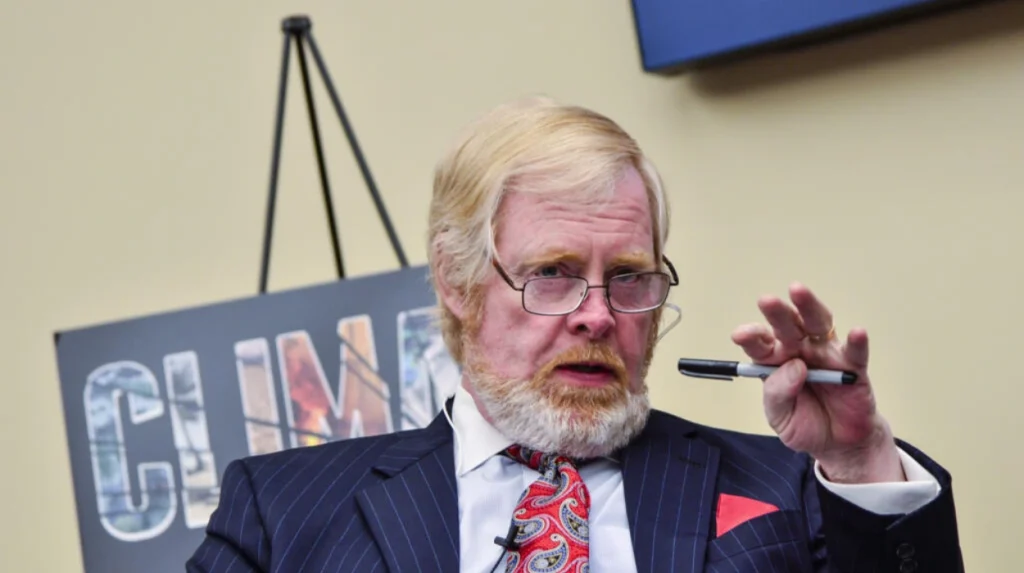
The appointment of Bozell in Pretoria is a major turning point in the US-South Africa relations after it has been degraded drastically by 2025. Leo Brent Bozell III officially took his office, following a controversial Senate confirmation vote in late 2025. The diplomatic contacts between the two countries have been sour for almost a year, with mutual expulsions, and aid schemes being suspended.
The nomination of Bozel had a direct relationship with the overall efforts of President Donald Trump to reignite pressure on governments that were seen to be moving towards other rival powers. In his confirmation hearings, Bozell stated that he would respond to what he said was the geostrategic drift of South Africa towards Russia, China, and Iran. His philosophy, as expressed to the congress, would be a combination of conventional diplomacy and the open promotion of the U.S. interests in economics and security.
Reestablishing a level of formal interaction is brought about by the reopening of full ambassadorial channels. It is also institutionalizing confrontation as Washington seeks an avenue to put pressure on the foreign policy course of Pretoria and non-alignment as South Africa focuses on sovereignty.
2025 rupture reshaped the bilateral architecture
The lowest point in relations came in March 2025, when South African officials spoke publicly on the issue of U.S. policy towards Israel and accused Washington of creating instability in Gaza. The United States reacted by expelling the South Africa ambassador leading to the same. The development assistance programs, estimated at about 440 million dollars per annum, and health and education programs were terminated.
The division went past speech. The fact that Washington excluded South Africa in some of its preparatory discussions surrounding the 2026 G20 summit was another indication of the tension in the relations between these countries. Even though Pretoria did not lose its formal membership, the symbolic downgrading depicted the expanding distance between the two governments.
Trade leverage and AGOA uncertainty
Soon after the diplomatic confrontation economic pressure followed. The Trump administration also proposed specific tariff hikes on certain South African exports such as agricultural products and car parts. South Africa had enjoyed the duty-free access under African Growth and Opportunity Act with the program exports amounting to about $3.5 billion per annum.
Scrutiny was also enhanced by a mechanism of congressional review to determine the eligibility of South Africa under AGOA. Lawmakers cited the issue of the military drills of Pretoria with Russia and increased collaboration with China. There was no direct suspension in effect; however, the mere doubt brought with it some investor strickenness and currency volatility.
To South Africa, the U.S. is second after China in terms of export. Any long-term tariff escalation would impact the employment in export-related industries, and the political sensitivity of the country to foreign policy mistakes.
Ideological fault lines deepen under BRICS expansion
It is added that South Africa is an active member of the extra BRICS bloc. In early 2026, the joint naval drills together with Russia were conducted despite the criticism of the West. At the same time, Chinese infrastructure funding and settlements of trade in yuan increased, which indicates the attempt of Pretoria to diversify the economic relationships.
South African authorities insist that these activities can be attributed to one of the long-term traditions of non-alignment and not anti-Westernist positioning. BRICS participation was defended by African National Congress Secretary-General Fikile Mbalula, as a sovereign policy aimed at limiting overdependence on a center of power.
The ICJ case against Israel
The case of South Africa against Israel in the international court of justice has become one of the most nagging irritants. The case was filed in late 2023 and accuses Israel of offenses concerning the Genocide Convention in Gaza. The Trump administration has time and again asserted that the filing was politically motivated.
This testifying, Bozell stated that he would bring up Washington concerns to the South African leadership face to face. However, Pretoria makes the case an international convention to be covered by law. The matter has taken on a symbolic role as a wider divergence over world governance standards and policy in the Middle East.
BRICS currency debates and strategic autonomy
The U.S. was even more anxious by discussions of alternative payment systems and possible reserve currency mechanisms in BRICS in 2025 and early 2026. In spite of the fact that there is no global BRICS currency, increased local-currency settlements are an indication of gradual abandonment of the dollar.
To Washington, there are strategic effects of such actions outside the South African borders. In the case of Pretoria, they are posed as realistic diversification into a multipolar economic order. The conflict shows contradictory imaginations of world financial structure.
Domestic political narratives complicate diplomacy
The confirmation made by Bozelly had sailed mainly along the party lines, which was an indication of domestic polarization on the issue of Africa policy. The Republicans senators used his appointment as a need to counter the growing influence of Russians and Chinese. Democratic critics doubted the relevance of confrontational rhetoric in getting Pretoria even more isolated.
This partisan landscape preconditions the performance of the ambassador. As congressional elections come midterm in 2026, there might not be a lot of congressional interest in either broad sanctions or broad reconciliation.
Afrikaner refugee debate
The other delicate aspect is that of the allegations of violence being perpetrated against white farmers in South Africa. President Trump once again made accusations of targeted persecution and provided possible avenues to Afrikaner refugees. The South African governments and external statistical analysis reject the systematic targeting argument by pointing out that there has been a wider decrease in the total number of farm-associated homicides in 2025.
Bozell has stated that he would be bringing issues of land reform and property rights. The government of South Africa opposes that reforms are aimed at correcting past inequalities and have no connection with arbitrary expropriation. The storytelling is another emotional twist to an already railing relationship.
Strategic implications for Trump’s Africa posture
The Bozell in Pretoria is a pilot of a more individualized and high-pressure model of diplomacy. Instead of utilizing the multilateral approach mostly, the administration seems to prefer direct bilateral pressure with trade instruments and social communication.
Meanwhile, unilateral influence is constrained by structural realities. The diversified nature of the trade portfolio, the BRICS relationships, and regional leadership position make South Africa less exposed to the single economic force. On the other hand, the United States still enjoys a lot of power in terms of market access, financial institutions and institutional affiliations.
Diplomatic restoration does allow avenues of negotiation. The areas where mutual interests overlap continue to be consular services, collaboration on counterterrorism security, and health programs on HIV/AIDS. Pragmatic cooperation even exists in the context of ideological conflicts, in particular spheres.
In the future, this trend is expected to depend on whether economic interdependence will be stronger than the symbolism of geopolitics. In case AGOA eligibility remains and the trade flows are stabilized, the tensions may stabilize without full reconciliation. In the event of escalation of tariffs or expansion of sanctions, Pretoria may hasten the process of integration with BRICS partners, and strengthen the diversification that is so strategic to Washington to restrain.
Bozell’s tenure begins at a moment when global alignments are fluid and African states are asserting greater agency in choosing partners. His effectiveness will depend less on rhetorical force than on whether he can navigate the intersection of domestic U.S. politics, South African sovereignty concerns, and the evolving architecture of multipolar competition. As accreditation formalities give way to substantive negotiations, the durability of U.S.–South Africa ties may reveal whether diplomatic recalibration can coexist with strategic rivalry or whether structural shifts have already redrawn the balance beyond the reach of any single envoy.