President Donald Trump has pitched a deceptively simple geopolitical trade-off: the United States lowers tariffs on Indian goods, India stops buying Russian oil, and instead turns to Venezuelan and American crude. The payoff, according to the White House, would be strategic and immediate — depriving Moscow of a key revenue stream that helps finance its war in Ukraine.
On paper, the logic works. In practice, the global oil market, Venezuela’s battered energy sector, and India’s economic incentives make the plan far more complicated.
Venezuela’s oil industry may now be “open for business,” but it is nowhere near ready to replace Russia as a supplier to one of the world’s largest energy consumers.
The Strategic Logic Behind Trump’s Oil Diplomacy
Since Western sanctions targeted Russian energy exports after the invasion of Ukraine, India and China have become the backbone of Moscow’s oil trade. Together, they absorb the majority of Russian crude exports, cushioning Russia from the full economic impact of sanctions and helping stabilize state revenues.
Trump’s strategy aims to fracture that arrangement.
By redirecting Indian oil purchases away from Russia and toward Venezuela and the United States, Washington hopes to:
- Reduce Russia’s oil export volumes,
- Shrink the Kremlin’s fiscal capacity to fund the war,
- And reshape global oil flows in favor of US-aligned producers.
But energy markets do not rewire themselves overnight.
Why Venezuelan Crude Appeals to India
From a technical standpoint, Venezuela is one of the few producers that can realistically compete with Russia in India’s refining system.
Venezuelan crude is heavy and sour — dense, sulfur-rich oil similar to Russia’s Urals blend. This makes it ideal for producing diesel, fuel oil, asphalt, and industrial derivatives that India’s fast-growing economy depends on. Many Indian refineries are already optimized to handle this type of crude.
By contrast, US oil production is dominated by light, sweet crude, which is better suited for gasoline and petrochemicals but less flexible for India’s broader energy needs.
That makes Venezuela, at least in theory, a natural substitute for Russian barrels.
A Post-Sanctions Venezuela Tries to Reopen Its Oil Sector
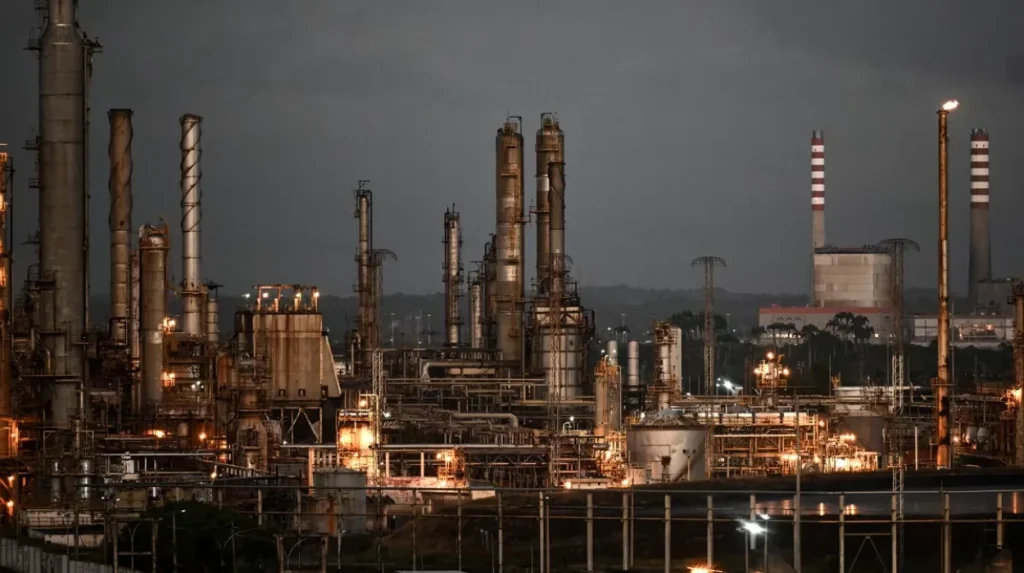
Following Washington’s decision to remove sanctions and encourage foreign investment, Venezuela passed legal reforms aimed at reviving its long-neglected oil industry. These changes are designed to attract international energy companies, modernize infrastructure, and reverse years of declining output.
Industry analysts view the reforms as a positive — but insufficient — step.
Homayoun Falakshahi, lead crude research analyst at Kpler, described the changes as “a step in the right direction” that could eventually help unlock higher levels of investment. Still, optimism fades quickly when production realities are considered.
Venezuela’s Production Gap: Scale Matters
Venezuela currently produces just over 1 million barrels of oil per day, with most exports flowing to China. India, by comparison, imports roughly 1.5 million barrels per day from Russia alone.
Even if Venezuela redirected every barrel it produces to India — an unrealistic scenario — it still would not cover India’s Russian imports.
The longer-term potential is enormous. Venezuela holds the world’s largest proven oil reserves and once produced more than 3 million barrels per day before years of mismanagement, sanctions, and infrastructure collapse.
But restoring that capacity would require:
- Tens of billions of dollars in annual investment,
- A decade or more of sustained rebuilding,
- And deep involvement from major Western oil companies.
So far, that commitment has not materialized.
Why Oil Majors Are Still Hesitant
Energy companies have laid out clear conditions for returning to Venezuela at scale:
- Stable rule of law and enforceable contracts,
- Long-term political certainty,
- Repeal of nationalist oil laws,
- Repayment of billions in outstanding debts,
- And credible security and financial guarantees.
Only two of those boxes have been checked: sanctions relief and partial legal reform.
Trump has ruled out offering debt guarantees or financial backstops, while political risk remains high. Even if the current Venezuelan leadership cooperates, there is no assurance that future governments will honor agreements struck today.
On top of that, Venezuela still demands high royalties on oil production, raising questions about whether companies can achieve competitive returns — especially in a low-price oil environment, as noted by Rob Thummel of Tortoise Capital.
India’s Dependence on Discounted Russian Oil
Trump has claimed that Prime Minister Narendra Modi agreed to halt Russian oil purchases, but energy transitions of this scale take time.
India would need to:
- Adjust logistics and shipping routes,
- Upgrade parts of its refining and storage infrastructure,
- And manage longer transit times for Venezuelan crude compared to Russian supplies.
Cost is the bigger obstacle. Russian Urals crude trades at a steep discount — roughly $16 per barrel below comparable grades — making it extremely attractive to price-sensitive buyers like India.
Although falling global oil prices have narrowed that gap, Russian oil remains cheaper than most alternatives.
Sanctions Evasion and the “Shadow Fleet” Problem
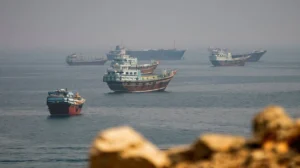
India has also shown little hesitation in skirting Western sanctions by purchasing Russian crude transported via shadow fleet tankers. According to Falakshahi, Russia has adapted quickly to new sanctions by routing exports through intermediaries and alternative logistics networks.
Rather than reducing purchases, India may even increase them.
“Russia has been circumventing the latest US sanctions on Rosneft and Lukoil,”
Falakshahi noted,
“and is now supplying most of its crude via new intermediaries.”
That reality undercuts the idea of a rapid, clean break between India and Russian oil.
Can This Strategy Still Hurt Russia?
Even partial success could have an impact.
Russia is already under pressure from lower oil prices, high inflation, and rising debt. While the economy has proven resilient — boosted by wartime manufacturing, higher taxes, and sanctions evasion — its margins are narrowing.
Losing even a portion of Indian demand would add friction to Russia’s oil exports and complicate revenue flows.
Over time, that pressure could make it more difficult for Moscow to sustain its war effort.
A Long Game With Limited Immediate Payoff
Trump’s Venezuela-centered oil strategy introduces a new variable into the global energy chessboard — but it is not a silver bullet.
Venezuela cannot yet replace Russia as a supplier. India cannot instantly abandon discounted crude. And Russia’s economy, while strained, is far from collapse.
Still, incremental damage matters.
As Rob Haworth of US Bank Asset Management put it,
“Over time, this may create additional challenges for the Russian economy.”
In a war that has already killed nearly 2 million people, even slow, imperfect pressure may count for something.