Protesters gathered in dozens of cities across the United States on Saturday in response to the Trump administration’s escalating immigration enforcement efforts, attempting to capitalize on the success of demonstrations held the previous day against federal enforcement actions in Minneapolis and other “liberal-leaning” cities.
The protests come as a result of mounting national outrage over aggressive enforcement tactics, the increasing presence of federal agents in local communities, and the death of two American citizens during immigration enforcement actions in Minnesota.
Tensions Flare in Minneapolis
In Minneapolis, the epicenter of the current backlash, some 100 protesters assembled in the cold outside the B.H. Whipple Federal Building, where federal agents have been holding suspected undocumented immigrants arrested in the Twin Cities area. The protesters blew whistles and air horns in protest.
The rally was marked by moments of tension as sheriff’s deputies made several arrests that were described as violent by the protesters. Witnesses said that some of the protesters were knocked to the ground as the deputies chased others, which further fueled concerns about excessive force by law enforcement.
The city of Minneapolis has been a hotbed of clashes between federal agents and protesters over the past few months, making it a point of contention in the national debate about immigration enforcement and civil liberties.
Los Angeles: Minneapolis as a Model of Resistance
Hundreds of people gathered outside Los Angeles City Hall on Saturday afternoon. Addressing the crowd, Democratic state legislator Isaac G. Bryan urged protesters to sustain pressure on the administration and pointed to Minneapolis as a model of collective resistance.
He cited the Trump administration’s decision to reassign Gregory Bovino, a Border Patrol commander widely criticized for aggressive tactics, away from Minnesota.
“That happened because the people of Minneapolis had had enough,”
Bryan told the crowd.
Portland Sees One of Its Largest Protests in Months
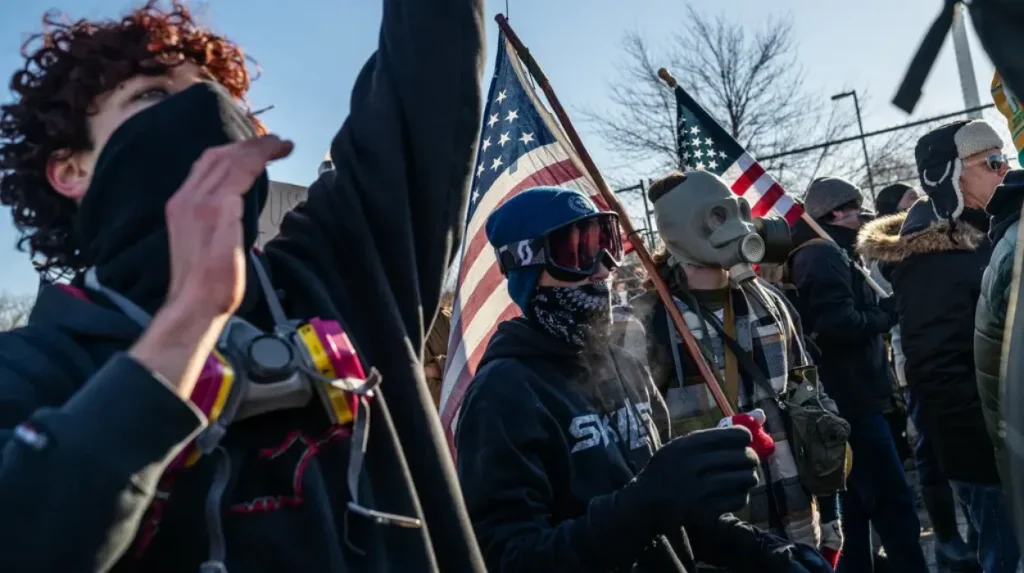
In Portland, Oregon, an afternoon rally swelled into one of the city’s largest protests in recent months, as demonstrators from earlier events joined together near the Immigration and Customs Enforcement facility.
Thousands gathered at Elizabeth Caruthers Park for a labor-backed rally supported by several major unions.
“This gathering, the size and energy, is unique,”
said Jackson Casimiro, a 28-year-old filmmaker from Portland.
Derek Boyd, a dental assistant, arrived carrying a leaf blower to counter tear gas—an increasingly common precaution in Portland protests.
“We have to let them know we won’t tolerate this,”
he said, referring to the aggressive tactics used by federal agents against detainees and demonstrators.
Tear Gas and Counterprotests Escalate Confrontation
The Portland rally was also attended by several dozen counter-protesters, chanting “God bless ICE,” as they marched by the park. The protesters tried to drown them out with whistles and taunts.
The rally later proceeded to march to Bancroft Street, outside the ICE facility, which had been closed to traffic by the police. Tensions rose around 4:30 p.m. as federal agents began firing volleys of tear gas into the crowd, which included families with children and people unfamiliar with the Portland protest culture. The crowd quickly dissipated, leaving only a few hundred protesters.
Federal Response and Rising Public Anger
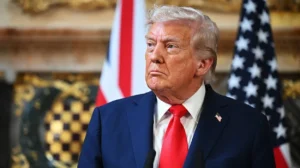
Protest activity intensified nationwide in January in response to aggressive enforcement operations in Minneapolis. On Saturday, President Trump announced on social media that ICE and Border Patrol agents would begin guarding federal buildings, which have increasingly become targets of demonstrations.
Public outrage has been fueled by the killings of two people in Minneapolis—Renee Good and Alex Pretti, both American citizens—by federal agents involved in immigration operations. The deaths have become a flashpoint in the broader debate over accountability, use of force, and the expanding mandate of immigration authorities.
In an effort to calm tensions, Trump dispatched his border czar, Tom Homan, to Minneapolis to oversee enforcement operations, replacing Mr. Bovino.
Faith Communities Join the Protest
Church bells rang throughout Minneapolis and neighboring St. Paul on Saturday in a symbolic act of solidarity with protesters and with immigrants facing detention and deportation.
Meghan Gage-Finn, a senior associate pastor at Westminster Presbyterian Church in Minneapolis, said the bells carried special meaning.
“I hear them all day long,”
she said.
“But to hear them ringing out in solidarity and in response to what this community is experiencing, I heard them in a new way.”
Some demonstrators have criticized the prosecution of protesters accused of disrupting a church service in St. Paul, where a pastor also serves as an ICE official. Two journalists present at the incident, including former CNN reporter Don Lemon, have also been charged, raising press-freedom concerns.
Protests Spread to Smaller Cities and Suburbs
Opponents of the administration’s immigration agenda also rallied in smaller towns and suburban communities, including areas that have themselves been targets of enforcement operations.
In New York City, about a dozen protesters staged a sit-down protest at a Trump-branded building. Nearly 100 people rallied in Fair Lawn, New Jersey, a community with a large immigrant population.
Alex Babin, who immigrated to the United States from Ukraine more than two decades ago, said his protest was shaped by both personal history and current events.
“Russia attacked Ukraine trying to take their human rights,”
he said.
“Trump supports Russia. And now, here in America, innocent people have been killed because of his policies.”
Fear and Citizenship in Question
Alba Lucia Morales Jimenez, a Columbia University professor who immigrated from Colombia and later became a US citizen, said she joined the Fair Lawn protest out of fear that legal status no longer offers meaningful protection.
“I don’t feel safe any more,”
she said.
“We don’t want to be kidnapped, snatched, threatened, pushed, shoved and shot.”
Her concerns echoed a broader anxiety among naturalized citizens and legal residents who fear that aggressive enforcement has blurred the line between immigration control and broader policing.
‘We Are All Witnesses’
Jessica Ochs, a photographer who attended the Fair Lawn rally with her husband and teenage son, said the killings in Minnesota and reports of federal agents knocking on doors nationwide compelled her to act.
She stressed the importance of documenting enforcement activity and holding federal agents accountable.
“We are all witnesses,”
she said.
“We all have phones in our pockets. We should use them for something good.”
As protests continue to spread, activists say the demonstrations are no longer only about immigration policy—but about constitutional rights, accountability, and the role of federal power in everyday American life.