The deployment of small contingents of European troops to Greenland by several NATO members marks one of the most symbolically charged military gestures within the alliance in decades.
Germany, Sweden, France, and Norway have all confirmed that personnel are being sent to the Arctic island at Denmark’s request, officially to participate in joint exercises. Yet the timing leaves little doubt that these moves are also a direct response to escalating threats by US President Donald Trump to seize control of Greenland, including by force if necessary.
Några officerare från den svenska Försvarsmakten anländer idag till Grönland. De ingår i en grupp från flera allierade länder. Tillsammans ska de förbereda kommande moment inom ramen för den danska övningen Operation Arctic Endurance. Det är på förfrågan från Danmark som Sverige…
— Ulf Kristersson (@SwedishPM) January 14, 2026
Trump’s repeated assertions that the United States will “do something on Greenland, whether they like it or not” have injected a level of internal crisis into NATO that the alliance has not faced since its founding in 1949. For the first time, the alliance’s most powerful member is openly threatening to annex territory belonging to another NATO state, raising fundamental questions about collective defence, alliance cohesion, and the credibility of NATO’s core principles.
Greenland’s strategic value in a rapidly militarising Arctic
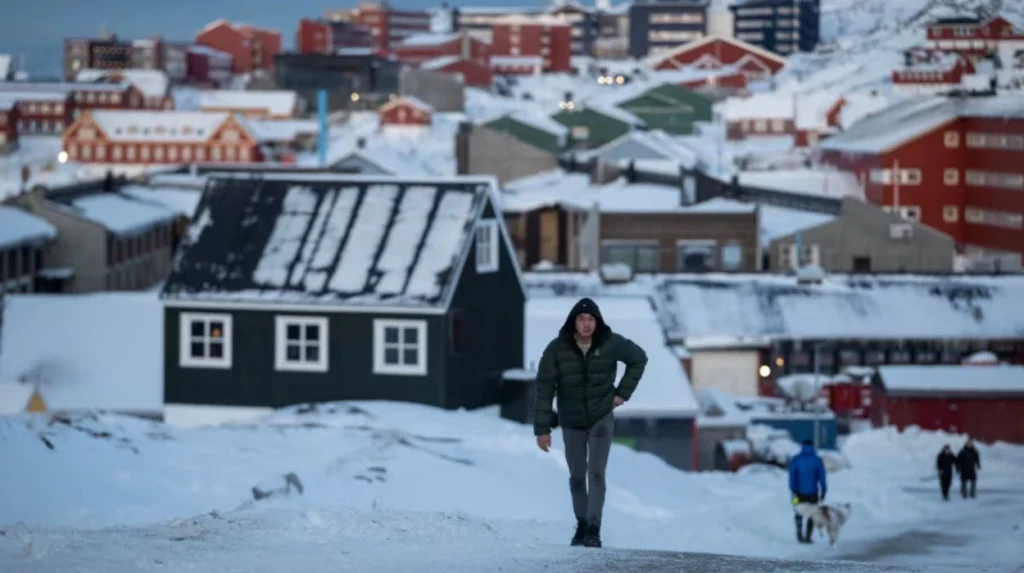
Greenland’s importance extends far beyond its sparse population of roughly 56,000 people. Covering more than two million square kilometres, it is the world’s largest island and occupies a commanding position between North America and Europe. As climate change accelerates Arctic ice melt, Greenland has become central to emerging shipping routes, untapped mineral reserves, and military positioning.
The island hosts the US-operated Pituffik Space Base (formerly Thule Air Base), which plays a critical role in ballistic missile early warning, space surveillance, and North American defence. Approximately 150 US troops are already stationed there, giving Washington a significant security footprint without any need for territorial control. Analysts note that Trump’s push for annexation appears less about immediate military necessity and more about long-term geopolitical dominance over Arctic resources, rare earth minerals, and strategic transit corridors.
According to estimates by the US Geological Survey, Greenland may hold substantial deposits of rare earth elements, uranium, and critical minerals essential for defence technologies and green energy transitions. Control over such resources would give the United States a major advantage amid intensifying competition with China and Russia in the Arctic.
European military deployments as political signalling
While NATO allies regularly conduct joint exercises in the Arctic, the current deployments carry unusual political weight. Germany has confirmed it is sending a 13-member reconnaissance team for what it described as an “exploration mission” alongside partner nations. Sweden, recently integrated into NATO structures after years of neutrality, dispatched officers to help prepare for Operation Arctic Endurance, a multinational exercise focused on Arctic survival, logistics, and interoperability.
France, under President Emmanuel Macron, has framed its participation as a defence of international law and alliance norms. Macron announced that French military units are already en route, with more to follow. Norway, which shares Arctic borders with Russia and has long experience in polar operations, has sent defence personnel as well.
À la demande du Danemark, j’ai décidé que la France participera aux exercices conjoints organisés par le Danemark au Groenland, l’Opération Endurance Arctique.
— Emmanuel Macron (@EmmanuelMacron) January 14, 2026
De premiers éléments militaires français sont d'ores et déjà en chemin. D'autres suivront.
These contributions are modest in size but heavy in symbolism. Collectively, they signal that European allies are prepared to visibly stand with Denmark and Greenland against coercion—even when that pressure comes from Washington itself.
Denmark’s warning and the existential stakes for NATO
Denmark, which retains responsibility for Greenland’s defence under the Kingdom of Denmark, has taken an unusually blunt tone. Danish officials have warned that a US attack on Greenland would “all but end NATO,” an extraordinary statement reflecting the severity of the situation.
At the heart of the crisis lies NATO’s Article 5, which states that an attack on one member shall be considered an attack on all. If the United States were to forcibly annex Greenland, it would shatter the legal and moral foundation of the alliance. Even if Article 5 were not formally invoked, the precedent would fundamentally undermine NATO’s credibility as a defensive pact rather than a tool of coercion.
Danish Defence Minister Troels Lund Poulsen has publicly described the idea of a US attack as “completely hypothetical” and “unlikely,” yet such reassurances sit uneasily alongside Trump’s repeated public statements and social media posts declaring US control of Greenland “unacceptable” to forgo.
Diplomatic strain and failed attempts at de-escalation
The military developments coincide with high-level diplomatic engagements that have produced little tangible progress. Danish and Greenlandic officials met with US Secretary of State Marco Rubio and Vice President JD Vance following Trump’s latest remarks, but talks exposed what Danish Foreign Minister Lars Løkke Rasmussen called a “fundamental disagreement.”
While the parties agreed to establish a high-level working group to explore possible compromises, the initiative appears more like a holding mechanism than a genuine breakthrough. Trump’s assertion that NATO would be “far more formidable” with Greenland under US control directly contradicts European views that such a move would irreparably damage alliance trust.
From a European perspective, Trump’s framing of annexation as a benefit to NATO is seen as a distortion of alliance principles, reducing collective defence to a transactional arrangement rather than a rules-based commitment.
Consulates and sovereignty as instruments of resistance
Beyond military deployments, diplomatic moves are reinforcing Greenland’s international standing. Canada and France have announced plans to open consulates in Nuuk, Greenland’s capital, a step that enhances Greenland’s visibility as a political entity rather than a strategic asset to be traded.
Canadian Foreign Minister Anita Anand has explicitly reaffirmed Canada’s “steadfast support” for Denmark and Greenland’s sovereignty, announcing her intention to travel to Nuuk to formalise Canada’s presence. France is set to open its consulate on February 6, a move French officials say has been in preparation since last year but now carries added political resonance.
These steps are widely viewed as efforts to internationalise Greenland’s status and complicate any unilateral US attempt to alter its sovereignty.
A dangerous precedent for international law
At a broader level, the Greenland crisis risks normalising territorial threats among allies at a time when the international order is already under strain. Western governments have spent years condemning Russia’s annexation of Crimea and its invasion of Ukraine as violations of sovereignty and international law. A US move against Greenland—even rhetorical—undercuts those arguments and weakens the West’s moral authority.
French Foreign Minister Jean-Noël Barrot has openly called Trump’s approach “blackmail” and warned that attacking a NATO member would be “contrary to the interests of the United States.” Such unusually direct language reflects growing frustration in European capitals over what they see as US unilateralism and disregard for alliance norms.