Iran has threatened to retaliate if attacked by the United States, even as cumulative evidence pointed to a widespread and increasingly deadly government crackdown on protesters across the country. Human rights activists and footage from verified sources seemed to indicate hundreds of civilians killed in recent days, underlining what critics describe as the growing reliance of the regime on brute force rather than political legitimacy to contain dissent.
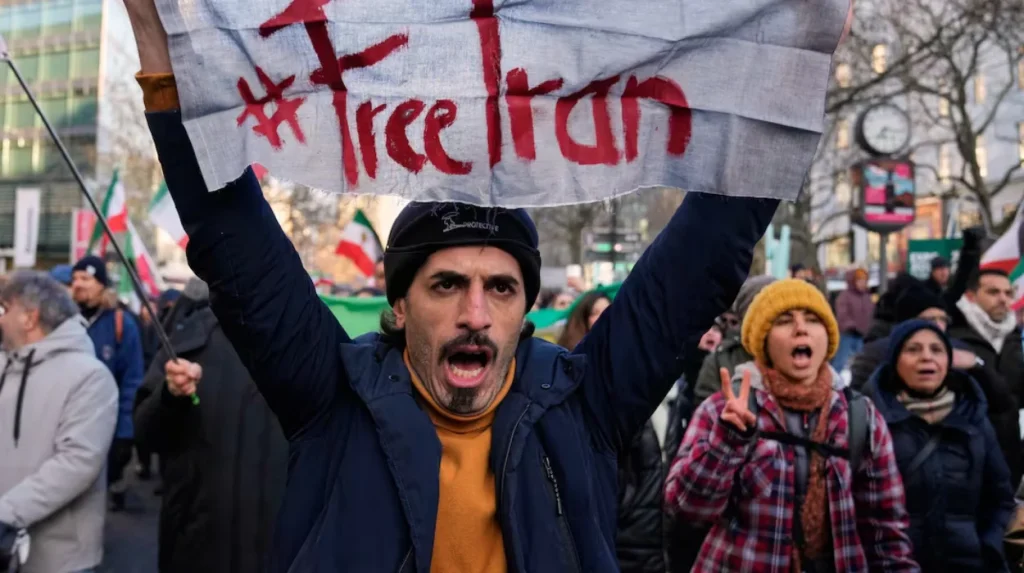
What started as protests over economic hardship has escalated into one of the bloodiest battles between a state and its citizens since the 2022 “Women, Life, Freedom” uprising. This time, however, the speed and intensity of the repression—and the scale of information control—appear even more severe.
“Like a war zone”: eyewitnesses describe streets soaked in blood
Accounts from inside Iran paint a stark picture of chaos and fear. “Things here are very, very bad,” a source in Tehran told the BBC on Sunday.
“A lot of our friends have been killed. They were firing live rounds. It’s like a war zone—the streets are full of blood. They’re taking away bodies in trucks.”
Such testimonies suggest not sporadic clashes, but systematic use of live ammunition against demonstrators. This contradicts official claims that security forces are exercising restraint and responding only to “violent rioters.” Instead, multiple independent sources describe scenes more reminiscent of armed conflict than crowd control.
Rising death toll and mass detentions
Verified figures, while incomplete, point to a rapidly escalating humanitarian crisis. The BBC estimates there to be approximately 180 body bags from footage shot at a morgue near Tehran. In other news, the US-based Human Rights Activists News Agency (HRANA) has confirmed a minimum of 495 civilian deaths and 48 members of the security forces who lost their lives.
HRANA also reports that more than 10,600 people have been arrested in just two weeks during the unrest. There is a high risk that the arrested individuals would be subject to torture, confessions, or trial, as it has been well-documented in the past. Because of the drastic restrictions on reporting and communication, it is thought that these figures are just a fraction of the real extent of the problem.
Hospitals overwhelmed as protesters die from gunshot wounds
Medical workers have described hospitals buckling under the pressure of mass casualties. BBC Persian verified that 70 bodies were brought to a hospital in Rasht in a single night. A health worker in Tehran gave an even more disturbing account.
“Around 38 people died,” the worker said.
“Many as soon as they reached the emergency beds… direct shots to the heads of the young people, to their hearts as well. Many of them didn’t even make it to the hospital.”
Such descriptions strongly indicate intentional lethal targeting rather than accidental deaths or crowd dispersal tactics. International human rights law strictly limits the use of lethal force against civilians, raising the prospect of serious violations that could amount to crimes under international standards.
Verified footage contradicts official denials
Although Iran has barred most international journalists from reporting inside the country, a growing body of video evidence has emerged. Footage verified by BBC Persian and BBC Verify shows security forces firing at protesters in Tehran, Mashhad, Kermanshah, Bushehr, and Ilam.
In Mashhad, Iran’s second-largest city, masked protesters can be seen taking cover behind bins and bonfires as gunfire rings out. A bus burns nearby, while security forces advance in formation. In Ilam, multiple videos show gunfire directed toward Imam Khomeini Hospital, where protesters had gathered—an act that further undermines claims of restraint.
These images sharply contradict official narratives portraying demonstrators as armed saboteurs and instead suggest a state response driven by fear of losing control.
From economic anger to calls for regime change
The protests initially erupted over soaring inflation, fuel price hikes, and economic mismanagement, but their demands have since broadened dramatically. Crowds in multiple cities are now openly calling for an end to clerical rule and the removal of Supreme Leader Ayatollah Ali Khamenei.
Rather than acknowledge the depth of public frustration, Iran’s leadership has chosen escalation. The attorney general warned that protesters would be treated as “enemies of God”—a charge that can carry the death penalty. Khamenei dismissed demonstrators as “vandals” seeking to “please” US President Donald Trump, effectively delegitimising dissent and justifying harsh repression.
Mourning the state’s “martyrs,” not civilian victims
On Sunday, Iranian authorities announced three days of mourning for what they described as “martyrs killed in the Iranian national battle against the US and Israel.” Critics argue this language is designed to shift attention away from civilian deaths and recast internal dissent as a foreign-driven war.
This framing not only denies accountability for the killing of protesters but also hardens divisions between the state and society, making compromise increasingly unlikely.
Internet blackout tightens regime’s grip on information
Iran has imposed one of the most severe internet shutdowns in its history, cutting off access not only to global platforms but also heavily restricting domestic networks. Experts say the current blackout surpasses even the controls imposed during the 2022 uprising.
Alireza Manafi, an internet researcher, told BBC Persian that satellite services such as Starlink may be the only remaining way to access the outside world—but warned that users risk being traced by authorities. The blackout has made verification difficult, delayed medical coordination, and left families searching blindly for missing relatives.
US threats, mixed signals, and risk of escalation
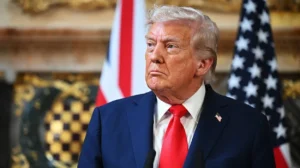
As the death toll rises, Washington has issued increasingly sharp warnings. President Donald Trump said Iranian leaders had contacted him and “want to negotiate,” but added that the US “may have to act before a meeting.”
While Trump has not detailed potential actions, officials confirmed he has been briefed on military strike options. Other measures reportedly under consideration include cyber operations, expanded sanctions, and increased support for anti-government information campaigns.
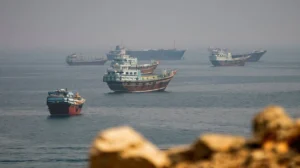
Iran’s parliament speaker responded by warning that any US attack would render American and Israeli military assets and shipping in the region “legitimate targets,” raising fears that domestic repression could spiral into a wider regional confrontation.
Blaming foreign enemies, again
President Masoud Pezeshkian has blamed the unrest on the US and Israel, alleging—without evidence—that foreign-trained individuals set mosques and markets on fire. Such claims follow a familiar pattern: portraying internal dissent as foreign sabotage rather than a response to domestic failures. Yet verified footage continues to show Iranian security forces shooting at unarmed crowds, undermining the credibility of these accusations.
Exiled voices and unresolved questions
Reza Pahlavi, the exiled son of Iran’s last shah, has sought to rally protesters from abroad, claiming widespread defections among security forces. While unverified, his statements reflect the growing fragmentation of Iran’s political landscape and the absence of a clear, unified alternative to the current system.
A regime under pressure, a society at breaking point
These protests mark the most widespread unrest since 2022, when more than 550 people were killed and 20,000 detained, according to human rights groups. The fact that demonstrations have re-emerged—despite that brutal crackdown—suggests repression has failed to resolve Iran’s underlying crises.
As violence escalates, the Islamic Republic faces a stark choice: continue down a path of militarised suppression and international isolation, or confront the social and economic failures driving millions into the streets. For now, the regime appears to be choosing force—at a mounting human cost.