Donald Trump’s renewed confrontation with Cuba marks one of the most aggressive escalations in US policy toward the island in decades, intertwining energy coercion, counter-narcotics rhetoric, and revived Cold War-era doctrines of hemispheric dominance. With Trump’s warning of a “deal” or face the consequences for Havana, it’s obvious that Trump wants to ensure Cuba returns to the forefront of Washington’s attack on left-aligned regimes in Latin America.
This warning is issued in the wake of a dramatic US operation on 3 January, in which the leadership of Venezuela, President Nicolás Maduro and his wife, Cilia Flores, were seized and led to the US, where charges of drug trafficking will be made against them. The operation has fundamentally altered regional dynamics and removed a key pillar of Cuba’s economic survival: subsidised Venezuelan oil.
The strategic role of Venezuelan oil in Cuba’s economy
Venezuela has been Cuba’s toughest economic critic on the outside market for over two decades. Caracas, in return, supplies Havana with 30,000 to 40,000 barrels of oil on preferential terms, with the arrangement having been in place since the early 2000s. The oil supply comes in exchange for healthcare staff, security, and intelligence advisors.
This oil arrangement has been vital for Cuba, which imports more than 85 per cent of its energy needs and lacks sufficient domestic refining capacity. According to Cuban government data and independent energy analysts, Venezuelan oil has historically accounted for nearly half of Cuba’s total fuel imports. Any disruption to this flow directly translates into electricity shortages, fuel rationing, and paralysis across transport, industry, and food distribution networks.
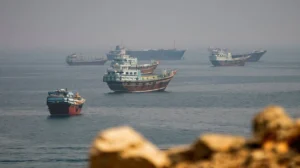
The Trump administration’s seizure of at least five Venezuelan oil tankers in recent weeks has already intensified Cuba’s ongoing energy crisis. Rolling blackouts lasting up to 12 hours per day have become routine across much of the island, further straining an economy that contracted by an estimated 2 per cent last year amid inflation exceeding 30 per cent.
Energy sanctions as a tool of political coercion
Trump’s declaration that there would be “no more oil or money going to Cuba – zero” underscores the administration’s reliance on economic warfare rather than diplomacy. By intercepting sanctioned oil shipments and threatening secondary penalties on third-party suppliers, Washington is attempting to collapse Cuba’s remaining external lifelines.
This policy has been described by Cuban Foreign Minister Bruno Rodríguez as a „ violación al derecho internacional,” while maintaining that „Cuba tiene derecho absolutamente a la entrada de petróleo desde cualquier país sin que nadie le impida.” The restrictions presented by US policy on Cuba have been viewed by Havana and other international bodies, such as a number of resolutions from the General Assembly at the UN, to affect disproportionately civilians.
However, Trump has made it apparent that humanitarian consequences mean little to him. Indeed, it seems that his administration believes economic suffering can be a bargaining chip, and that a likely state of domestic turmoil might be orchestrated by a state of shortages.
Security, sovereignty, and the Venezuela connection
A central justification for Trump’s posture is Cuba’s long-standing security relationship with Venezuela. Trump has accused Havana of propping up what he describes as “Venezuela’s last dictators” by supplying intelligence officers and personal security details to Maduro.
Cuba has acknowledged providing security assistance but strongly disputes claims of financial compensation. Rodríguez stated that Havana has “never received monetary or material compensation” for such services, portraying them instead as acts of political solidarity.
The Cuban government has also condemned the US raid on Caracas, claiming that at least 32 Cuban nationals were killed during the operation. If confirmed, this would represent one of the deadliest confrontations between Cuban personnel and US forces since the Cold War, significantly raising the stakes of the confrontation.
The revived Monroe Doctrine and US regional ambitions
Trump’s rhetoric reflects a broader ideological shift in US foreign policy toward Latin America. By invoking a rebranded version of the 1823 Monroe Doctrine — which he has dubbed the “Donroe Doctrine” — Trump is asserting an explicit claim to US supremacy across the western hemisphere.
This framework treats left-wing governments not merely as ideological rivals but as security threats linked to drug trafficking, organised crime, and foreign influence. In this context, Cuba is portrayed as both an enabler and symbol of resistance to US dominance.
The administration’s focus has extended beyond Havana and Caracas. Trump has publicly threatened Colombia, suggested military action against drug cartels in Mexico, and imposed sanctions on Colombian President Gustavo Petro, accusing him of tolerating narcotics trafficking. These actions point to a strategy that conflates counter-narcotics operations with regime pressure.
Domestic politics and performative confrontation
Trump’s hardline stance on Cuba also serves a domestic political function. Florida remains a critical electoral battleground, and anti-Castro rhetoric has long resonated with Cuban-American voters, particularly older generations. The president’s decision to repost a message suggesting Secretary of State Marco Rubio could one day lead Cuba reflects this political calculus.
Rubio, the son of Cuban exiles, has reinforced the administration’s aggressive messaging, warning that Cuba’s leaders are “in a lot of trouble.” His remarks suggest that Washington is deliberately fostering uncertainty within Havana, even in the absence of a clearly articulated policy roadmap.
The return of the terrorism designation
One of Trump’s first acts upon returning to office was to reinstate Cuba’s designation as a state sponsor of terrorism, reversing a decision made days earlier by the Biden administration. The designation carries sweeping financial and diplomatic consequences, including restrictions on banking, trade, and international lending.
Critics argue that the terrorism label is politically motivated and unsupported by credible evidence, noting that Cuba has played a role in peace negotiations in Colombia and has not been linked to major international terrorist attacks. Nevertheless, the designation further isolates the island and complicates its ability to secure fuel, food, and humanitarian aid.
A relationship frozen in history
US–Cuba relations have been adversarial since Fidel Castro’s 1959 revolution toppled a US-backed regime. While the Obama administration briefly pursued détente, reopening embassies and easing travel restrictions, Trump dismantled much of that framework during his first term.
Now, his second-term rhetoric suggests an even less conciliatory approach. By declaring that Cuba is “ready to fall,” Trump implies that collapse is not only inevitable but desirable — a stark departure from international norms that prioritise stability and civilian protection.
Sovereignty versus survival
Cuban President Miguel Díaz-Canel has responded with defiance, rejecting what he describes as US “blackmail” and defending Cuba’s sovereign right to choose its political system. His remarks reflect a broader narrative within Havana that frames the confrontation as a struggle between national dignity and external domination.
Yet sovereignty comes at a steep cost. With fuel supplies dwindling, infrastructure deteriorating, and migration accelerating — more than 400,000 Cubans have left the island since 2021 — the pressure on the Cuban state is intensifying.
An uncertain endgame
Despite Trump’s threats, Washington has offered no clear outline of what a “deal” with Cuba would entail. Whether it involves political reforms, security realignment, or economic concessions remains unspecified. What is clear is that the administration is betting that sustained economic and psychological pressure will force Havana to bend.
History suggests otherwise. Decades of sanctions have failed to dislodge Cuba’s political system, instead entrenching mistrust and hardship. Trump’s latest escalation risks repeating that pattern — amplifying suffering while deepening regional instability — under the banner of restored American dominance.