The Monroe Doctrine, announced by President James Monroe in 1823, established the Western Hemisphere as a zone free from European intervention. It asserted a protective posture rather than an expansionist one, setting a precedent for future administrations to guard the region without absorbing territory. For much of the 20th century, this framework shaped Washington’s engagement through diplomatic pressure and economic influence rather than explicit annexation goals.
By 2025, Trump’s America’s expansionism reinterprets this doctrine in ways that previous administrations avoided. Commentators tracking his speeches and policy documents note a shift from sphere-of-influence thinking to territorial ambition, a direction reminiscent of pre-World War II interventionism. The transformation expands the doctrine’s meaning far beyond its original defensive intent.
Rhetorical Escalation In 2025
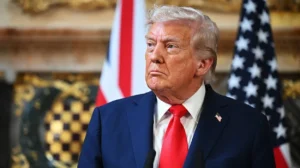
Public statements throughout early 2025 signal a sharp pivot. Trump framed economic and security concerns as justification for unprecedented intervention in neighboring states. His speeches in March and April referred directly to what he described as “unrealized American claims,” placing Canada, Mexico, and the Panama Canal at the center of revived debates.
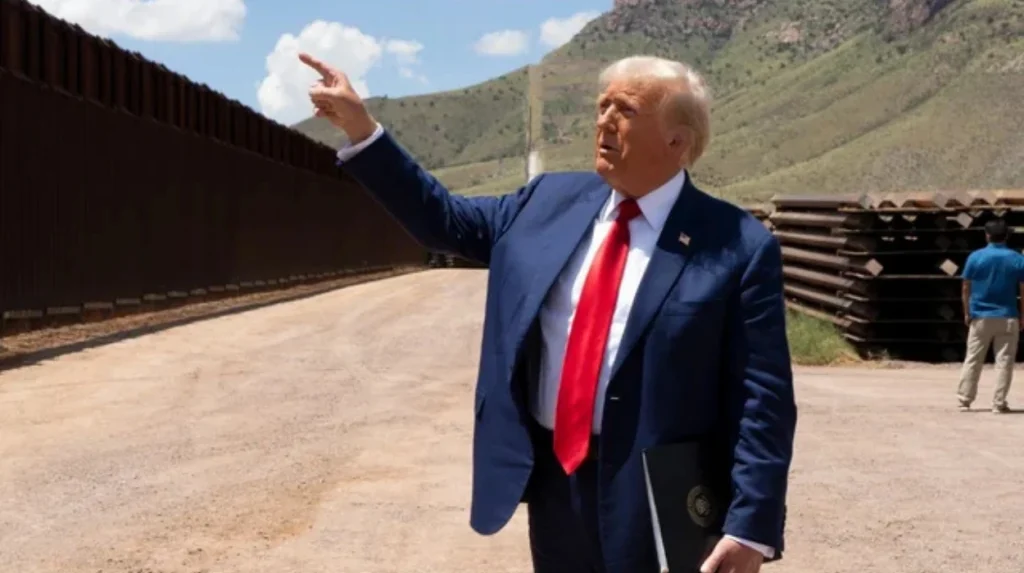
Trade tensions accelerated the shift. By April 2025, tariffs on Mexican imports reached 25 percent, tied to cross-border manufacturing disputes and migration pressures. These measures were outlined in new executive orders that argued for reclaiming leverage within North American supply chains. Critics viewed these steps as the early stages of a policy architecture designed to support territorial aspirations.
Canada As A Central Target
The most significant rhetorical escalation involved Canada. After a July 2025 national security briefing, Trump suggested that certain provinces might “benefit from integration” into the United States for mutual defense. Analysts linked his remarks to growing competition over Arctic resources. Defense officials noted that newly mapped seabed deposits could be worth more than $500 billion over the next decade, intensifying strategic pressure.
Implications For NATO
The remarks reverberated through NATO circles. Canadian leadership argued that annexation talk undermined alliance unity at a moment when European members were responding to intensified Russian activity in the Baltic region. The prospect of internal disputes within NATO over territorial claims raised questions about operational cohesion in 2025.
Panama Canal As A Strategic Flashpoint
The Panama Canal became another point of friction as global shipping congested throughout mid-2025. Trump asserted that U.S. control was necessary to restore efficiency after the canal experienced a 15 percent capacity shortfall. He cited treaty interpretations from the early 20th century, arguing that the United States retained “residual rights of enforcement,” a claim sharply rejected by Panamanian authorities.
Threats Of Military Leverage
The situation was further agitated when the U.S. officials hinted that control could have to be reverted in case Panama did not pass operational standards. The Panamanian diplomats replied by consulting the International Court of Justice in November, claiming that there was a need to seek multilateral clarification. Such developments brought back world debates concerning sovereignty, presidential boundaries.
Policy Mechanisms Reinforcing Expansionism
The September 2025 National Defense Strategy formalized a number of regional priorities, which included $120 billion of hemispheric operations within the fiscal year 2026. The paper focused on speed to react and enhanced defense belts in the south, indicating that military position in the Americas was emerging to be a high profile agenda
Economic Coercion And Trade Leverage
The initial form of pressure was trade policy. The tariffs reached a high in October, reaching 60 percent on Chinese products passing through Mexico, which has caused a break in supply chains in the region. The council on foreign relations estimated that more than 2.5 million jobs would be lost across the borders leading to a tension that Trump exploited to justify a more significant involvement of the U.S. in regulatory and territorial affairs.
Military Posturing And Alliance Reactions
In 2025, there was a 40 percent rise in joint US-LatinAmerican military exercises, which was made to signal operational preparedness in key corridors. Sending 5,000 men to the Darien Gap was introduced as an anti-cartel operation but brought in even bigger issues pertaining to sovereignty and jurisdiction.
Regional Pushback
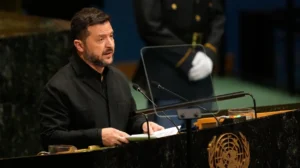
At the September UN general assembly, Canadian Prime Minister Justin Trudeau gave a very strong reaction to Trump rhetoric and termed it as a reckless provocation that jeopardized bilateral trade to the tune of 100 billion a year. Mexico responded by diversifying its alliances, completing agreements on EUR50 billion of trade with the European Union. In every international speech, Panama highlighted the issue of international law in that sovereignty was not a negotiable variable.
Domestic Divisions Within The United States
In the U.S., the response was split. Secretary of State Marco Rubio was in support of what he termed as a hemispheric recalibration. They were defended by the supporters as the changes of the geopolitical currents provoked intensified regional claims.
Opposition From Policy Institutions
Consequences were threatened by think tanks and policy groups. Brookings noted that the regional opinion in favor of the United States had declined by 30 percent in December 2025, which has led to concerns over the loss of diplomatic capital in the long run. The Foundation for Defense of Democracies scholars pointed out discrepancies in policy talk, pointing out incommensurate discrepancies between strategic planning and operational reality.
Strategic Risks And Global Repercussions
Russia and China took advantage of the tensions in the hemisphere. Russia increased its involvement in Venezuela providing $2 billion in aid packages declared by October meetings in Caracas. The Belt and Road investments in Latin America by China gained 25 percent, which paved the way to greater ties between the governments that are looking to avoid the influence of the United States.
Escalation Scenarios
The scenarios of war-games that took place in 2025 estimated that there are high risks. Analysts had forecasted that in case of a military conflict where there was an issue of territory in Canada, over 10,000 lives might have been lost. The vulnerability of the North American supply chains was proposed by economic modeling which indicated that, in the long run, trade conflict would shrink GDP by almost 2 percent.
Long-Term Geopolitical Consequences
The pressure built up broke old ties in the region. Other countries in Latin America considered looking more closely into BRICS, and Mexico attended some of the 2025 summits. These actions were indicative of more general cynicism with the U.S. course of action and presupposed a transition to multipolar involvement.
Impact On International Order
It was observed that the three elements of assertive rhetoric, trade coercion, and military posturing disrupted institutional norms of the post 1945 period. When the great powers sought expansionist discourses in their own territories, questions emerged as to the longevity of the rules-based order.
The course of Trumpian America expansionism at the end of 2025 suggests a more fundamental question of the extent to which territorial rhetoric can develop, what limits might trigger a regional crisis, and how alliances may shift to remake the balance of power in the hemisphere. According to these uncertainties, the world has become highly volatile and the ancient borders of influence and sovereignty are put to the test in ways never before seen.