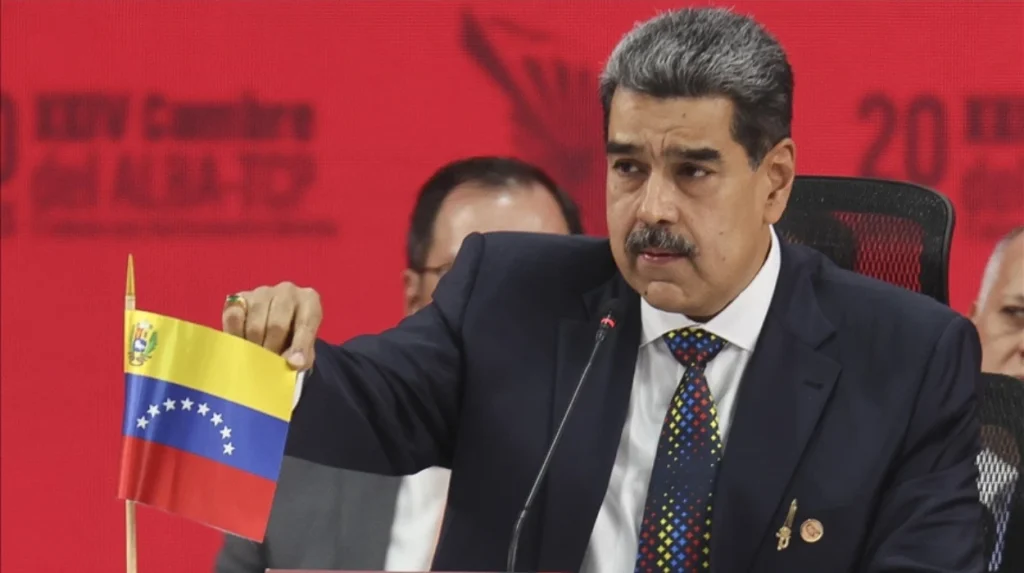
Venezuela’s reliance on its vast hydrocarbon reserves has shaped its foreign policy for decades, but the stakes reached new intensity in 2025 as President Nicolás Maduro attempted to leverage energy assets to secure political survival. His proposals in October 2025 offered the United States access to joint oil and gold ventures, framed as an alternative to conflict escalation. Maduro described these overtures as an “economic pathway to mutual stability,” suggesting that concessions on resource partnerships could ease bilateral tensions.
US officials dismissed the approach almost immediately. Washington viewed the overtures as an attempt to undermine sanctions and weaken international isolation. The rejection aligned with long-standing US priorities seeking structural political reforms rather than transactional resource deals. Diplomatic officials emphasized that energy offers could not replace governance accountability or address security concerns tied to migration, narcotics, and regional instability.
US Policy Realignment Under Trump In 2025
Donald Trump’s return to office in 2025 reoriented Venezuela policy toward intensified economic coercion. In March, an executive order introduced a 25 percent tariff on countries importing Venezuelan crude. This measure targeted non-US buyers such as China and India, which together imported more than half of Venezuela’s 2024 exports.
Tariffs And Enforcement Shifts
The tariff policy operated on a compliance-based timeline, with exemptions lapsing automatically after twelve months. By August, Washington withheld approvals for companies like Repsol and Eni, reducing Venezuela’s available export channels. The result was a 30 percent contraction in global pathways for PDVSA sales. US officials publicly tied the enforcement mechanisms to security threats rather than resource access, insisting that the policy aimed to limit funding streams for the Maduro government.
Chevron’s Limited Operational Window
Chevron remained the single US company permitted to operate in Venezuela under a tightly controlled license extension. The arrangement allowed crude exports valued at roughly $5.6 billion annually yet restricted payments that could reach PDVSA. Chevron executives met with administration officials throughout the year, navigating a compliance environment that tied corporate access to broader political objectives. Trump frequently connected these approvals to migration enforcement, reinforcing the perception that national security rather than energy needs defined US policy.
Maduro’s Calculations Behind Resource Concessions
Maduro’s offers reflected pressures that converged throughout 2025. Venezuela’s economic contraction deepened, inflation surpassed 150 percent, and political divisions persisted following disputed regional elections. Domestic analysts argued that the government had limited avenues to stabilize output, which hovered below 800,000 barrels per day and continued to fall.
Opposition candidates, including Edmundo González, described the overtures as unworkable due to PDVSA’s rigid 51 percent ownership requirements. Maduro faced compounding strains as Russian advisors and security agreements expanded in Caracas, prompting US concerns over foreign troop presence and arms transfers.
A December 2025 address saw Maduro accuse Washington of “weaponizing energy dependency” and promoting “military aggression under the guise of humanitarian pressure.” He suggested that granting US firms expanded stakes in oil and gold extraction zones could reduce tension. The United States rejected the proposal within days, signaling unwillingness to link resource access to political de-escalation.
US Priorities That Shaped The Rejection
Washington’s approach in 2025 emphasized strategic risk assessment over energy considerations. Intelligence briefings highlighted Venezuela’s role in regional instability, referencing $2 billion in Russian assistance and expanding Chinese infrastructure investments under Belt and Road initiatives.
Security Dimensions Of The Decision
Pentagon assessments identified potential threats tied to organized criminal networks, including the transnational spread of the Tren de Aragua group. Venezuela resumed deportation flights in early 2025, returning 200 individuals identified by US authorities. While these actions were portrayed by Caracas as concessions, they did not alter Washington’s broader strategic outlook.
Geopolitical Counterbalances
Russia’s October security summits in Caracas and BRICS outreach efforts created an environment in which Venezuelan overtures appeared to serve multiple geopolitical aims. The United States viewed the offers as part of a broader strategy to diversify Maduro’s alliances rather than a genuine effort to reform extractive partnerships. This contributed to Washington’s decision to reject the proposals despite economic incentives.
Domestic Political Drivers In The United States
The political situation of 2025 became a major determinant of the position of the administration. Opinion polls indicated massive electoral backing of a tough strategy on Venezuela with the issue of migration issues on top of publicity. Those policy institutes monitoring energy trends, such as the Foundation to Defense democracy, claimed that the pressure improved the US bargaining power and minimized the risks over an extended period.
The congressional committees went in support of the administration interpretation and stressed the use of sanctions as the most important means of influencing the behavior of the Venezuelans. Rejection of energy concessions of Maduro can be arranged in this wider context.
Regional Reactions And Economic Ripples
The plight in Venezuela had assisted in policy complications in Latin America. Colombia was trying to find alternative sources of crude oil to reduce their exposure to US tariffs and Brazil opted to keep a balanced position to ensure that they did not further polarize the region. Mexico deepened the relationship with the European Union, and as a result trade agreements worth EUR50 billion were signed aimed at cushioning the turbulence in the hemisphere energy markets.
In late 2025, oil prices stood at models of about 75 per barrel regardless of Venezuela tightening export control. According to the analysts of the Energy Policy Center of Columbia University, disruptions related to sanctions impacted up to 2.5 million positions in the region, especially in maritime transport and refining industries.
There were also diplomatic repercussions. The non-attendance of several members of OAS in US-sponsored resolutions that dealt with Venezuela was an indication that they were not comfortable with the actions that were becoming more coercive.
Possible Trajectories For Venezuela’s Energy Future
As the overtures were rejected and sanctions were expected to persist, analysts estimated that Venezuela would produce less than 700,000 barrels a day in early 2026. The lack of investment, old infrastructure and the lack of access to technology remained limiting PDVSA in its recovery efforts.
Chevron’s Extended Influence
The carve-out of Chevron was one of the most important variables as it allowed extracting it with limited consideration and US retaining leverage. It was proposed that discussions in late 2025 would be the renewal of the license but with more stringent conditions, which strengthens the balance between economic involvement and political pressure.
Maduro’s Remaining Options
Venezuela can seek greater integration with the non-Western allies. Russian and Iranian officials discussed new refinery agreements, and members of the BRICS gave signs of desire to increase financial assistance. But there are some technological constraints of these avenues and there is also a danger of long term dependency.
The strategic importance of the conventional resource endowment in Venezuela is structurally altered as the world shifts to renewable energy and the Arctic shipping routes begin to alter the trade patterns. It is still not clear whether these changes will force the US policies to be rebalanced or the political forces will ensure the existing course of action.
This rejection of the Maduro oil bait highlights a question that will need to be posed in 2026: how is resource diplomacy as a tool tenable as geopolitical realignments start taking a larger place in the shadow of traditional energy resources?