The US Israel relations 2025 foundations indicate a great reimagining of the situation due to the change in political priorities, the opinion of people, and the situation on the ground. The bilateral relationship has been working on the same basis over the decades with military assistance and diplomatic support being the main structure of support to the American cause. This long-standing model, however, has recently changed towards a more conditional and leveraged partnership with changes in expectations on both sides.
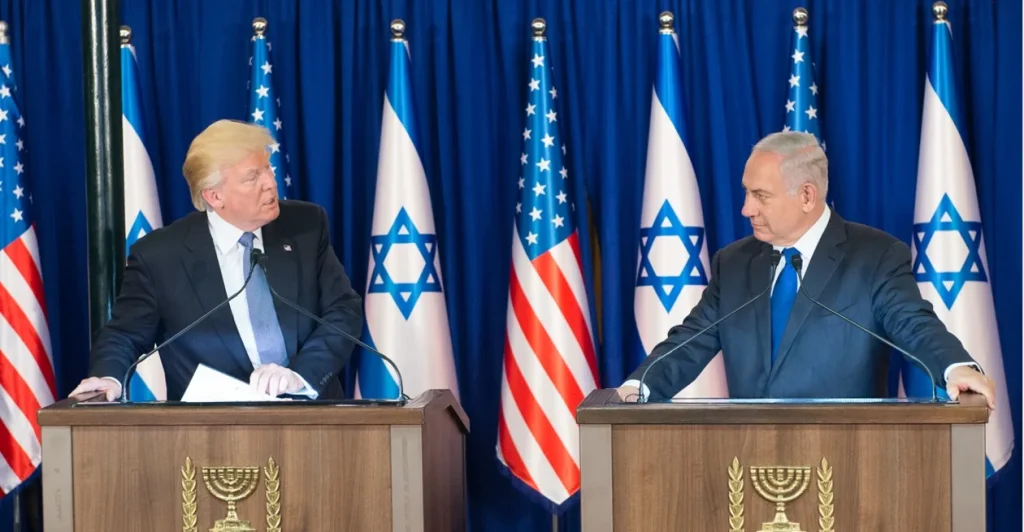
One of the key driving forces behind this change is the aggressive nature of the policy of President Donald Trump whose continued impact on policymaking in the Middle East in 2025 is changing the outlines of the US-Israel relationships. The fact that he pressured Prime Minister Benjamin Netanyahu directly to agree to a twenty-point Gaza ceasefire plan underscores the strategic bargaining position Washington can currently make. It is devoid of emphasis on historical commitments but rather, in alignment of Israeli activities with that of the wider US regional goals, which are restraint, stability and de-escalation in flashpoint regions.
Such a re-focused position reflects a policy climate in which American military assistance is large but is being more conditionalized. This conditionality of such assistance reflects the manner in which Washington had changed his approach to accountable diplomacy, which is an indication to Israel that they must be strategically aligned first before they can enjoy the continued benefits of such assistance.
Public sentiment and its influence on policy directions
The future course of the US Israel relations 2025 is influenced heavily by changing the general opinion in the United States. The results of polling during the year show that the positive attitude to the Israeli government has declined significantly. A survey by Pew Research shows that unfavorable views are at 59 percent in America compared to 51 percent last year. The tendency is acute among younger voters and Democrats, as a great number of them tend either to be more sympathetic to Palestinians or take neutral positions as the humanitarian situation in Gaza grows increasingly problematic.
How has sentiment shifted across demographics?
This is a divide in generation and ideology that affects the atmosphere of congressional discussions, especially when it comes to military aid packages and transfers of weapons. Policies that were unanimously passed through the policy process are now under more intense examination and being called to task. A number of legislators even propose a conditional aid upon Israeli compliance with international humanitarian norms, which is a manifestation of the general unease that the country feels about extended military activities.
Implications for legislative decision-making
Such changes have a direct influence on policy making. Arguments on the sale of arms, the allocation of funds and diplomatic immunities at the UN outline rifts that previously could remain invisible in congress. Although solid affairs in favor of Israel still appear a bipartisan condition, the solidarity and consistency of the support are no longer assured. What has come about is Israeli politics where Israeli policies are analyzed in a more critical and accountability-based manner.
Media narratives and their broader influence
This realignment is strengthened by more intense attention by American media agencies and international coverage of the conflict. Similar coverage by the large broadcasting houses is an indication that there is an increase in pressure on Washington to strike a balance between its affiliation to Israel and its focus on humanitarian results. These kinds of stories reinforce the position of conditional engagement, which states that US interests should consider both strategic and ethical concerns.
Strategic consequences for Israel’s decision-making environment
These reconstructed balancing of the US puts Israel on a state where strategic independence exists alongside increased dependency. Surveys carried out domestically in Israel demonstrate that almost fifty percent of the population assume that US policies have a stronger impact on their national security choices than the instructions given by their government. This feeling highlights the increased pressure of American demands in Israeli operations planning.
Constraints on military and diplomatic actions
Layers and restrictions on Israeli decision-making can be exemplified by US interventions in ceasefire talks and its encouragement of the international stabilization mechanism of Gaza. The initiatives introduced by Trump under the UN Security Council, as well as the idea of inclusiveness of diplomatic alliances, promoted by his administration, create new facets of control that have never existed in the previous periods of bilateral relations.
Balancing national security with allied expectations
The American support is increasingly conditional, which presents Israel with a fine balancing act of keeping up the required security activities and being aware of this reality. The discussions on military involvement, the policy of settlements, and the strategy of reaching out to the region become more and more inclusive of the consequences that may face Washington, especially with the increasingly divided population and political opinion.
Impact on domestic political dynamics
These pressures are directly in line with the complex political environment of Netanyahu. As Trump continues to gain popularity among some sections of Israeli voters, the prime minister is faced by some form of doubt, which is based on economic issues, security challenges, and criticism by other countries. The interactions make it more difficult to maneuver Israel through the demands of the US since the government has to exhibit the ability to project itself as autonomous in policy formation.
Regional diplomacy and multi-state partnerships reshaping relations
The developing Middle East approach of Washington which gives more attention to multilateral diplomacy also influences US Israel relations 2025. The American interest with Egypt, Qatar, Saudi Arabia, and Turkey is an indication of a wider development towards coalition-based conflict management. This rebalancing facilitates sharing of the regional burden and minimizing the escalation pressure.
Role of multilateral mediation efforts
By incorporating regional partners into ceasefire frameworks and humanitarian negotiations, the US broadens the diplomatic space in which Israeli decisions are evaluated. Such multilateral oversight places indirect constraints on Israel while helping the US balance its commitments against regional expectations.
Strategic recalibration under Trump’s foreign policy posture
Trump’s focus on transactional diplomacy reinforces this multilateral approach. His administration’s willingness to attach conditions to aid while maintaining high-level support marks a departure from earlier eras defined by largely unconditional backing. This creates a more fluid but also more demanding diplomatic environment for Israel.
Broader geopolitical implications
The rise of Russia-China engagement in the Middle East further complicates US-Israel calculations, as Washington seeks to prevent strategic openings for competing global actors. Conditional support becomes not merely a political preference but a strategic necessity to maintain influence without deepening regional instability.
Influence of public figures speaking on the topic
This person has spoken on the topic and emphasized the shifting expectations surrounding US involvement in Israeli military operations, noting the increased reliance on American diplomatic pressure to shape conflict outcomes. The commentary highlights how Washington’s assertiveness in 2025 reflects a broader initiative to recalibrate military aid, humanitarian oversight, and regional stability efforts, reinforcing the evolving contours of US Israel relations 2025 (X Link).
A shifting alliance with long-term implications
The transition from unconditional support to conditional partnership marks a pivotal chapter in US Israel relations 2025. It signals a future where military aid, diplomatic protection, and political alignment increasingly depend on shared strategic goals and public accountability. While the core alliance remains intact, its character is being reshaped by domestic opinion, geopolitical complexity, and evolving leadership priorities. The emerging landscape suggests an era defined by negotiation, recalibration, and heightened scrutiny, prompting questions about how both nations will adapt as global pressures and regional conflicts continue to evolve.