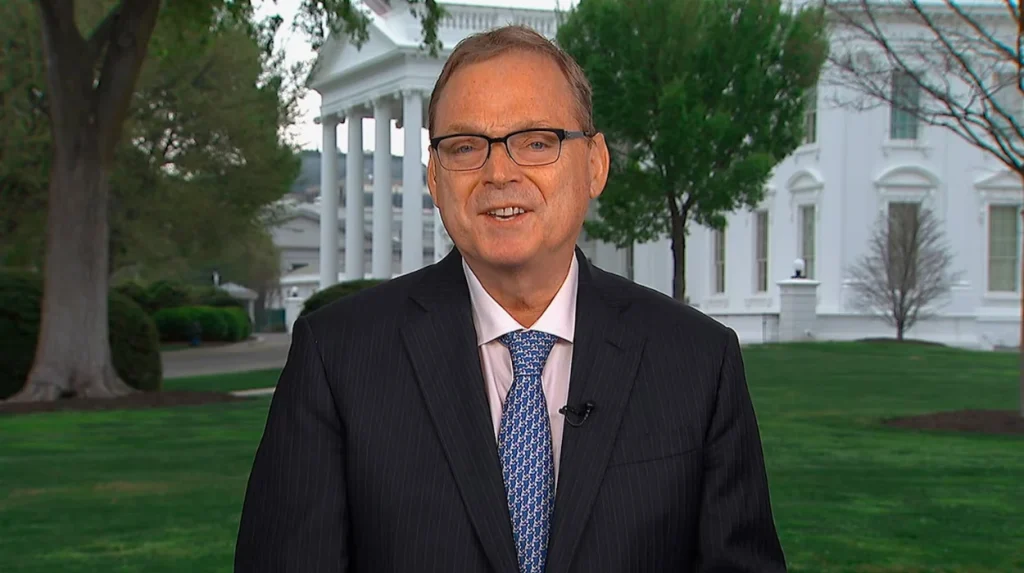
Kevin Hassett, the current Director of the National Economic Council (NEC) in 2025, has become one of the key figures in the transformation of the balance between economic systems and the foreign policy of the United States. He has a unique view on utilizing fiscal instruments to advance strategic global objectives, given his career history based on academic economics and policy advisory.
The influence that Hassett achieves in the present geopolitical environment, which is based more on economic rather than military power, is indicative of a more fundamental institutional change. He incorporates economic statecraft in his work by applying the tools of diplomatic plans like sanctions, trade adjustments and plans of investments to control international alliances and international rivals. Under his direction, the NEC has become more involved in foreign policy formulation, ensuring economic policies enhance not conflict with defense and diplomatic strategies.
Economic Statecraft As A Tool In Geopolitical Competition
One of the defining aspects of Hassett’s strategy is the renewed focus on sanctions as precision instruments of deterrence and influence. In 2025, the United States expanded coordinated sanctions on Russian financial networks, Iranian industrial groups, and Chinese AI surveillance firms. These actions, often in sync with European and Indo-Pacific allies, aim to cut access to capital, technology, and influence for entities seen as threats to democratic order.
Hassett’s emphasis has been on refining enforcement capabilities. Enhancing financial intelligence sharing between the Treasury and foreign central banks has become a cornerstone of this approach, preventing sanctions evasion and reinforcing compliance through stronger legal and banking frameworks.
Trade Policy And Economic Alliances
Hassett’s economic diplomacy also emphasizes forging deeper economic integration with traditional allies. Trade negotiations in 2025 with the European Union, Australia, and Brazil reflect this alignment. These agreements are not only about tariff reductions or market access; they are designed to solidify long-term political and technological cooperation.
The concept of “trusted supply chains” has gained prominence under his guidance. It is also hoped that agreements that focus on secure logistics, data governance, and flows of resources will lessen dependency on strategic competitors such as China particularly in areas like semiconductors, elements of critical materials and green technology.
Domestic Economic Strategy Underpinning Foreign Policy
The domestic economic policy of Hassett that relies on the principles of supply-side is aimed at making America competitive in the long run. Early 2025 tax reforms are meant to stimulate capital investment, especially in high-technology manufacturing and research and development that are important to national security. Such initiatives are backed up by specific deregulation in biotechnology, AI, and energy innovation.
Promoting a high growth environment within the country, Hassett argues that the US can keep its leadership position in the global world without excessive dependence on traditional projection of power. The 2025 National Competitiveness Strategy, which was developed in collaboration with the Department of Commerce, balances incentives to support innovation with national security objectives, particularly in sectors primarily reliant on exports.
Federal Reserve Interaction And Monetary Alignment
Although the Federal Reserve operates independently, the NEC under Hassett has engaged more deeply with monetary strategy as a component of economic statecraft. Exchange rate stability, inflation control, and investor confidence are recognized as essential to sustaining global influence.
Hassett has publicly supported stronger coordination between fiscal authorities and the Fed, particularly in managing inflationary pressures while sustaining capital formation. His name has been floated for potential leadership at the central bank, with supporters arguing that his background could help bridge the divide between monetary stewardship and strategic policymaking.
Strategic Impact Of Hassett’s Economic Pillars On US Foreign Policy
Hassett’s work demonstrates a structural realignment of how the US engages with the world. The shift from purely military-diplomatic initiatives toward economically driven influence strategies reflects the nature of modern geopolitical rivalry. In 2025, American pressure on adversaries is as likely to come through financial restrictions and export controls as it is from defense agreements.
This model has had noticeable effects. In Southeast Asia, nations have joined new US-led digital trade partnerships, attracted by incentives for clean technology investment. In Eastern Europe, security assistance is now accompanied by reconstruction-linked economic frameworks reducing the vacuum that previously allowed adversarial influence to grow.
Managing Global Risks Through Economic Coordination
As global risks multiply from AI proliferation to climate-induced instability economic coordination is seen as central to crisis management. Hassett’s NEC has been involved in cross-agency task forces addressing these emerging challenges.
In 2025, the US-led Global Financial Resilience Forum was launched with support from G7 economies, providing rapid response tools to economic disruptions in vulnerable regions. Such tools, blending development assistance with strategic alignment, underscore Hassett’s belief that long-term stability depends on economic resilience as much as military alliances.
Challenges Ahead In Balancing Power And Partnership
Although the influence of Hassett has made the US domestic development stronger and the foreign policy more coherent, it has also caused controversy. There are critics who claim that excessive focus on economic levers runs the risk of pushing away partners or simplifying complicated issues of politics. Others warn that economic coercion would only be sustainable in the long run as it would wear out sanctions, fragmentation of global markets and retaliatory policies of competitors.
Nevertheless, its proponents emphasize the fact that the methods of Hassett do not oppose each other in terms of isolationism or interventionism. His economic system provides a way forward that keeps the US at the helm without overstepping by creating alliances based on mutual prosperity and resiliency to protect them.
The implication of the involvement of Kevin Hassett in the formation of the economic principles of the foreign policy is a radical change in the American statecraft. With countries competing on the basis of technological superiority, financial connections and the security of resources, economic strategy being an aspect of global politics is not just preferable, but necessary. The durability of this model will be based on how it is advantageous to the multipolar world and how it will provide mutual benefits as well as being able to safeguard the national interests.
As the geopolitical conditions are going to change in 2025 and beyond, one might ask whether this balance is going to be refined and redefined by the future administrations. Hassett’s legacy may lie not in a specific policy but in institutionalizing economics as the starting point for foreign policy design, a paradigm likely to endure long after his tenure.