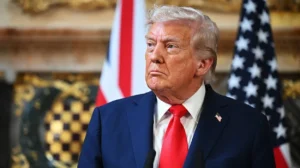
The Trade Over Aid doctrine proposed in April 2026 represents a radical recalibration of the United States foreign policy, focusing more on encouraging private investment and commercial diplomacy rather than traditional development assistance. The initiative was announced at the New York Stock Exchange, placing market-led growth as an alternative to state-based aid flows, with officials arguing that sustainable development requires integration into global capital systems, as opposed to depending on aid flows provided by donors.
It is in this policy direction where a backdrop of decreasing official development assistance is seen. The US aid, according to the OECD data, declined drastically, with the aid amounting to under $29 billion in 2025, compared to $63 billion in the year 2024. Chair of OECD Development Assistance Committee, Carsten Staur, described the decrease as deeply worrisome, and reflects the increasing disparity in global needs and funding.
Strategic logic behind trade over aid
Trade Over Aid is presented by the administration as a remedy to what it termed as inefficient aid dependency. Focusing on the partnerships in terms of investment, regulatory changes and the involvement of the private sector, policymakers claim that the developing economies can attain more sustainable growth results.
Nevertheless, this would presuppose that the capital markets would be able to replace the grant-based aid, especially in the weak or conflict-ridden countries. Although investment can help increase infrastructure and industrialization, it is less appropriate to address immediate humanitarian demands, like food security, health interventions, and emergency relief.
Institutional implications for development agencies
The transition also portends a structural change in the functioning of the US institutions in the foreign countries. The agencies such as the USAID are being restructured or shrunk and their resources are being redirected towards facilitating deals on private investment rather than the running of aid programs.
This shift is a metamorphosis of the operational identity of US development engagement. This has seen aid agencies being placed more as mediators between governments, investors and multilateral frameworks than they used to be direct service providers.
2025 funding precedents set the stage for retrenchment
The policy of Trade Over Aid did not arise in a vacuum but is based on a set of funding decisions throughout 2025 that transformed the US contributions to the international institutions. In August 2025, the administration announced an effort to cancel $4.9 billion previously approved foreign assistance with a pocket rescission, so it would expire without congressional action.
This ruling has been widely criticized on a bipartisan basis as a reflection of the executive exceeding its authority and legislative authority being taken away. It was also an indicator of readiness to do without the use of conventional funding schemes in a quest to achieve fiscal and strategic objectives.
Peacekeeping and multilateral cuts
Other important precedents included the cancellation of nearly $800 million in peacekeeping contributions in 2024 and 2025. This action saw the introduction of an a la carte approach to funding multilateral institutions whereby contributions made to the multilateral institutions are conditioned on compliance with US policy aims.
By early 2026, the arrears due to the United Nations had reached around 1.5 billion. Such arrears under Article 19 of the UN Charter run the risk of the suspension of voting rights in the General Assembly which would raise questions about the long term implications of the suspension of voting rights in the General Assembly.
Congressional moderation and fiscal tension
Congress toned down some of the FY2026 budget cuts proposed by the executive, approving foreign assistance of up to $50 billion. This was a 16 percent drop compared to 2025 but was still a lot higher than the original request of the administration.
The split underscores the current strife between austerity and offensive. Although the politicians have expressed interest in cutting down on spending, they have been opposed to the idea of completely eliminating existing aid structures.
UN budget vulnerabilities deepen under reduced contributions
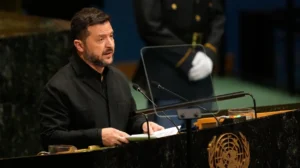
The Trade Over Aid model has a direct impact on the financial stability of the United Nations which depends largely on assessed and voluntary contributions of member states. The United States, the long-term biggest contributor, is central to ensuring the capacity of the organization to operate.
In early 2026, UN Secretary-General António Guterres cautioned of a possible imminent financial collapse in the event funding gaps continue. Late and diminished contributions have already put a strain on peacekeeping efforts and administrative operations, as well as on development initiatives.
Conditional funding and reform demands
US diplomatic communications have made future contributions, under a set of reform conditions, including administrative costs reduction, pension restructuring, and measures to increase the efficiency of operations. These quick win reforms are positioned as being required in order to hold the UN accountable but also create a degree of uncertainty in the budgeting process of the UN.
The management has also suggested a 10 percent cut in the amount of money it spends on peacekeeping as part of wider cost-cutting measures. Although those in support believe that this will promote efficiency, the opponents fear that this would have the opposite effect and weaken missions in conflict zones where resources are already strained.
Legal and political constraints
Assessed dues to the UN are not voluntary like the voluntary contributions but are regarded under the international agreement as legal obligations. Guterres has stressed that the inability to fulfill these commitments not only impact operations, but also question the integrity of the multilateral system.
This conflict between the law and the politics highlights the bigger dilemma of the US foreign policy; balancing domestic fiscal concerns with international obligations.
Humanitarian and health systems face growing strain
The decline in aid resources has direct implications on the global humanitarian and health initiatives. Proposals in the FY2027 budget have revealed that there would be significant reductions in global health spending, with the possibility of budget cuts on programs such as family planning and reproductive health by up to 20 percent.
Humanitarian support is also in the process of centralizing into a few central accounts, and that amounts to around 4 billion dollars. The restructuring is raising questions on the capacity to respond to crises especially in the areas where conflict, climate change, and economic instability are prevalent.
Impact on global health infrastructure
The organizations that are involved in the prevention of HIV, food security, and disease control have warned that the reduced funding may reverse the gains, which have been achieved in the previous decade. The end of USAID-funded projects in 2025 allegedly resulted in the loss of about 280,000 jobs all over the world, involving both local personnel and contractors.
Critics suggest that privatized investment is not easily able to substitute these functions, because many health interventions do not produce cash returns. This leaves a disjuncture between the kind of activities that are popularized under Trade Over Aid and the realities of the needs of the people as far as health is concerned.
Food security and development challenges
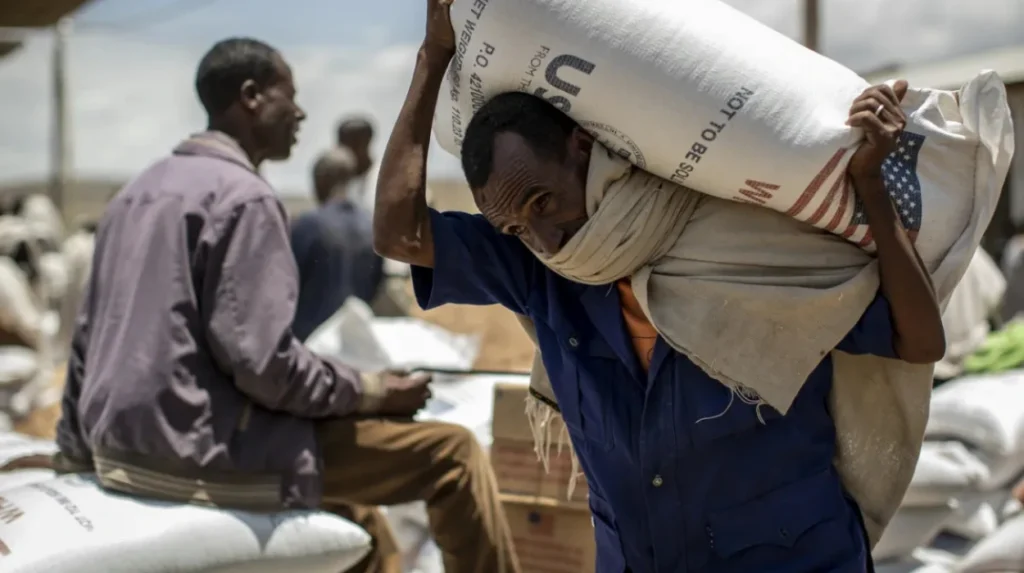
The proposed elimination or reduction of programs such as Food for Peace further illustrates the shift away from direct assistance. At a time when global aid flows declined by 23 percent in 2025, the reduction of food aid exacerbates vulnerabilities in regions already facing shortages.
Foreign direct investment, while important for long-term growth, declined by 11 percent in 2024, suggesting that private capital alone may not compensate for reduced public funding.
Multilateral engagement shifts toward selective partnerships
The Trade Over Aid initiative has gained support from a group of approximately 35 countries by early May 2026, indicating a degree of international alignment with its principles. These countries view private-sector engagement as a pathway to reducing dependency and fostering economic resilience.
However, this alignment is not uniform. Many developing nations continue to rely on aid for essential services, creating a divide between those able to attract investment and those dependent on grants.
Withdrawal from multilateral frameworks
The policy also coincides with a broader pattern of US disengagement from multilateral institutions, including withdrawals from the World Health Organization, the UN Human Rights Council, and UNESCO. These moves reflect a preference for bilateral or ad hoc arrangements over institutional cooperation.
While this approach may increase flexibility, it also reduces the predictability and coordination that multilateral systems provide. For the UN, this translates into greater uncertainty in planning and resource allocation.
Diplomatic and economic recalibration
US officials have actively promoted the Trade Over Aid model through diplomatic channels, encouraging allies to adopt similar approaches. This includes lobbying efforts and public messaging that emphasize efficiency, accountability, and economic opportunity.
At the same time, critics argue that the model risks prioritizing commercial interests over humanitarian considerations, potentially widening global inequalities.
Strategic implications for global governance and development
The Trade Over Aid policy represents more than a budgetary adjustment; it signals a redefinition of how global development is conceptualized. By shifting from aid to investment, the United States is reshaping the incentives and structures that underpin international cooperation.
For the United Nations, this shift introduces both challenges and opportunities. While reduced funding creates immediate operational pressures, it may also prompt reforms aimed at increasing efficiency and diversifying revenue sources.
Balancing investment and assistance
The central question is whether a hybrid model can emerge that integrates private investment with targeted aid. Such a model would need to address the limitations of market-based solutions while preserving the benefits of economic growth.
Experts suggest that without safeguards, the transition could leave the most vulnerable populations underserved. Investment tends to flow toward stable, profitable environments, leaving fragile states at risk of neglect.
Long-term outlook for multilateral stability
As arrears accumulate and funding becomes more conditional, the stability of multilateral institutions may depend on their ability to adapt to a changing financial landscape. This includes exploring alternative funding mechanisms and strengthening partnerships with non-state actors.
The evolving dynamic raises broader questions about the future of global governance. If major contributors shift toward unilateral or transactional approaches, the collective capacity to address shared challenges may be tested.
The trajectory of Trade Over Aid suggests a world where economic pragmatism increasingly shapes diplomatic engagement, yet the unresolved tension between market efficiency and humanitarian necessity continues to define the boundaries of what such a policy can realistically achieve.