South Korea made a historic commitment of investing in the United States as it promised about $350 billion. This commitment that will become part of a new bilateral trade agreement is a significant strategic move to not only evade high tariffs, but also to reinforce economic relations.
Its investments include major areas regarded as strategic to the upcoming industries- semiconductors, electric batteries, rare earth minerals, artificial intelligence, pharmaceuticals, shipbuilding and quantum computing. The entire amount has been allocated to industrial infrastructural development in the United States amounting to $150 billion. This involves increasing South Korean controlled production in hi-tech materials and hastening research and development centers that are operated in a joint venture by the U.S. partners.
The finance ministry of the Republic of Korea is establishing a special task force to oversee the implementation process whereas the U.S. Commerce Department is preparing a memorandum of understanding (MOU) to establish the control mechanisms. The financial institutional commitment blends direct capital injection, state-guaranteed loans, and government guarantees to make every investment stable and accountable over the long term.
Economic And Political Context Surrounding The Agreement
The $350 billion promise emerged amid a looming threat of punitive U.S. tariffs targeting South Korean exports. The Trump administration had floated 25% tariffs on sectors like automotive parts, consumer electronics, and steel. The July trade deal scaled this down to a 15% ceiling, conditional on South Korea executing the investment package. This provided the political cover to both parties to help them sell the deal within the national arena.
These strategic concessions by South Korea therefore assisted in de-escalating trade tension without giving away all economic leverage. Seoul demanded that a high percentage of the funding should be in the nature of debt instruments but not in the nature of equity so that the foreigners could not have un-proportionate foreign control of its returns on investment.
Disagreements Over Investment Control
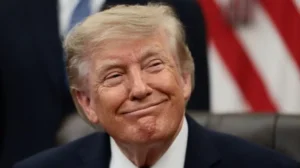
The package has been sold as a major victory by American manufacturing and employment by President Donald Trump. He claimed that the U.S. agencies would be at the forefront in the selection of the projects that would be South Korean funded. South Koreans protested against this frame and emphasized the necessity of equal control and maintenance of economic independence.
Although there was divergence in implementation outlook, both parties agreed that the framework would be reviewed semi-annually to guarantee that the framework is geared towards the larger trade objectives as well as the industry priorities.
Geopolitical And Security Dimensions
The trade commitment coincides with broader U.S.-South Korea security cooperation. Increased activity in the South China Sea and the increase in missile activity by North Koreans have led to joint military exercises since early 2025. The agreement further conforms to the Washington plan of securing key supply chains in regions susceptible to geopolitical interruption, especially those of semiconductors and rare earth elements.
Lee Jae-myung, South Korean President has struck a balance between the two-dependency of the country on the U.S. and China. Although the investment transaction enhances the relations of the alliance with Washington, Seoul takes a cautious step so as not to provoke the retaliatory action of Beijing. This renders the accord a test of whether South Korea could maintain the strategic neutrality in a bifurcated world economy.
Strategic Significance In U.S. Industrial Policy
The investment flows into sectors central to the Biden-era CHIPS Act and Inflation Reduction Act, now maintained and expanded under the Trump 2024 administration. South Korea’s involvement supports U.S. ambitions to re-shore industrial production, reduce Chinese technological dominance, and build a trans-Pacific coalition of trusted supply partners.
Challenges And Criticisms
While the dollar value of the commitment is significant, specific operational frameworks are still under development. Concerns persist over transparency, local labor inclusion, and intellectual property arrangements. Regulatory alignment, particularly in digital trade and AI ethics, remains unresolved.
The South Korean parliament has also raised questions about the lack of prior legislative scrutiny before the deal was finalized. Domestic industrial lobbies worry that excessive capital outflows to U.S. projects may come at the cost of domestic reinvestment and technological leadership.
Sovereignty And Domestic Backlash
There are growing voices in South Korea warning of potential erosion of industrial sovereignty. Business leaders in the country’s pharmaceutical and electronics sectors have expressed unease about U.S.-imposed investment controls. Calls for renegotiation or safeguards are intensifying, especially among opposition lawmakers ahead of the December 2025 legislative elections.
Trade Diplomacy And Strategic Interdependence
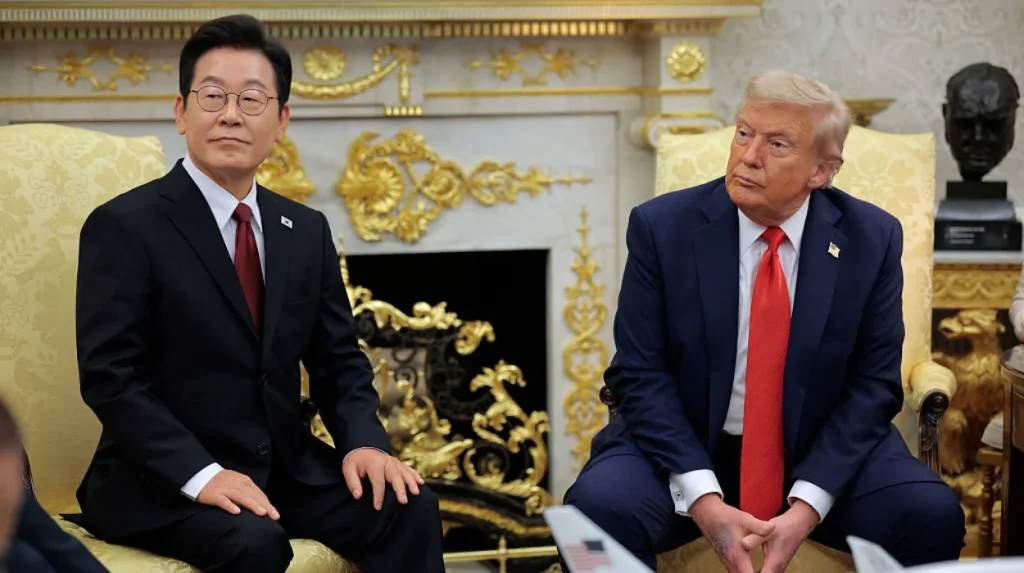
The July 2025 summit between Presidents Trump and Lee Jae-myung formalized a deal that represents more than an economic handshake. It signaled a comprehensive convergence of trade, technology, and strategic cooperation under growing global fragmentation. The $350 billion commitment now serves as a bellwether for what future cross-national investment frameworks might resemble—conditioned on national interests, industrial security, and mutual resilience.
Nick Sortor, a political commentator known for analyzing trade diplomacy, captured the core dynamic by noting,
“South Korea’s investment pledge symbolizes more than money, it is a strategic alignment in a fraught global order, testing trade diplomacy’s limits.”
How this deal materializes over the next few years will determine not just the trajectory of the U.S.–South Korea economic relations but also influence how allies and competitors structure their own bilateral agreements. The promise of mutual growth is clear, but its fulfillment depends on resolving tensions between strategic autonomy and partnership discipline. As global supply chains realign and industrial policy enters a new phase, the South Korea–U.S. model may set a precedent for future economic statecraft.