Hungary’s Paks II nuclear development, a €12 billion initiative, stands as the central pillar of its energy strategy through the next decade. Designed to house two VVER-1200 reactors built by Russia’s Rosatom, the facility is expected to double Hungary’s nuclear output. The expansion will not be only a technical upgrade of the current Paks facility as it already manages to supply about a half of the country with electricity, but it is a planned security measure as well as to stabilize the energy prices in the long-term and stabilize the external ties.
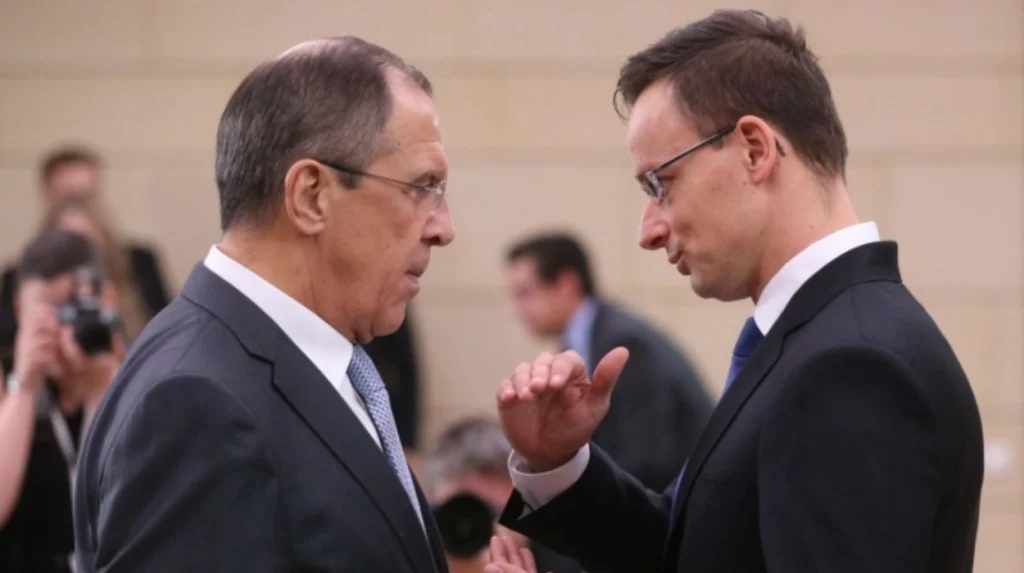
P. Szijjarto, Hungary foreign minister, heralded the lifting of sanctions by the U.S. Treasury in June 2025 as a new starting point in the bilateral relations. Taking the General License 115B in consideration, the U.S. gave a more practical ground to various civil nuclear projects still in the process, such as Paks II by not subjecting them to penalties involving Rosatom. Not only is this policy reversal unlocking long stalled infrastructure but also reviving the decades old Hungarian approach of taking its energy insulation via self-sufficiency nuclear generation.
The Shift from Deterrence to Engagement
Under the Biden administration, Hungary’s dealings with Rosatom were subject to sanctions, part of a broader campaign to isolate Russian state-backed enterprises following the Ukraine conflict. The Trump administration’s pivot reflects a more pragmatic calculus, prioritizing national energy goals over collective sanction pressure. Hungary, for its part, welcomed the decision as a revalidation of its sovereign right to chart an independent energy course.
The project’s resumption also signals to investors and suppliers—many of them based in France and Russia—that financial and logistical obstacles are easing. With contracts already active and manufacturing underway for core components, the momentum behind Paks II now appears irreversible, barring a geopolitical shift or EU regulatory intervention.
European Energy Policy in Friction with National Sovereignty
Hungary’s Challenge to EU Energy Unity
The deep Russian involvement in Paks II places Hungary in a difficult position within the European Union. Since Brussels struggles to free the bloc of Russian energy influence, Budapest taking the step to continue using the Rosatom technologies runs counter to the joint initiative of the EU. Hungary, and Slovakia, have opposed sanctions in the energy-sector and said that national demands must not be abandoned in the name of regional compromise.
This could also tear apart EU solidarity. Whereas other member countries see the sanctions relief as a move out of a collaborative strategy on the part of Washington, the leaders at the Hungarian side however argue that the move strengthens the sovereign strategic decision-making process within a partnership EU. This case has brought back the ancient controversies of subsidiarity in European energy governance when climate policies and geopolitical machinations coincide within policy formulation.
Strategic Risk of Technological Dependence
Rosatom does not engage in purely transactional activities. Nuclear power plants are so integrally intertwined with technical standards, maintenance regime and operational expertise, it forms years worth of dependency. As noted by security analysts, in such settings there is a risk that Moscow may gain more leverage on how Hungary manifests itself in terms of energy position, especially in the case of political strains or resurrection of sanctions.
Hungary claims that its strategy of energy diversification, including LNG and renewables, as well as Western cooperation in the sphere of nuclear energy, reduces these risks. Nevertheless, the struggle between being reliant on technologies and politically uninvolved is fragile, and more so, with how the EU thinks of regulating or monitoring any Russian-related energy projects on its territory in the future.
U.S. Policy Adaptation and Bilateral Diplomacy
Reframing of Strategic Engagement with Hungary
The Trump administration’s decision to authorize General License 115B marks a strategic shift. By creating a carveout for civil nuclear projects initiated before late 2024, the U.S. sent a message that its sanctions policy could accommodate allied national interests. This selective flexibility, while potentially undermining the coherence of multilateral sanctions, may preserve valuable bilateral goodwill in the short term.
Hungarian authorities seized on the decision as a diplomatic victory. Szijjártó publicly thanked U.S. counterparts for what he termed a “respectful and rational decision,” suggesting Budapest sees the move as a renewed trust-building exercise. Washington’s response aligns with a broader effort to maintain influence in Central Europe by differentiating strategic allies from adversaries in implementation of sanctions policy.
Implications for Broader Sanctions Frameworks
This exemption sets a precedent. Other countries within the EU or Eurasia with ongoing or planned Rosatom-linked projects may now look to replicate Hungary’s approach. The risk is that such exemptions normalize selective compliance, weakening the enforcement logic of broad-spectrum sanctions. Analysts suggest future exceptions will need clearer guidelines to prevent fragmentation of the sanctions regime.
Nonetheless, Hungary’s case illustrates how energy security can be used to justify policy flexibility. The United States may be signaling that its core interests now include pragmatic support for nuclear stability and low-carbon energy, even when these intersect with Russian partnerships.
Reactions Within Europe and Across the Atlantic
Intra-European Policy Strains
Brussels has yet to formally respond to the U.S. exemption, but quiet discontent is evident. European energy officials argue that such bilateral deals could undermine the bloc’s sanctions authority and complicate joint decision-making. Hungary’s vocal resistance to energy-related punitive measures has already affected EU unity, especially in debates over future sanctions or green infrastructure standards.
The EU’s internal energy security strategy depends on alignment, particularly when countering third-party influence. Hungary’s position may now prompt other states to reassess how much policy latitude they can exert under current EU frameworks. The bloc will need to clarify whether nuclear energy, particularly with third-party involvement, should be considered part of its geopolitical risk matrix.
External Observations and Strategic Implications
The shift was recognized by the U.S. Embassy in Hungary as part of a bigger review of alliance politics but it was established that the U.S. will remain in support of the economic stability and energy future in Hungary. The given confirmation highlights the depth of modern day diplomacy in which there is both geopolitical confrontation and energy pragmatism.
That reevaluation in Washington is an indicator of the emerging realities in the world today in 2025. As the global push to decarbonization is generating renewed interest in nuclear energy, the Paks II project becomes a microcosm where the problem of alliances has gained the balance between security and sovereignty and sustainability.
The Strategic Balancing Act Ahead
The fact that Hungary has continued to seek out Paks II with the support of the United States now poses an opportunity to inject energy resilience and a complication to European foreign policy unity. This sanction relief lays the ground for a faster pace to accomplish this task and is needed given current and impending challenges such as volatility in the supply chains, climate requirements, and escalating geopolitical rivalry that Europe must counter. But it also shows the boundaries to collective enforcement under the circumstances where the national priorities are different.
With renewed construction on the horizon, this poses a dilemma to Hungary as it will be put to prove that continuity in collaboration with Russian suppliers can go hand in hand with EU integration and NATO solidarity. Opportunities of parallel participation in U.S. nuclear technologies, including the small modular reactors, can become the way to diversity that can reconcile such tensions.
What comes out of the recalibration is bound to be determinative of the way in which smaller states of the EU cope with strategic dependence within a multipolar energy environment. The decisions that Hungary takes today, funded by the American exceptions of AEOI and characterized by their nuclear ambition, can potentially affect energy security policies in the whole continent in the near future. This resolution of energy pragmatism vs. geopolitical alignment may become an example or even a lesson to the European order after sanctions.