This debate has gone on regarding American foreign policy over Ukraine, and it cuts across administrations and represents very deep differences in how Americans see their country in the world. Yet the fundamental fissures driving public attitudes on this matter remain remarkably constant, even as particular policies and political leaders come into play.
For ages, Ukraine has been in the core of geopolitical disharmony. The country has been sandwiched between Russia and Europe because of its geographical location, giving it a unique detailed history; nevertheless, it has moderated the interests of both countries separately but has always left tempers high in both. But this background is essential to grasp how the many attitudes Americans take up about the US role in the region arise.
Ukraine and Russia
The extent to which the US should put its domestic issues ahead of its obligations as a world leader is a recurring subject in US foreign policy. This translates into discussions about whether American funds should be used to aid a nation located distant from its boundaries, particularly when domestic needs are not being satisfied, in the case of Ukraine.
International relations have changed as a result of China’s ascent and Russia’s comeback as a significant world power. Some Americans feel that the US has a strategic and moral obligation to prevent future aggression because they see Russia’s activities in Ukraine as a direct challenge to the current global order.
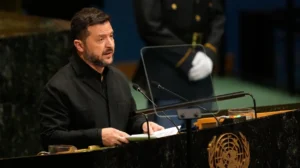
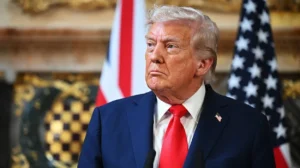
International diplomacy has focused on the Ukrainian war, with several peace measures put out to end the current crisis. The peace plan credited to former U.S. President Donald Trump is one such endeavor that has attracted a lot of interest because of its possible ramifications for Russia, Ukraine, and European allies. According to the leaked information, the plan may call for Ukraine to being suggested Russian authority over occupied territory in exchange for territorial concessions to Russia. With the potential for Ukrainian troops to leave some regions, a ceasefire is suggested to stop fighting along the eastern Ukrainian lines.
This notion potentially dismisses Ukraine’s NATO membership in favor of a peace deal that necessitates firm security guarantees enhanced by non-NATO forces. Under these tactics, Ukraine may ultimately take a strong neutral position. Trump has expressed interest in convening a summit of world powers to mediate the peace process. The plan is to finalize the details by a set deadline, probably in May. Among the very first steps, Zelensky added Russian reciprocity, a ceasefire in airspace, an instant truce at sea, and the release of prisoners. He’s keen to work closely with the United States to finalize a strong deal showing Ukraine’s commitment to peace.
The deployment of peacekeeping troops and ceasefires are two examples of the gradual peace proposals put forth by European politicians, including French President Emmanuel Macron. Negotiations may get more difficult, though, because Russia has voiced resistance to European peacekeeping soldiers in Ukraine. Trump’s strategy has drawn criticism for perhaps excluding European allies, which may make it harder for Western allies to work together to resolve the issue. Ukrainians and European partners are concerned that the plan’s concessions to Russia could legitimize Russian aggression and threaten Ukraine’s sovereignty.
Some future aspects of US plans for a peace plan in Ukraine
The United States and Ukraine’s planned mining accord may act as a financial inducement for the promotion of peace. If US investments in Ukraine’s mineral wealth are substantial, Russia may find the decision to invade less attractive. Trump has, meanwhile, pledged severe sanctions against Russia until a peace treaty is resolved.
While it could also mean more conflict, this could encourage Russia to hold talks. European leaders like Macron have expressed their belief that should any deal be struck, peacekeeping troops might be sent to Ukraine despite protests from Russia. This is a contentious issue that may come up in the round of talks ahead. Coordination with European allies will be key to any peace deal’s success. Trump’s strategy rings alarm bells. He may be undermining Western unity by excluding NATO allies.
China and Asia
Trump tariffs initiated the global trade war that ended with enormous economic repercussions; it marked an abrupt drift in US trade policies. Alongside the duties, there were other steps to rectify trade issues, especially with Canada, Mexico, and China. China wielded retaliatory tariffs on US exports, beginning a ratcheting cycle of increasing tariffs that are changing flows of international trade.
One of the most immediate effects of the Trump tariffs was on consumer prices. US businesses did so by transferring the higher costs of imported goods to consumers by raising the prices of electronics, automobiles, major appliances, and other products. Research indicates these tariffs created large extra expenses for American households. For example, the Congressional Budget Office estimates the tariffs would be reducing average real household income by some $1,277 in 2020 and raising consumer prices by perhaps 0.5%.
The tariffs also have significant implications for employment, particularly in the manufacturing sector. While the intention was to create more jobs in the U.S. manufacturing sector by making it more costly to import foreign goods, the reality was far more complicated.
Due to the tariffs, industries that were propelled mostly from imported materials tended to lose employment. According to research by economists with the Federal Reserve Board, the steel tariffs reduced manufacturing employment by roughly 0.6%, representing about a loss of 75,000 jobs. Further, the 2021 research statistically put that tariffs led to the loss of almost 245,000 working places in the U.S. The tariffs incurred impacts on GDP and economic growth, culminating in a wider impact across the board, affecting the whole economy in the U.S. Tariffs would reduce the capital stock by 0.1% and the long-term GDP by roughly 0.2%, the Tax Foundation speculated. Higher costs for businesses that are also disrupted by supply chain problems create a loss in economic production.
Even so, tariffs earned a considerable amount of money for the government, even if they damaged the economy. Tariff income exceeded $79 billion in 2019, double that of 2017. This money came, however, at the price of reduced economic efficiency and elevated prices for consumers. The Trump executive, through the Tax Cuts and Jobs Act of 2017, also lowered taxes on personal income and corporation taxes. While these cuts initially boosted business profits and consumer spending, they increased federal debt as well. The trade war dramatically modified the dynamics of international trade. By 2017, roughly 17.6% of its imports had tariffs imposed by the United States. In reciprocal measures, China and other nations set tariffs on American exports.
Trump’s tariff legacy will have a long-running effect on future trade policies when the world economy evolves. Under Biden, the actions taken to bring China and other trade partners back to the negotiating table were an attempt to assuage some of the concerns resulting from the trade war.
Still, the tariffs themselves will remain a legacy that continues to shape the performance of international trade and its economics. From Trump’s tariff experience, policymakers will learn how difficult it will always be to use tariffs as a trade policy weapon again. Tariffs on steel and aluminum made it more expensive to build cars in the United States, and consumers paid higher prices for those cars. Retaliatory tariffs from such countries as China on American-made cars further reduced car exports and affected US automakers.
One of the main changes undertaken by the US in the Asia-Pacific region was through the implementation of the Free and Open Indo-Pacific (FOIP) plan by the Trump administration, which, as set out in late 2017, was articulated for the first time in a speech by Japanese Prime Minister Shinzo Abe. With noble intentions, this was meant to create a zone of peaceful coexistence and independent states living side by side. However, its apportionment for implementation was wrought with challenges, bespeaking the larger conflict between Trump’s “America First” policy and traditional American engagement in the region.
The FOIP policy focused heavily on shielding the sovereignty of nations across the Indo-Pacific, assuring that no outside forces can exert pressure on such countries to renounce their independence. This policy also proposed engagement, with specific reference to overflight, trade, and navigation-thus leaning towards regional stability and awakening the sleeping economic giants to their feet. The Trump administration wanted to develop regional partnerships and alliances with countries, mainly including the ASEAN nations, Japan, Australia, and India. This chain aimed to sustain a collective front against threats to regional security, especially those imagined to arise from China’s rising military prowess.
Trump’s aggressive and offensive rhetoric toward both allies and enemies is said to have weakened the efficacy of that policy. Due to such contradictory messaging, it would be tough for allies to wholeheartedly endorse US actions. The climate for the implementation of the FOIP strategy was complicated by the increasingly worsening US-China relationship.
Due to the growing aggressiveness of China in the area, especially in the South China Sea, there’s a grave difficulty in maintaining regional stability. South Korea, along with other regional partners, was hesitant to endorse the FOIP concept entirely. Such hesitation raised the question of the necessity of more coordinated and inclusive regional planning.