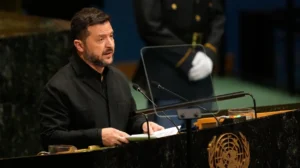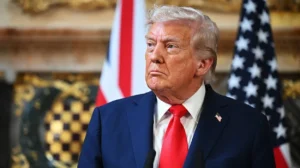
Iran’s increasingly firm position on the Strait of Hormuz is turning the waterway into the central bargaining point in the latest attempt to end the conflict with the United States. Diplomatic efforts on the sidelines of the United Nations General Assembly in New York have so far failed to produce a breakthrough. Instead, Tehran has insisted that Washington must lift its blockade before formal negotiations can move forward, while the United States continues to demand meaningful concessions from Iran before easing pressure.
The dispute has transformed Hormuz from a military and economic flashpoint into the principal test of whether Washington and Tehran can translate indirect diplomacy into a workable agreement. Iranian officials have said that the strait will remain closed until their conditions are met. At the same time, Europe and Washington are discussing a possible UN Security Council initiative that would provide political backing for an international military mission protecting navigation through the waterway. For the Trump administration, the problem is increasingly clear: the United States can apply substantial military and economic pressure, but reopening Hormuz requires managing Iran’s demands, protecting international shipping and maintaining the support of regional partners.
Hormuz Has Become the Core Negotiating Issue
The latest diplomatic impasse centres on a basic disagreement over sequencing. Iran wants the US blockade lifted before it agrees to reopen the Strait of Hormuz and resume substantive negotiations. Washington, by contrast, has indicated that Iran must first demonstrate sufficient goodwill before the blockade is removed.
That creates a classic bargaining deadlock. Neither side wants to surrender its strongest source of leverage at the beginning of negotiations. For Iran, control over access through Hormuz provides a powerful regional and economic instrument. For Washington, the blockade represents one of the main tools available to pressure Tehran. Iranian officials have therefore framed reopening the strait as something that must be negotiated rather than simply ordered. The National reported that Iran’s Supreme National Security Council secretary said the waterway would not be opened and negotiations would not proceed until Tehran’s conditions were met.
New York Diplomacy Has Produced Contact but Not a Settlement
The meetings in New York demonstrate that diplomatic channels remain open, but contact should not be confused with agreement. US and Iranian representatives have been communicating through intermediaries, with Qatar, Pakistan and Egypt involved in earlier rounds. Iran has presented proposals involving a ceasefire, reopening Hormuz and a framework for broader negotiations.
Reuters reported earlier in the week that Washington and Tehran remained far apart on how to end the conflict, even as Iranian officials argued that diplomacy should continue. The latest discussions therefore appear to be focused on establishing the conditions for negotiations rather than resolving the underlying dispute immediately. That distinction is important for Washington. A diplomatic channel gives the administration an alternative to further military escalation, but it does not guarantee that Iran will accept American demands.
Iran Is Using Hormuz as a Source of Leverage
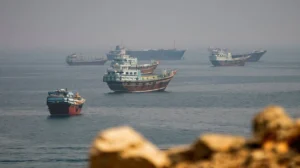
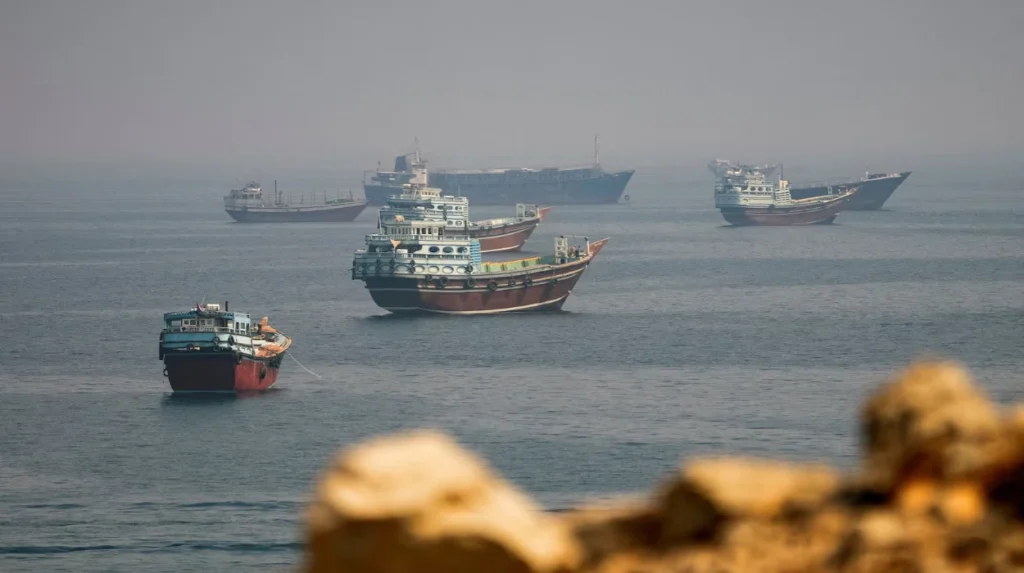
Tehran’s position reflects the strategic importance of the waterway. The Strait of Hormuz is one of the world’s most important energy corridors, connecting the Persian Gulf with the Gulf of Oman and wider international shipping routes. Before the conflict, roughly 20 million barrels of oil a day passed through the waterway. US efforts to restore a significant portion of oil flows have reduced some of Iran’s leverage, but the strait remains central to the regional energy system.
For Iran, keeping Hormuz closed or restricted creates pressure well beyond the United States. It affects Gulf producers, Asian energy consumers, European markets and international shipping companies. That gives Tehran a mechanism through which a bilateral confrontation with Washington can produce global economic consequences. The strategy also creates risks for Iran itself, however. Prolonged disruption can encourage neighbouring states to seek alternative export routes, increase international pressure on Tehran and strengthen arguments for a multinational security response.
Washington Faces a Difficult Choice
The Trump administration now faces a strategic calculation over how much pressure can be maintained without making diplomacy impossible. The United States has demonstrated that it can use naval power and economic restrictions to affect the flow of energy through the region. But maintaining pressure indefinitely carries its own costs.
Higher energy prices affect American consumers and businesses. Shipping disruptions affect global markets. A prolonged military deployment increases operational demands on US forces. These costs become particularly important when the administration is simultaneously dealing with other major foreign-policy challenges. The diplomatic objective is therefore not simply to demonstrate American military superiority. It is to use that leverage to produce an agreement that Washington considers durable while avoiding a wider regional escalation.
The Gulf States Are Not Passive Participants
The Hormuz dispute also creates difficult calculations for America’s Gulf partners. Saudi Arabia and the United Arab Emirates have a direct interest in maintaining the security of their energy exports and shipping routes. Yet they also face the consequences of any prolonged US-Iran confrontation. Recent reporting indicates that Saudi Arabia and the UAE have urged Washington to maintain pressure on Iran and keep the blockade in place until Tehran accepts a broader agreement.
This demonstrates that regional partners can reinforce American pressure, but their interests are not necessarily identical to Washington’s. Gulf governments need security from Iran while also protecting their own economies from prolonged disruption. For the United States, that means regional diplomacy cannot be reduced to a Washington-Tehran negotiation. Any sustainable arrangement over Hormuz will need to take into account the interests of the states whose economies and security are directly tied to the waterway.
Europe Is Moving Toward a Security Role
The latest European response introduces another dimension. The National reported that European governments and Washington are discussing a western-backed UN Security Council initiative that could provide political support for an international military mission designed to protect navigation through Hormuz. This would represent an important development if it moves forward.
Rather than relying exclusively on American naval power, Washington would be seeking broader international participation in securing the waterway. Such an approach could strengthen the political legitimacy of an international maritime mission. It could also distribute some of the military and diplomatic burden among US partners. But securing international backing will not automatically resolve the underlying confrontation with Iran. A multinational mission can protect shipping. It cannot by itself settle the political conditions Tehran has attached to reopening the strait.
The UN Becomes Another Diplomatic Arena
Approximately 80 countries have backed a joint statement calling for the urgent reopening of the Strait of Hormuz and condemning Iranian attacks on regional states and shipping, according to The National. The diplomatic significance is substantial. Washington is attempting to frame the Hormuz issue not only as a bilateral confrontation with Iran but also as an international security problem involving freedom of navigation and global energy markets.
That framing can help build international support for maritime security measures. Iran, meanwhile, has an incentive to portray the issue as a consequence of US military pressure and blockade. The contest over the narrative matters because international support could influence the legitimacy and political sustainability of any future maritime operation.
A Seven-Day Roadmap Could Offer an Alternative
Iran has also put forward a separate proposal involving a rapid timetable for de-escalation. Al Jazeera reported that Tehran had offered a seven-day roadmap under which the Strait of Hormuz could be reopened if regional conflicts were halted. The proposal indicates that Tehran is not necessarily rejecting diplomacy altogether.
Instead, Iran appears to be attempting to connect the reopening of Hormuz to a broader settlement covering the conflict itself. That approach creates a possible negotiating pathway but also makes the talks considerably more complicated. Washington would need to determine whether reopening the waterway should be treated as an initial confidence-building measure or as the outcome of a larger agreement. Iran wants the former conditions to be addressed before making the concession. The United States appears to want the opposite sequence. That sequencing dispute remains one of the biggest obstacles to progress.
Shipping Security Is Becoming a Wider Regional Problem
The consequences of the Hormuz dispute are no longer limited to the immediate area around the strait. A commercial vessel was struck in the waterway this week, with one crew member killed and others evacuated, according to reporting cited by CBS. Iranian officials have also warned that any renewed US attacks could produce an expansion of the conflict toward the Red Sea and Bab el-Mandeb.
That possibility creates a dangerous connection between the Persian Gulf and Red Sea shipping systems. The two waterways are strategically distinct, but disruption in both could create substantially greater pressure on global energy and commercial routes. For Washington, preventing such a development is increasingly important. A conflict that expands from Hormuz toward the Red Sea would increase the geographical burden on US naval forces and create additional risks for America’s regional partners.
The Economic Pressure Is Becoming a Foreign-Policy Constraint
Energy markets are already responding to uncertainty. CBS reported that Brent crude rose above $105 a barrel amid renewed uncertainty surrounding the war and the lack of progress at the UN summit. This gives the Hormuz dispute a direct domestic dimension for the United States. Higher oil prices can translate into higher fuel costs, increasing economic pressure on American households and businesses.
For the Trump administration, that means the diplomatic stakes extend beyond military strategy. A successful agreement could reduce market uncertainty and ease pressure on energy prices. A prolonged confrontation could have the opposite effect. Foreign-policy decisions therefore have immediate economic consequences inside the United States.
The Limits of Maximum Pressure Are Becoming Clearer
The Trump administration has relied heavily on pressure against Iran. Economic restrictions, the naval blockade and military threats are designed to convince Tehran that continued resistance will become increasingly costly. But maximum pressure has an inherent limitation: the target must ultimately have a reason to compromise.
If pressure becomes an end in itself, it can narrow the diplomatic space rather than expand it. Iran’s insistence on maintaining its conditions demonstrates that Tehran still believes it possesses sufficient leverage to resist immediate US demands. For Washington, the strategic question is whether additional pressure will strengthen that leverage imbalance or instead push Iran toward a more dangerous regional response.
The Bigger US Foreign-Policy Question
The Hormuz dispute is becoming a test of how the United States intends to exercise power in the Middle East. Washington can attempt to maintain unilateral control over the security environment through military force. Alternatively, it can build a wider international coalition involving European states, Gulf partners and other countries whose economies depend on freedom of navigation.
The second approach could distribute responsibility more widely, but it would also require Washington to accommodate the interests of partners. That is a recurring feature of modern US foreign policy. American military capabilities give Washington enormous influence, but successful diplomacy often depends on building coalitions around shared interests rather than relying exclusively on American power. Hormuz is now demonstrating that distinction in real time.
What Comes Next for US-Iran Diplomacy?
The immediate question is whether the two sides can overcome the sequencing dispute. Iran wants the blockade lifted before formal negotiations and has tied reopening Hormuz to broader political conditions. Washington wants concessions and evidence of Iranian cooperation before making major changes to its pressure campaign. The possibility of an internationally supported maritime mission adds another variable.
If Washington and its partners move toward a UN-backed security arrangement, Iran could interpret the step as an increase in international pressure. Conversely, a successful multinational framework could reassure shipping companies and regional states that navigation can be protected without requiring an immediate comprehensive political settlement. Much will therefore depend on whether diplomacy can produce a mechanism that separates immediate maritime security from the longer-term political dispute.
For Washington, the central challenge is balancing pressure with negotiation. The United States needs to preserve leverage over Tehran while ensuring that the tools used to create that leverage do not produce a wider conflict or undermine the economic interests of America’s own partners. The Strait of Hormuz has consequently become more than a shipping route. It is now the clearest test of whether American diplomatic pressure can produce a negotiated outcome in a conflict where Iran still possesses meaningful leverage of its own.