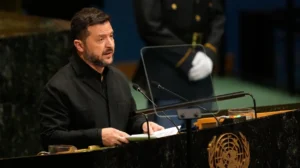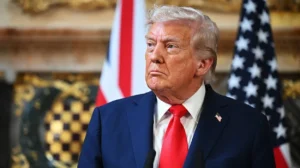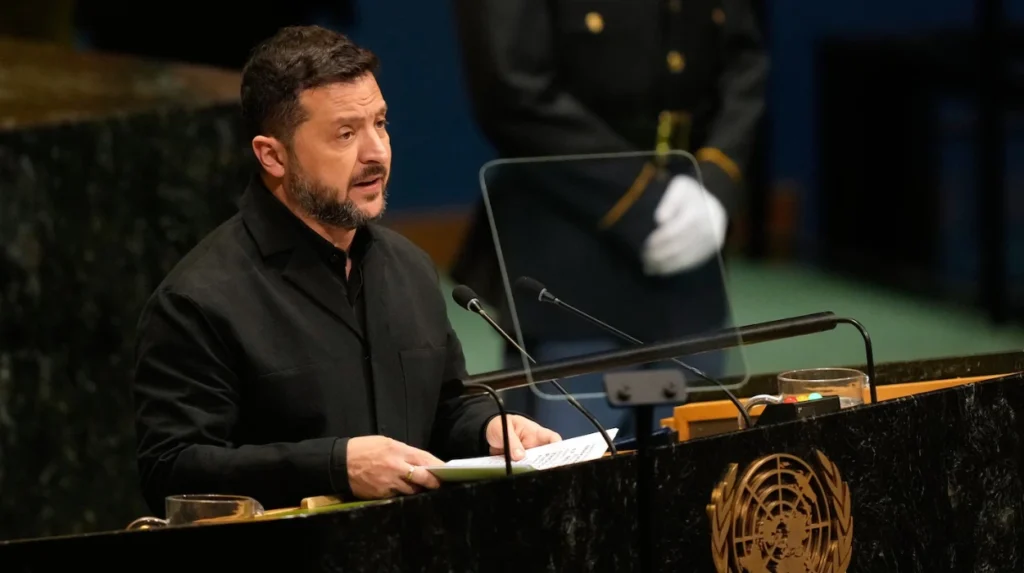
Ukrainian President Volodymyr Zelenskyy has asked President Donald Trump to bring China more directly into efforts to end Russia’s war in Ukraine, placing Beijing at the centre of a diplomatic calculation that Washington has largely approached through pressure on Moscow and direct engagement with Kyiv. Zelenskyy said he urged Trump to ask Chinese President Xi Jinping to use Beijing’s influence over Russian President Vladimir Putin to support de-escalation and potentially help move the war toward negotiations.
The request comes as the Trump administration is attempting to revive a diplomatic process involving Washington, Kyiv and Moscow. At the same time, Trump and Xi have been holding high-level discussions in Washington on a broader set of issues, including Ukraine. The intersection of those two diplomatic tracks creates a significant question for US foreign policy: whether China can become a channel for influencing Russia without allowing Beijing to gain greater control over the wider peace process.
Why Zelenskyy Wants China Involved
Zelenskyy’s argument rests on a basic geopolitical reality: China maintains extensive economic and strategic ties with Russia and has remained one of Moscow’s most important international partners during the war. According to Zelenskyy, he told Trump that Xi has influence over Putin and could potentially encourage the Russian president to take steps toward de-escalation. Zelenskyy specifically pointed to energy and grain arrangements as possible areas where limited agreements could provide an indication of Moscow’s willingness to reduce tensions.
This approach does not necessarily mean Kyiv is seeking to make China a formal mediator. Instead, it reflects an attempt to use every available channel of influence around Moscow. For Washington, that creates an additional diplomatic option. The United States can engage Russia directly while simultaneously testing whether Beijing is willing to use its relationship with Moscow to facilitate practical steps toward reducing the conflict.
Trump’s Ukraine Strategy Is Moving Toward Limited De-escalation
The Trump administration has been pursuing several immediate measures rather than relying exclusively on a comprehensive peace agreement. Washington has been pushing for a potential ceasefire covering attacks on energy infrastructure, the reopening of the Black Sea grain corridor and renewed three-way discussions involving the United States, Ukraine and Russia. Zelenskyy said US officials were seeking initial technical discussions among the three countries, with the United Arab Emirates suggested as a possible venue.
The importance of this approach is that it separates immediate de-escalation from the much harder questions surrounding territory, long-term security guarantees and the final political settlement. An energy ceasefire, for example, would not end the war. But it could reduce attacks on infrastructure and establish whether Moscow and Kyiv are capable of implementing a limited reciprocal arrangement. For Trump, such incremental agreements would also provide a way to test Russian and Ukrainian intentions without immediately committing Washington to a comprehensive settlement.
China Gives Washington Another Channel to Moscow
The most significant development in Zelenskyy’s proposal is that it treats China not simply as part of the broader US strategic competition but as a potential instrument of diplomacy. That is a complicated proposition. China has maintained close economic relations with Russia while officially presenting itself as a supporter of negotiations. NATO countries have described China as a major enabler of Russia’s war effort, while Beijing has rejected accusations that it is directly supporting Moscow’s military campaign.
This leaves Washington with a difficult balance. The United States wants Beijing to exert pressure on Moscow where that could help end the war. At the same time, Washington has broader disputes with Beijing over Taiwan, trade, advanced technology, Iran and the international economic system. Ukraine therefore introduces another layer into an already complex US-China relationship.
The Trump-Xi Meeting Creates a New Diplomatic Test
Trump and Xi discussed Ukraine during their White House meeting on September 24, although neither leader publicly disclosed detailed information about the discussion. Chinese officials confirmed that the two leaders exchanged views on the Ukraine crisis alongside other international and regional issues. Zelenskyy said Friday that he had not yet received feedback from the White House on the Trump-Xi discussion but expected to learn more about its outcome.
That uncertainty is important. If Washington wants China to influence Moscow, it will need to determine what Beijing is actually prepared to do. A general call for negotiations would have limited value if it is not accompanied by concrete pressure or diplomatic engagement with Russia. The question is therefore not simply whether Xi supports peace talks. It is whether Beijing is willing to use its economic and political relationship with Moscow to encourage specific actions that Washington and Kyiv consider meaningful.
Washington Still Has Its Own Pressure Tools
The China channel does not replace American leverage. Zelenskyy also highlighted a sanctions package that Trump signed into law last week but has not yet implemented. The Ukrainian president argued that sanctions could be used to increase pressure on Moscow and encourage Russia to negotiate. This gives the administration several potential instruments at the same time.
Washington can pursue direct negotiations, maintain sanctions pressure, encourage limited ceasefires and engage China over its relationship with Russia. The effectiveness of that strategy will depend partly on whether these instruments reinforce one another rather than sending conflicting signals. The central diplomatic challenge is therefore coordination. Pressure on Russia has to be compatible with negotiations, while negotiations have to produce enough practical movement to justify continued diplomacy.
Energy Security Is Becoming Part of the Peace Process
The energy issue has become particularly important to Washington. Ukraine has expanded attacks against Russian oil infrastructure after Russia repeatedly targeted Ukrainian energy facilities. Zelenskyy has said Kyiv is prepared to support an energy ceasefire if Russia agrees to stop attacks on Ukraine’s energy system as well. For the United States, the issue extends beyond the battlefield.
Disruptions to Russian fuel production can affect international energy markets, while the wider conflict has already been complicated by instability in global oil supplies. Trump has publicly expressed concern about the impact of Ukrainian attacks on Russian refineries and fuel prices. That makes an energy ceasefire both a diplomatic measure and an economic issue for Washington. If an agreement can reduce attacks on energy infrastructure, it could provide an early test of whether limited cooperation is possible before the parties attempt more difficult negotiations.
The Black Sea Adds Another Layer to US Strategy
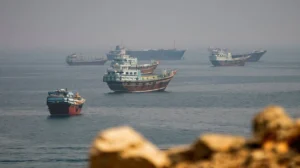
The Black Sea is another area where Washington is attempting to connect security and diplomacy. Ukraine and Russia are major suppliers of agricultural commodities, while attacks on shipping have disrupted important trade routes. Zelenskyy said Kyiv wants Moscow to accept a Black Sea ceasefire that would allow food shipments to resume more freely. The issue also has implications beyond Ukraine and Russia.
Countries including India, Turkey and Egypt have an interest in maintaining reliable Black Sea food routes, according to Zelenskyy. Their involvement creates the possibility of a broader diplomatic coalition around limited measures rather than an exclusively US-Russian-Ukrainian negotiation. For Washington, that could broaden the diplomatic base for an agreement while reducing the impression that the conflict is being managed solely through great-power negotiations.
China’s Role Could Complicate the US Diplomatic Equation
Bringing China into the Ukraine process also carries risks for Washington. Beijing may have different priorities from Kyiv and Washington. China has strategic ties with Russia and has its own interests in maintaining a stable relationship with Moscow. At the same time, China is engaged in a broader strategic competition with the United States. That means Beijing’s participation cannot automatically be treated as synonymous with American objectives.
A Chinese diplomatic initiative that encourages negotiations could complement US efforts. But an approach that gives Moscow additional diplomatic space without producing reciprocal concessions could create disagreements between Washington and Kyiv over the terms and direction of the peace process. The United States therefore has an interest in using Chinese influence without surrendering control over its own diplomatic objectives.
Ukraine Still Wants Washington at the Centre of the Process
Zelenskyy’s appeal to Trump is also significant because it reinforces Kyiv’s reliance on American diplomacy. Ukraine continues to seek US support for air defence, sanctions and financial assistance. Zelenskyy said Trump had confirmed a decision allowing Ukraine to obtain licenses to produce Patriot air-defense systems, while Kyiv continues to seek additional support ahead of winter. At the same time, Ukraine is willing to consider technical negotiations and limited ceasefires.
This suggests that Kyiv is trying to preserve two tracks simultaneously: maintaining the military capabilities needed to withstand Russian attacks while supporting diplomatic initiatives that could produce concrete de-escalation. For Washington, managing those tracks will be one of the central challenges of the coming months.
Russia Remains the Decisive Variable
China can influence Moscow, but Russia ultimately determines whether it accepts a specific arrangement. The Kremlin has indicated that discussions between Trump and Putin have included the possibility of further meetings, while Ukrainian and US officials continue to work on proposals for renewed negotiations. Yet earlier rounds of trilateral talks produced no significant breakthroughs. That history limits what can reasonably be expected from another diplomatic initiative.
The immediate question is therefore whether Moscow will accept narrower measures such as an energy ceasefire or Black Sea arrangement. If such agreements prove workable, they could create a foundation for broader negotiations. If they fail, Washington would face another test of whether additional pressure or a different diplomatic format is necessary.
What This Means for US Foreign Policy
The Ukraine issue is increasingly becoming part of a larger US foreign-policy equation involving Russia, China, energy security and global trade. Trump’s administration is attempting to manage negotiations with Moscow while simultaneously dealing with a strategically competitive relationship with Beijing. Zelenskyy’s request effectively connects those two challenges.
That creates both an opportunity and a constraint. Washington can potentially use Beijing’s relationship with Moscow to widen diplomatic pressure on Russia. But doing so requires the United States to accommodate another major power whose interests do not fully align with those of Washington or Kyiv. The outcome could influence how future conflicts are managed. If China contributes to practical de-escalation, Washington may have greater reason to use Beijing as a diplomatic channel in other crises. If the effort produces little movement, the administration may place greater emphasis on direct US leverage and sanctions.
The Next Test Is Whether Diplomacy Produces Something Concrete
The immediate focus will be on what emerged from the Trump-Xi meeting and whether China is prepared to engage Moscow on Ukraine. At the same time, Washington is expected to continue working on technical US-Russia-Ukraine discussions, an energy ceasefire and the reopening of Black Sea trade routes. For the Trump administration, the significance of the coming weeks will therefore be measured less by diplomatic statements and more by implementation.
An agreement to stop attacks on energy infrastructure, restore Black Sea shipping or establish a new negotiation format would provide tangible evidence that the diplomatic track is moving. The larger question is whether Washington can combine American pressure, Ukrainian participation and Chinese influence into a process that Moscow is willing to enter and sustain. That will determine whether China’s involvement becomes a meaningful new element of US diplomacy or remains another channel with limited practical impact.