The United States appears ready to clinch a historic deal, giving it long-term access to a substantial portion of Venezuela’s oil reserve. This will double the proven oil reserve of America and give a new assurance of energy security for the Western Hemisphere. In a number of reports, the Trump administration is said to be finalizing an agreement that will give the United States ownership of or long-term lease right to more than ten productive oil fields in Venezuela with approximately 90 billion barrels of proven oil – one third of the total reserves in the country.
This major deal being led by the Secretary of State, Marco Rubio, and the acting president of Venezuela, Delcy Rodriguez, involves participation of Stephen Miller, the Deputy Chief of Staff of the White House. This is not just a business deal but a geopolitical strategy. With the deal, the U.S. hopes to achieve greater stability in supply, cut the cost of importing oil from abroad and protect its supplies from the unstable Middle East route. With this deal, Venezuela will have an opportunity to rebuild its oil sector through private investments and knowledge while thinking of leaving the very cartel that it was instrumental in founding.
The Architecture of the Agreement: Leases, Ownership, and Field Selection
The key to these negotiations involves giving the government of the United States some form of an equity interest or long-term lease (up to 100 years) on certain fields located in Venezuela’s two most productive basins – the Orinoco Belt and the Lake Maracaibo region. This is because these regions are the ones that will be necessary in any effort aimed at scaling up production. Instead of claiming the rights to the entire Venezuelan reserves of over 300 billion barrels, the government of America only seeks the rights over “more than a dozen productive oil fields” holding close to 90 billion barrels of proven reserves.
In other words, this is intended to accelerate production without involving the most politically sensitive areas. Under this arrangement, private corporations (including those of the U.S.) will be responsible for the development of these fields, whereby a proportion of the income will go to the government of Venezuela. For the U.S., the idea here will be that these fields will be locked away for American development while ensuring that America receives the promised guaranteed crude supply. This can be used to refill the Strategic Petroleum Reserve (SPR) currently holding about 290 million barrels or 41% of its capacity.
Why 90 Billion Barrels Matter: Reserves, Output, and Market Impact
Venezuela holds the world’s largest proven crude reserves—about 303 billion barrels, or roughly 17% of the global total—yet its production has languished for years due to underinvestment, sanctions, and operational decay. Output has recovered since early 2026, reaching approximately 1.12–1.25 million barrels per day (bpd) by mid-year, up from a 2025 average near 941,000 bpd. Even so, the country remains far below its historical peaks, and analysts estimate that meaningful, sustained recovery will require on the order of $180 billion in investment over the next decade.
Securing access to 90 billion barrels does not instantly translate into 90 billion barrels of producible oil, but it does create a pipeline of developable resources that can be brought online in phases. For the U.S., the strategic value is twofold: it expands the reserve base that American companies can book and develop, and it creates a stable, nearby source of heavy and extra-heavy crude that complements Gulf Coast refining configurations. For global markets, the prospect of additional Venezuelan barrels flowing under U.S. oversight could ease price pressures and reduce reliance on long-haul shipments, particularly if OPEC cohesion weakens further.
Sanctions Relief, Revenue Oversight, and the Post-Maduro Framework
The deal takes place in the context of the changing relationship between the United States and Venezuela after the ousting of Nicolás Maduro in January 2026. In that period, Washington took under its control the selling of Venezuelan oil and granted temporary relief from sanctions such as OFAC General License 46C, which allowed U.S. companies to lift, buy, ship, refine, and sell Venezuelan crude. As a result, Venezuelan crude oil imports into the U.S. reached the seven-year record in July 2026 and amounted to nearly 786,000 bpd. Revenue management became the key part of the rhetoric of the administration.
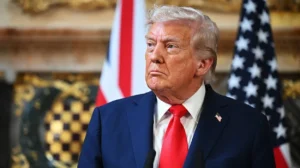
For instance, President Donald Trump said,
“We’ve made our billions of dollars in oil and we’ve sold that and we’ve already gotten more than $13 billion from those sales. We’ve paid for that war many times over.”
At the same time, Secretary of State Marco Rubio stressed that sales were audited by KPMG and the money was kept in the Citibank account. The proposed field-level deal would further develop this scheme and ensure predictable flows of income to Caracas and U.S. access to it.
Constitutional Constraints and the Legal Tightrope
Any long-term lease or ownership-stake arrangement must navigate Venezuela’s constitutional and regulatory landscape. The country’s Constitution reserves core oil industry activities to the state, and existing hydrocarbons regulation does not provide for acreage leases in the manner contemplated by the U.S. proposal. Recent reforms have opened the door to joint ventures and production-sharing contracts, but legal experts warn that a 100-year lease or direct equity stake could face constitutional challenges and protracted litigation.
The administration appears aware of these risks. By focusing on a subset of fields and structuring the deal as a hybrid of lease and production-sharing, negotiators are seeking a model that can withstand domestic legal scrutiny while delivering the durability U.S. companies require to commit capital. The involvement of Venezuela’s acting president and the oil ministry suggests that Caracas is prepared to advance enabling measures, but the final legal pathway—whether through legislative amendment, executive decree, or a combination—remains a critical variable.
OPEC at a Crossroads: Venezuela’s Potential Exit and Cartel Dynamics
Alongside the negotiations for the oil fields, Venezuela is also contemplating the possibility of leaving OPEC after 66 years of being a founding member of the organization. This development would be symbolic in nature despite its limited market implications at present. Venezuela has failed to meet OPEC quotas for quite some time due to the declining state of its oil industry, and according to Bloomberg, Venezuela currently has no production quota whatsoever.
Exiting OPEC would therefore remove a ceiling that Venezuela has not been facing anyway, and show how much it is aligning itself with the policies of the United States with regards to energy. This development would certainly be an embarrassment for OPEC in terms of its prestige given that Venezuela is one of the founding members of the organization and boasts of the world’s biggest proven reserves. Nonetheless, the timing of such a move would also be interesting given that the U.S. has secured its access to Venezuelan fields for years to come.
Statements from the Ground: What Officials and Sources Are Saying
The contours of the deal have emerged through a series of pointed statements from U.S. officials and sources close to the negotiations. One source told Reuters,
“This is real and being discussed at the highest levels of the U.S. and Venezuelan governments,”
underscoring the seriousness with which both sides are approaching the talks. An official familiar with the discussions told Axios,
“Calling this agreement huge would be an understatement. It’s massive,”
highlighting the scale of the reserves and fields under consideration.
On the revenue side, President Trump has framed the arrangement as a return on U.S. engagement, stating,
“We’ve paid for that war many times over,”
a reference to the more than $13 billion collected from Venezuelan oil sales since the change in government. Secretary Rubio has reinforced the transparency message, noting that sales are audited by KPMG and proceeds held at Citibank, a detail intended to bolster confidence among potential investors and international observers. Venezuelan authorities, including the oil ministry and PDVSA, have not publicly commented on the specific terms, leaving the final shape of the agreement to be clarified in the coming days.
Strategic Implications: Energy Dominance, SPR Replenishment, and Geopolitics
The Energy Dominance strategy of the Trump administration is furthered through this deal, since the resource base secured by the deal would increase America’s proven reserves more than twofold. Furthermore, the deal would serve as an answer to one of the biggest issues that the country currently faces, namely, the filling of the Strategic Petroleum Reserve, which currently stands at less than the pre-2022 level. Regular shipments of Venezuelan crude oil to be overseen by Americans may serve both the purposes of refilling the SPR and serving as a buffer for any possible disruptions.
Geopolitically, this deal makes the USA less dependent on Middle Eastern transit routes and provides a balance to OPEC+ supply management. Through such deals, the USA receives means to affect the global crude flow not only through diplomatic pressure inside OPEC. Finally, Caracas has an opportunity to obtain capital and technology to maintain its output and create income even though it would have to overcome the legal issue and think about leaving OPEC.