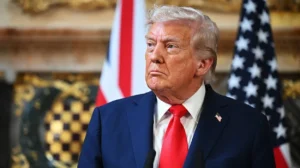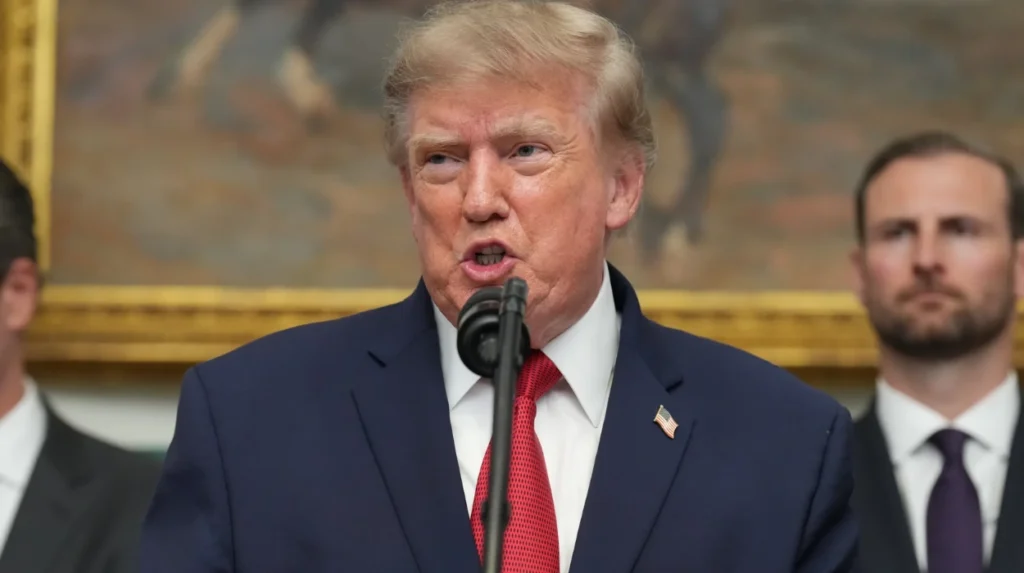
President Donald Trump has escalated U.S. pressure on Iran with a sweeping threat of “TREMENDOUS Economic Consequences” against any country that provides Tehran with a financial or commercial lifeline, framing the move as an unprecedented campaign of economic warfare. In a Truth Social post on Wednesday, August 19, 2026, the president declared that
“ANY country that allows its financial institutions, businesses, airports, or government entities to provide any type of lifeline to Iran will itself face TREMENDOUS Economic Consequences,”
signaling a new phase in Washington’s effort to isolate Iran’s economy amid a nearly six‑month‑old conflict.
The ultimatum in full: channels to be cut and the “D‑Day” framing
Trump’s message went beyond a general warning, listing specific evasion channels he says must stop immediately. He wrote:
“Oil smuggling, swap lines, cash transfers, exchange houses, ship registries, front companies — It all needs to stop NOW. You know who you are. This will be an ECONOMIC D-DAY, and we need all of our Allies to stand with the United States of America to isolate, and defeat, the Iran threat.”
The phrasing—“ECONOMIC D‑DAY”—evokes a coordinated, large‑scale operation rather than a piecemeal sanctions tweak, and the direct address “You know who you are” suggests the administration believes it has identified key enablers but is withholding names for now.
Neither was the nature of legal mechanisms to be used defined in the blog, such as sanctions on foreign banks, prohibition on executive officials from acquiring visas, or sector-specific tariffs, nor the level beyond which “consequences would be tremendous” was established. This vagueness is in itself an instrument of strategy, as it increases the level of perceived risks for those who think of continuing doing business with Iran.
Strategic context: a war‑time push to choke off revenue and workarounds
The timing is critical. Reuters reports the threat comes as the U.S. and Israel seek to resolve a war they began together nearly six months earlier, underscoring that the economic pressure is being used as leverage in an active conflict environment. Trump characterized the campaign as
“economic warfare and isolation on an unprecedented scale”
and later described it as the
“most crushing economic operation ever taken against any country,”
arguing that Iran had “failed to take” a deal opportunity.
Through their efforts to stop oil smuggling, currency swaps, money laundering, foreign exchange brokers, ship registrations, and dummy companies, the government is going after the very pipelines through which Iran has been able to export its oil and obtain hard currency even while under decades of sanctions. Their objective is to make sure that dealing with Iran is simply too expensive for outside parties, thus reducing its income and influence.
What “lifeline” means in practice: the anatomy of Iran’s evasion network
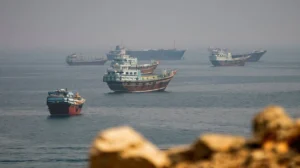
The ability of Iran to survive sanctions has always been dependent on a wide array of facilitators: regional exchange houses that clear rial-linked transactions, shell corporations that change the flags on oil tankers, and front corporations that obscure the beneficial owners of ships. Currency swap lines and cash transfer routes are the mechanisms which help Tehran circumvent the US dollar payment system, and ship registries and complex corporate ownership structures complicate enforcement actions against each specific vessel.
By calling out those channels explicitly in his tweet, Trump makes it clear that the next round of sanctions will concentrate on the nodes rather than blanket embargos of the country itself. Such a strategy echoes the recently issued warnings by the US Treasury Secretary Scott Bessent of “never before seen” sanctions against Iran, with the commentators speculating about possible secondary sanctions against foreign buyers of Iranian oil, especially China, and stricter sanctions against financial facilitators. The administration has also reportedly considered an option requiring cooperation of seven neighboring countries for enforcing the land blockade against Iran.
The enforcement gap: ambiguity as leverage, but also a risk
An important aspect of the statement lies in its omission. The White House did not clarify from the outset what the punitive measures would entail for violators, while President Trump did not point out any particular nation in his post. Here we have a problem of the gap between the statement and its implementation as the criteria remain unclear: it might be difficult for other governments and financial institutions to understand what kind of risk they bear; moreover, America’s allies might be reluctant to get involved in case of possible arbitrariness of punitive measures.
One should keep in mind that, as is the case with every statement that involves some uncertainty, this one carries certain risks as well. For instance, it might bring about diplomatic problems if America’s key partners see such a threat as excessive.
Global stakes: oil markets, shipping lanes, and the China factor
Indeed, the first and most important global stakes involved in the campaign center around oil. While Iran’s oil exports are limited due to existing restrictions, they represent a significant factor in the already thin market, and disruption of shipping or financial means for smuggling Iranian oil might have implications on the price and freight of the product. Moreover, the restrictions on the ship registers and front firms could make insurance and ports problematic for ships with some connection to Iran, thus increasing compliance costs throughout the tanker fleet.
Here comes the role of China. As the largest reported importer of Iranian oil in recent years, the decision taken by Beijing will play a critical part in the success of the campaign. Any sanctions against Chinese refining, banking or trading firms will affect relations between China and the United States and possibly bring retaliations on the part of China, and the refusal of China to buy oil from Iran will strengthen the pressure on Tehran.
Iran’s likely response: resilience, escalation, and the limits of pressure
Iran has survived decades of sanctions by developing workarounds and deepening ties with non‑Western partners. Reporting notes that faced with more pressure, Tehran is
“likely to escalate rather than surrender,”
a dynamic that could manifest in regional proxy activity, cyber operations, or further nuclear brinkmanship.
The story of resilience that the regime tells through resisting coercive power means that there must be a diplomatic track that shows how economic pressure will lead to political concession. CNN’s report on this matter captures this issue as well, in its description of the effort by Trump to increase the degree of isolation of Iran through an “economic D-Day,” taking into account the resilient sanctions evading economy of the country. The danger here is that an approach that is purely punitive could lead to miscalculations in a volatile region.
What to watch next: instruments, targets, and diplomatic signalling
The next 72 hours will likely reveal whether the administration follows the rhetoric with concrete regulatory steps. Key indicators include:
- Treasury designations targeting foreign banks, exchange houses, or shipping registries linked to Iranian oil sales
- Guidance to U.S. allies on expected compliance standards and potential penalties
- Public or private signals to China and Gulf states about red lines and off‑ramps
- Any parallel diplomatic messaging that outlines conditions for de‑escalation or talks, given Trump’s remark that Washington may resume discussions with Tehran “at some point.”
If secondary sanctions are used against foreign major players, the market will immediately move to measure the spillovers on the energy, transport, and cross-border payments markets. However, if the threat remains largely rhetoric in nature, then the loss of credibility for the US administration could be quite high.
A high‑stakes bet on economic isolation
The “Economic D-Day” approach from Trump will be a risky one that will seek to cut off the lifelines that Iran uses to connect externally and thereby make it rethink its position. The language used is quite maximalist, with references made to
“economic warfare and isolation on an unprecedented scale.”
The list of channels being targeted is quite exhaustive, ranging from oil smuggling to ship registries. The fact that there are no specific targets identified makes the question arise whether this is to be a concerted, sustained effort with allies involved, or whether this is a threat that will fade away because of practical considerations? For now, the message from the US to the rest of the world is clear: any organization supporting Iran must brace itself for some tough economic times ahead.