The U.S. ambassador to Israel, Mike Huckabee, has condemned a days-long siege of Palestinian homes in the occupied West Bank as a “horrific act of terror,” an unusually severe rebuke from a diplomat widely regarded as a strong supporter of Israel and its settlement movement.
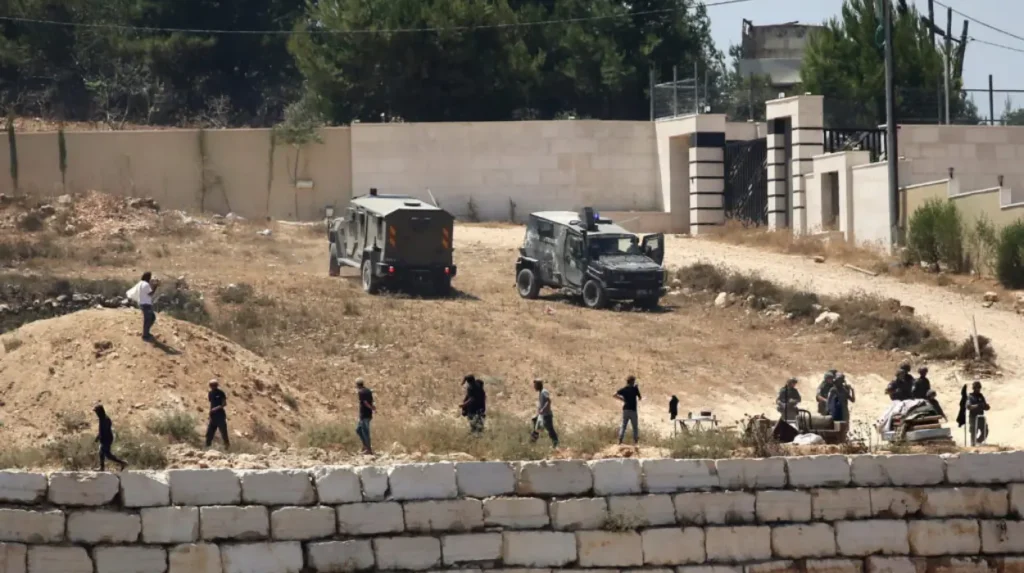
The event took place in the village of Qusra in the northern West Bank, south of Nablus, where it was reported that Israeli settlers barricaded three Palestinian homes, set up a tent in front of the properties, and barred the inhabitants from entering or exiting. The families claimed that they have been deprived of water, electricity and food, in addition to medical help and all other necessities. The whole situation began on the weekend and has lasted until Thursday, August 13, despite the presence of Israeli soldiers and police. An Israeli military spokesperson reported that the army sent reinforcements to the village after failing in the first try to dislodge the settlers. The United Nations reported that about 15 Palestinians, including two children, are trapped in their homes “under conditions of terror.”
This episode has escalated from being a local incident into something else, as it is revealing how difficult it is becoming for Israel’s security apparatus to deal with these violent settlers, questioning whether the government is willing to enforce the law upon them, and pressuring the United States after an American-Palestinian family became a victim.
Families trapped inside their homes
It has been stated that settlers started to surround the houses in Qusra from Sunday, as informed by the Palestinians in the area. They blocked the access to the houses and set up a tent in the front of the houses. It seems that Palestinians could not go out of the house and others such as the relatives, medical workers and others could not reach them. The houses include a house belonging to a Palestinian-American businessman, who is Lou Ridi. Family members of Lou, such as his brother and a teenage boy were also involved in this incident. Family members stated that as a result of this, they suffered from shortages and they were trapped inside their property. In this regard, United Nations also stated that there was no access to water and electricity for the people who were staying inside the houses and their basic needs could not be met.
The reported conduct included blocking roads, surrounding entrances, cutting or disrupting utilities, throwing stones and damaging property. Some reports also said the settlers attempted to take control of land around the homes by creating an unauthorised outpost. The precise number of homes and residents has varied across early reports. Some accounts referred to two Palestinian families, while the Reuters report described three homes and approximately 15 people. That discrepancy may reflect changing conditions on the ground, different definitions of who was inside each property or the difficulty of verifying events during the siege.
For the families, however, the central reality remained consistent: they were confined for days while armed or organised settlers maintained a presence outside their homes.
Huckabee’s forceful intervention
Huckabee’s response was striking not only because of the language he used, but also because he claimed the U.S. Embassy had directly requested Israeli intervention.
Responding to criticism that Washington had failed to act, Huckabee wrote on X that the embassy had been “VERY involved” and that Israeli soldiers and police had gone to Qusra at the request of the United States. “The embassy has been VERY involved, and the IDF and Israel Police have gone at our request to remove the Israeli terrorists doing this,” Huckabee wrote.
He also rejected the suggestion that the White House had been absent from the matter. “The WH hasn’t ‘intervened’ because we have kept DC apprised of the situation already,” he said.
In another message, the ambassador described the actions against the Palestinian family as criminal. “The actions of those doing this to this family’s home are criminal,” Huckabee wrote. He added: “Actions by those who carried out this horrific act of terror meant to intimidate and harass this family are disgusting.”
Huckabee concluded with a further condemnation: “No excuse for such thuggish behaviour.”
This is so, as Huckabee has always been known not to be part of the more aggressive stand taken by the United States on the issue of Israeli settlement. The man has always been known to take the side of the Israelis and to have sympathies with the Jews who settle in the West Bank. This is what makes the whole thing very politically complicated. Huckabee was not announcing any change in the policy of the United States on Israeli settlements. He also did not announce that the Israeli settlers were all terrorists. He was simply commenting on the activities that were going on in Qusra and which involved intimidation, confinement and harassment of Palestinian civilians.
Israel’s incomplete response
The Israeli armed forces have strongly criticized the behavior of settlers and termed it as illegal and unacceptable. They have declared the area as a closed military zone, used troops and police force, and removed a tent or makeshift camp, stating that more forces would come to restore law and order. However, this first attempt was not successful in bringing an end to the siege. Israeli forces are reported to have faced settlers on Wednesday using crowd control methods such as tear gas and stun grenades. Though they dismantled some of the infrastructure, settlers returned or stayed in the vicinity of the property. Israeli military has further announced that they have demolished two illegal settlements in the area and arrested at least one Israeli. They also stated that soldiers would patrol and defend in Qusra.
It is the inability to quickly remove settlers from the area that is the core of the controversy. The Israeli government has ample power both militarily and police-wise in the West Bank area, especially in places where it restricts Palestinians from moving freely. But in Qusra, settlers were reported to defy orders and confront soldiers.
The episode therefore raises a question that has become increasingly common in the West Bank: whether Israeli forces are unable or unwilling to confront settlers who act against Palestinians. Israeli security personnel were also criticised after footage reportedly showed soldiers praying with settlers at the site. The military said disciplinary action would be taken against personnel involved. Even if the conduct did not directly establish collusion, the images reinforced Palestinian allegations that state forces sometimes tolerate, facilitate or fail to prevent settler abuses.
The Israeli military’s response on Thursday suggested an effort to regain control. Yet the need to send additional troops after several days of blockade also demonstrated the limits of the initial operation.
A wider pattern of settler violence
The siege at Qusra took place against a background of the rise in attacks by settlers throughout the West Bank. According to United Nations officials, up to August 10, there had been 76 Palestinians killed in the West Bank in 2026 by Israeli forces and settlers, and 18 of those people were children. In addition, three Israelis, one civilian and two from the security forces, were killed in the region. UN officials noted that there were over 1,430 incidents of settler attacks in 2026, which included casualties, damages, or both.
There were also about 260 communities suffering from those attacks in Palestine. Some 3,800 Palestinians were displaced in 2026 due to settler attacks, demolitions, and evictions. About half of them were children. The statistics provide evidence that there is something systemic behind the Qusra attack rather than just an isolated incident. Settler attacks can include violence, vandalisation, arson, destroying farms, threats, blocking roads, and establishing unauthorised outposts. Even in cases when nobody dies, the attacks may drive Palestinian families from their lands.
In previous reports, the UN estimated that over 6,390 Palestinians have been affected by full or partial displacement due to violent settler acts committed in 127 villages since January 2023. Forty-seven villages have been fully displaced. The village of Qusra itself has also been subjected to violence multiple times. UN-related reports indicated that there have been 27 settler attacks in the village during the first half of 2026. This number was supposedly the highest for a single community during that period. These attacks reportedly killed one Palestinian and injured eight Palestinians. The village was also related to a mosque fire attack in July. This attack took place after an Israeli settler was killed. Four Palestinians and two Israeli soldiers were reportedly killed as a result. These numbers matter because settler attacks go beyond targeting individuals. They may harm people’s property, livelihood, movement and create circumstances where people are forced to leave.
The legal and political dispute
The West Bank has been occupied by Israel since the 1967 Arab-Israeli war. Most of the international community considers Israeli civilian settlements in the occupied territory illegal under international law. Israel rejects that interpretation and points to Jewish historical and religious claims, as well as security and political arguments. The dispute over Qusra involves two related but distinct questions. The first is the broader legal status of Israeli settlements and outposts. The second is whether specific actions—such as blocking homes, denying access to water, damaging property or preventing medical assistance—amount to criminal offences and human-rights violations.
The comments made by Huckabee answered the second question. He criticized what he called criminal intimidation but did not make any changes in the well-known US stance regarding the Israeli-Palestinian dispute. The Israeli representatives claim that Israel is entitled to secure its people and create Jewish communities on the West Bank. The Palestinian authorities and citizens claim that settlements expansion and land appropriation serve the purpose of making Palestinians leave the area.
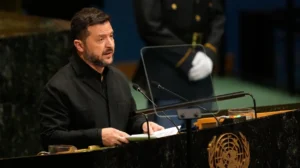
The Israeli Ambassador Danny Danon at the UN General Assembly denied that the settlements were an obstacle to peace. He also noted that Israel had historical, biblical and legal claims to the territory and that Israel “is not going anywhere,” the settlements will keep developing. This point of view is completely opposite to that of the Palestinians concerning the siege in Qusra. From the Palestinian point of view, the siege was not just the confrontation between the trespassers.
Why the American connection matters
The involvement of a Palestinian-American family gave Washington a direct consular interest in the case. U.S. diplomatic pressure appears to have helped produce a more visible Israeli response, although it remains unclear whether the siege was fully ended by Thursday.
This raises an uncomfortable question about the protection of Palestinians who do not hold American citizenship. If the presence of an American property owner accelerates intervention, critics will ask whether Palestinian families without foreign connections receive the same level of attention.
The United States remains Israel’s principal international ally. Washington provides diplomatic, military and political support, but it also faces pressure to respond to Israeli policies that harm Palestinian civilians. Huckabee’s intervention attempted to balance both realities: he defended the Israeli military’s response while strongly condemning the settlers. His language may also serve as a warning to Israeli authorities. Even a settlement-supporting American envoy appears to recognise that unchecked settler violence can damage Israel’s international standing and complicate U.S. policy.
The unresolved question of accountability
The pressing matter is whether the Israeli authorities will take up their responsibilities and investigate and bring to justice those who perpetrated the blockade, caused the damage to properties, and cut utilities. An announcement by the army that there will be one arrest and disciplinary action taken against the personnel is not the same as conducting the criminal investigation to completion. The test of accountability will also depend on whether the authorities will be able to uncover the organizers of the siege, to find out whether the act was planned, and whether it was tolerated by any government or security officials.
The general challenge for the authorities is whether the government is able to enforce its own orders. If settlers are able to block the road, surround the houses of Palestinians, resist police interventions and remain on the spot for days, it is clear that the authority of the Israeli military and police forces is undermined.
For Israel, Qusra is a test of law enforcement. For Washington, it is a test of whether public condemnation can produce meaningful protection. And for the international community, it is another indication that settler violence and displacement are becoming central to the future of the West Bank. The language of “terror” has brought unusual attention to the case. But the lasting significance of Qusra will depend not on the words used by the U.S. ambassador, but on whether those words are followed by prosecutions, protection for the families and a sustained effort to prevent the next siege.