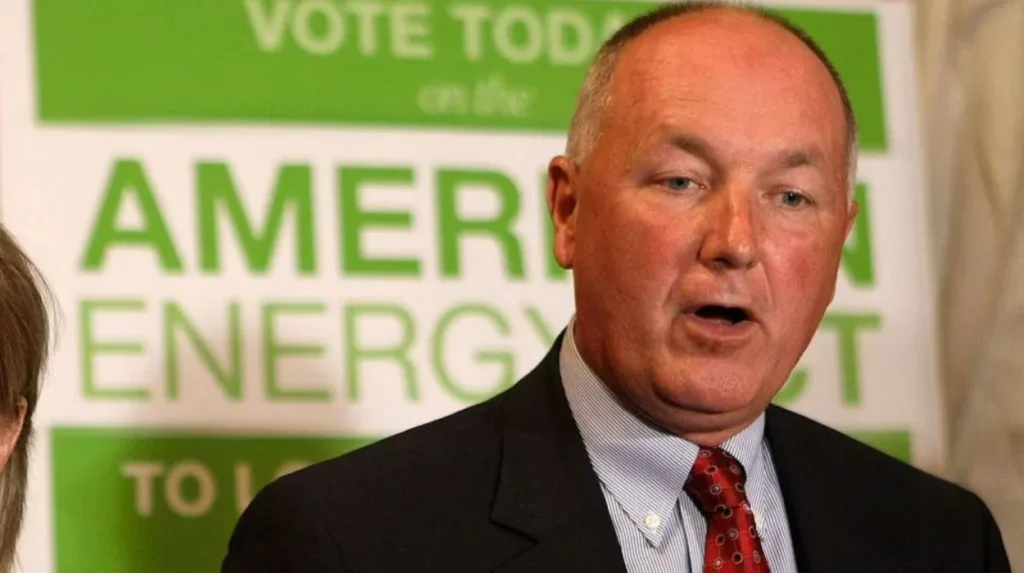
In an unprecedented display of public diplomatic activism, more than 70,000 Canadians have signed a formal House of Commons e-petition calling for the expulsion of the United States ambassador to Canada. The petition, designated e-7531, accuses Ambassador Pete Hoekstra of a pattern of conduct that undermines the Canada-U.S. relationship and violates the norms of diplomatic protocol. Launched in late July 2026 by Calgary resident Leanne Walker, the initiative has rapidly gained traction, evolving from a grassroots complaint into a significant political flashpoint that underscores the deepening strains in North American relations.
However, the key demand of the petition is very clear: it demands that the Government of Canada should make a declaration that Ambassador Hoekstra be declared persona non grata and demand him out of Ottawa. Apart from just demanding his expulsion, the petitioners have also demanded a parliamentary inquiry into a systematic practice of intervention of American diplomats in the internal matters of Canada. This is an extremely unusual situation in which the sentiments of the people have dared to challenge the post of a high-ranking diplomat of the country’s closest ally nation.
The Catalyst: A Pattern of Provocative Conduct
The surge in signatures is not an isolated reaction to a single event but rather a culmination of what the petition describes as repeated interventions by Ambassador Hoekstra that are inconsistent with diplomatic norms. The document lists several specific grievances that have fueled public outrage. Chief among them is Hoekstra’s amplification of President Donald Trump’s recurring references to Canada as the “51st state.”
Hoekstra brought back the rhetoric of annexation by sharing a post from Trump on social media in June 2026, which led to backlash from Canadian officials. In response, the prime minister, Mark Carney, said, even though the rhetoric was inappropriate, Ottawa will not be expelling the diplomat, as there was a need for the country to work with the U.S., its most significant trading and security partner. The petition mentions how Hoekstra labeled the 2025 Canadian federal elections as “anti-American”, an utterance that has been criticized by many Canadian politicians and political analysts, who say that such comments were not appropriate coming from the mouth of an ambassador. Also mentioned is an instance when, in October 2025, Hoekstra gave an expletive laden rant at Ontario’s trade representative during a gala in Ottawa, saying Canada was responsible for the bad negotiations.
The Mechanics of the Petition and Political Response
The petition operates within the formal framework of the Canadian Parliament’s e-petition system. Once a petition reaches a certain threshold of signatures, it must be tabled in the House of Commons by a sponsoring Member of Parliament. In this case, Green Party Leader Elizabeth May has agreed to sponsor the petition, ensuring it will be presented when the House resumes in the fall. Under parliamentary rules, the government is then required to issue a formal response within 45 days. This procedural requirement guarantees that the issue will receive official attention, even if the ultimate outcome does not align with the petitioners’ demands.
Despite the overwhelming public support, the Liberal government has signaled that it will not act on the call for expulsion. Prime Minister Carney has been clear that while the administration shares concerns about the tone of U.S. rhetoric, expelling an ambassador from a key ally would be counterproductive to ongoing trade negotiations, particularly the review of the Canada-U.S.-Mexico Agreement (CUSMA). Opposition leaders have echoed this sentiment of caution; Conservative Leader Pierre Poilievre dismissed Trump’s “51st state” comments as “ridiculous” but focused his criticism on domestic economic issues rather than diplomatic expulsions. The U.S. Embassy in Ottawa has acknowledged the petition but declined to comment substantively, with a spokesperson noting that amplifying the President’s social media posts is standard practice.
Sovereignty, Trade, and the Shadow of the 51st State
This petition can hardly be considered outside the context of worsening Canada-U.S. relations during the second term of Donald Trump as the president. The term “51st state” is not an idle phrase; it speaks to very serious concerns about sovereignty and economic independence of Canada. These concerns were fueled by the application of tariffs by the Trump administration as a means of coercion. By August 2026, the U.S. government had already threatened to introduce 50% tariffs on a huge number of goods produced in Canada in case no new trade deal was agreed upon, increasing economic tension throughout the country. In such circumstances, the actions of Ambassador Hoekstra are considered by many Canadians not just diplomatic blunders but a part of a larger pressure campaign.
The petition makes explicit references to Hoekstra and his involvement in the controversies with regard to Alberta separatism. It mentions meetings between representatives of the U.S. State Department and such organizations as the Alberta Prosperity Project, as well as raises doubts about a voter ID application in Michigan used by the Alberta separatist “Centurion Project.”
For the petition’s signatories, these actions represent a violation of the Vienna Convention on Diplomatic Relations, which mandates that diplomats respect the laws and regulations of the host country and refrain from interfering in its internal affairs.
The Limits of Public Diplomacy
Despite the success of the petition in mobilizing public opinion, its practical effect on the policy appears to be minimal. The expulsion of a diplomat as a persona non grata falls under the sovereign power of the host nation, but it is a measure which can be taken in the cases of spying, gross misconduct, or breakdown of relations. The expulsion of the ambassador of the United States would pose great danger since it could interfere with trade negotiations, as well as harm the security cooperation between the two nations.
According to an expert cited in a radio program, the expulsion as a political measure is unlikely to follow the petition, but it might force the government to bring the issue to attention more formally, or to commission an investigation into the activities of U.S. diplomats. The reaction of the government shows how they strike a balance. Firstly, they should recognize the anger of people and legitimize the question of their sovereignty. Secondly, they have to consider pragmatic needs of maintaining the relation with a superpower being the most important economic and security ally of Canada.
As he stated in June,
“Ottawa will not expel the U.S. ambassador to Canada for amplifying U.S. President Donald Trump’s latest reference to Canada as the ‘51st state.’”
This stance highlights the limits of public diplomacy in the face of hard geopolitical realities.
A Defining Moment for Canadian Foreign Policy
The petition to expel the US ambassador from Ottawa serves as a barometer for the current state of Canadian public opinion. It reveals a populace that is increasingly willing to challenge the status quo of North American relations and demand a more assertive stance on sovereignty. The fact that over 70,000 Canadians have signed the petition, with strong support from every province, indicates that these concerns are not confined to a specific region or political faction but are shared across the country.
Ambassador Hoekstra is certainly under a serious threat of damage to reputation because of this petition. In fact, his ambassadorship was rather controversial due to the way he has acted on the diplomatic stage – including his expletive filled argument with the trade representative of Ontario and the accusations of Canadian intervention in American internal affairs. Though, he still holds his post as an ambassador, the petition has made him an ambassador known as one of the most controversial figures in the diplomatic history of Canada.
The petition is a serious challenge for the Canadian government in terms of conducting foreign policy and demonstrating skills of diplomacy because the question of dealing with the public mood is extremely complicated without risking the interests of the country itself. Thus, the petition, which is going to be officially submitted to Parliament, will inevitably cause serious discussions about diplomatic ethics and its limits. Whether Ambassador Hoekstra gets expelled or not, the petition has achieved a great deal because the problem of US diplomatic interference has become one of the main topics of discussion within the political discourse of Canada.