The intelligence-sharing relationship between the United States and Ukraine has reportedly returned to levels seen before Washington temporarily suspended cooperation in March 2025, according to U.S. lawmakers and regional experts cited by POLITICO. The reported recovery comes at a strategically important moment, as Kyiv intensifies long-range drone and missile strikes against Russian military, logistics and energy targets.
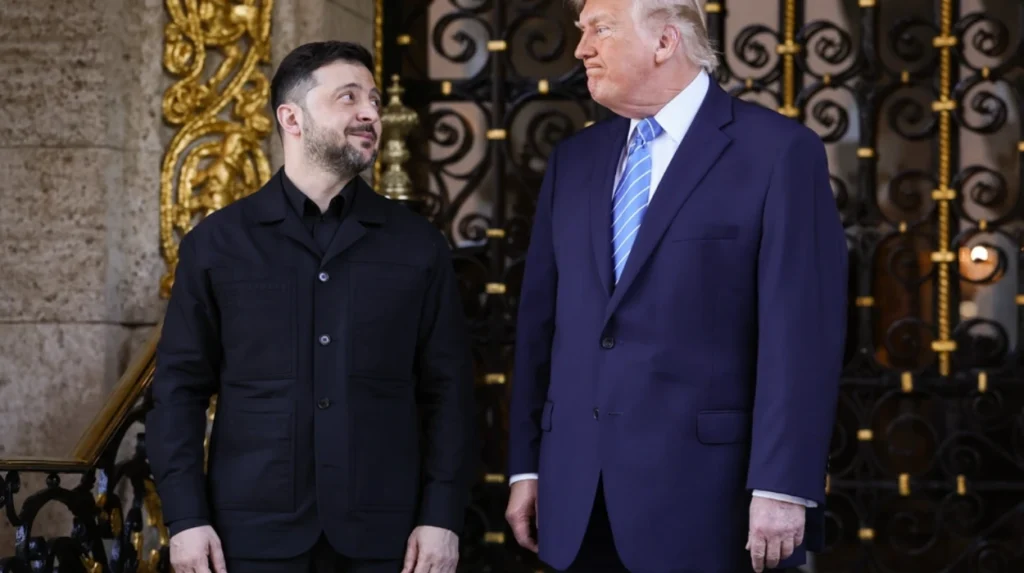
This development represents a major departure from the fallout that took place after the strained meeting held in the Oval Office between U.S. President Donald Trump and Ukrainian President Volodymyr Zelenskyy on February 28, 2025. Immediately after this meeting, the U.S. government stopped all military assistance and intelligence support to Ukraine, leaving the future of continued U.S. support to the Ukraine uncertain. The U.S. and Ukraine resumed the cooperation after discussions in Jeddah, Saudi Arabia, on March 11, 2025. Intelligence and military assistance were once again promised after indications from Kyiv that it is ready to join a proposed 30-day ceasefire agreement. The suspension officially lasted for a week; however, politically and strategically it was much more far-reaching because Ukraine had relied on intelligence provided by the United States for early warning and battlefield targeting.
More than a year later, officials and lawmakers now say the relationship has not merely been restored but has recovered to what POLITICO described as “previous highs.” However, neither the CIA, the Office of the Director of National Intelligence nor the White House has publicly confirmed the exact scale, scope or terms of the renewed cooperation.
Warner links intelligence to Ukraine’s gains
Sen. Mark Warner, the ranking Democrat on the Senate Select Committee on Intelligence and a long-standing supporter of additional U.S. assistance to Ukraine, confirmed that communication and intelligence cooperation had improved.
“I don’t want to get into any specifics, but it has improved,”
Mark Warner said. He added that the improvement, combined with Ukraine’s long-range drone campaign, had strengthened Kyiv’s position in its war against Russia.
“That, combined with I think, the really smart, long-range drone strategy has really improved the Ukrainians’ position,”
Warner said.
The statements made by Warner are particularly important since they constitute one of the most explicit signs that the United States is likely to start supplying intelligence consistently. The reluctance to go into details also speaks to the sensitive nature of the partnership. Assistance with intelligence could include information on Russian forces, command centers, air defense systems, logistics, fuel dumps, and military infrastructure.
The senator also acknowledged that Ukraine’s performance has surprised many officials in Washington.
“No one — including our defense establishment and, frankly, maybe even including me — a year ago thought they’d be in this position right now,”
Warner said.
Warner had strongly criticized the March 2025 suspension. At the time, he said allied intelligence had been essential to Ukraine’s defense since the beginning of Russia’s full-scale invasion in February 2022.
“Allied intelligence support has been crucial to enable Ukraine to defend itself from the first days of the conflict in February 2022, to unmask Russian invasion plans and intentions, and to save countless innocent lives,”
Warner said.
He further warned:
“Cutting off intelligence support to our Ukrainian partners will cost lives.”
His earlier criticism and current assessment together indicate that he views intelligence sharing as a central component of Ukraine’s military resilience, rather than as a secondary element of U.S. assistance.
Bipartisan confirmation in Senate
Warner is not the only one to have noticed this resurgence in intelligence cooperation. Republican Sen. John Cornyn, who sits on the Senate Intelligence Committee, and Republican Sen. Roger Wicker, chairman of the Senate Armed Services Committee, both noted that Washington-Kyiv intelligence cooperation had become more common.
Cornyn offered the most politically striking assessment.
“It sure seems like that,”
John Cornyn said when asked whether intelligence sharing had improved. He added:
“Everybody loves a winner and looks like Ukraine has turned the tide.”
The statements made by Cornyn imply that the improvement that is being witnessed is not limited only to the Democratic legislators who have been consistent about their demand for increased U.S. backing for Ukraine. That said, the use of the term “turned the tide” is to be considered a political and analytical assessment and not evidence that Ukraine has won decisively. The war is ongoing on a long front, with Russia having the upper hand when it comes to manpower, missile arsenal, artillery, industry, and even airpower. The intelligence turnaround seems to have enabled Ukraine to better utilize Russia’s weaknesses.
Democratic Sen. Tim Kaine, a member of the Senate Armed Services Committee, said he had observed stronger communication during visits to Ukraine.
“I was in Ukraine in April 2025 and I was there again in July 2026. And I detect more confidence in the communication,”
Kaine said.
That observation points to an important aspect of intelligence cooperation: effectiveness depends not only on the amount of information exchanged but also on trust, speed, secure communication channels and the confidence of officials on both sides.
How intelligence supports Ukrainian strikes
While details of the package of intelligence are classified, the studies and reports that have been made public reveal that the aid provided by the United States may include satellite imaging, intelligence on signal interception, early warning intelligence, cyber assistance, and intelligence on the military plans of Russia. The intelligence provided may assist Ukraine in answering various tactical questions such as the location of Russian command centers, how the military units are getting supplies, the air defense systems that cover a particular objective, when it is vulnerable, and how an air strike may bypass or neutralize the effect of electronic warfare. There is a huge difference between providing intelligence assistance and carrying out a military operation.
According to Barros, a military analyst cited by POLITICO, Ukrainian long-range strikes became substantially more effective after intelligence support began helping Kyiv identify targets more accurately.
“Those strikes were supercharged, and they became much more effective only starting in 2025 with the new Trump administration, when intelligence-sharing started to help provide the Ukrainians better information to make their strikes much more effective,”
Barros said.
He also emphasized Ukraine’s own capabilities.
“There’s no doubt of the following: Ukraine has outstanding intelligence on Russia,”
Barros said.
That distinction is essential. U.S. intelligence may improve the accuracy and timing of Ukrainian attacks, but the strikes also depend on Ukrainian drone design, domestic production, operational planning, electronic-warfare capabilities and the ability of Ukrainian forces to interpret and act on information quickly.
Energy targets increase pressure on Moscow
Ukrainian attacks have increasingly targeted Russian oil refineries, fuel storage facilities, ports, logistics facilities, and other infrastructure related to Russia’s war economy. Ukrainian officials have stated that the attacks could disrupt Russia’s efforts to supply its troops and to earn money from the invasion. According to Reuters, Ukrainian attacks on Russian energy infrastructure helped cause a fuel shortage and caused Moscow to limit the export of diesel fuel. A temporary ban on the export of diesel fuel was imposed by Russia due to the increase in attacks on Russian refineries and the associated pressure on Russian fuel supplies and prices. Reuters reported that Ukrainian forces hit three Russian oil refineries as well as the Vysotsk Baltic Sea oil terminal in the first week of July 2026.
The Ukrainian attack has been characterized as an attempt to disrupt Russia’s capability to fund and support its military operations. Another source indicated that Kyiv claims its forces have attacked almost 50 fuel ships in five days, with ten tankers attacked in the Sea of Azov.
These attacks do not establish that the United States is selecting targets for Ukraine. They do, however, illustrate why improved intelligence could have a major operational effect. Accurate information can help Ukrainian forces identify the most valuable targets and reduce the risk of wasting scarce long-range weapons.
The campaign also creates economic and political pressure. Disruption of fuel supplies can affect Russian military logistics, domestic prices, exports and the Kremlin’s ability to portray the war as economically manageable.
Ukraine’s wider drone advantage
Ukraine’s reported progress is also connected to a rapid expansion of drone warfare. The Institute for the Study of War said Ukrainian forces had developed a growing advantage in unmanned systems and had increased attacks against Russian logistics, command centers and energy infrastructure.
As noted in the report, Ukrainian unmanned aircraft carried out over 11,000 combat sorties per day and hit over 150,000 confirmed targets in March 2026, according to claims made by the Ukrainian military and cited by the institute. Such numbers are not independent and need to be attributed to Ukrainian authorities. The same estimate includes over 350 mid-range attacks by Ukrainian unmanned vehicles, including 143 strikes against Russian logistics bases and warehouses, 52 command centers and 20 energy facilities.
As noted by the Council on Foreign Relations, Ukrainian drones are increasingly operating at 30 to 100 kilometers behind the front lines, compelling Russia to deliver supplies further away and allocate more assets for air defense. All these facts can be used to interpret the comment of Warner, stating that intelligence sharing and Ukrainian drone tactic are complementing each other. While intelligence can locate a target, Ukrainian drones have the capability to hit it. At the same time, battlefield experience enables Ukrainian troops to improve their drones and prioritize intelligence information.
Washington’s two-track policy
The renewed intelligence relationship also reveals a tension in the Trump administration’s Ukraine policy. Washington is publicly emphasizing negotiations and an end to the war, while lawmakers and analysts report that intelligence cooperation is helping Ukraine conduct more effective operations against Russia.
The White House has not publicly confirmed the reported return to previous intelligence-sharing levels. Its stated position remains that the war should end through negotiations.
“The President wants this war settled so the senseless killing ends,”
the White House said.
This creates a two-track policy. On one track, the administration seeks a diplomatic settlement and presents itself as a potential mediator. On the other, intelligence support can help Ukraine impose costs on Russia and strengthen Kyiv’s position before or during negotiations.
For Ukraine, the renewed relationship is strategically valuable even if Washington’s political commitment remains conditional. The March 2025 freeze demonstrated that intelligence access can be restricted rapidly by presidential decision. Kyiv therefore has an incentive to use U.S. support while continuing to develop independent satellite, drone, cyber and signals-intelligence capabilities.
Russia likely to view cooperation as escalation
Moscow has consistently contended that intelligence assistance provided by the West makes the United States and NATO active participants in the fight. Speaking in October 2025, Dmitry Peskov, an official of the Kremlin press office, claimed that the United States and NATO have been providing regular intelligence assistance to Ukraine and using their own facilities for collecting and transmitting information to Kyiv.
The reestablishment of a closer partnership will likely lead to increased allegations by Moscow of a proxy war by Washington. Russia may also decide to step up its attacks against intelligence centers, control centers, energy networks and civilian targets in Ukraine. The main threat for Washington consists in the risk of escalation. The closer the intelligence ties, the more likely it is that Russia will consider Ukrainian raids into its territory an effort supported by the United States.