Iran is considering a plan to prohibit U.S., Israeli and other “hostile” vessels from using the Strait of Hormuz while imposing charges on ships allowed to pass. The proposal, reportedly under review by Iran’s parliamentary National Security and Foreign Policy Committee, would also restrict military and civilian cargo considered connected to Israel or to operations against Iran and its allies.
The policy would empower the Iranians to refuse passage to any nations or organizations considered responsible for damage incurred during the course of the war until the damage had been compensated for. Ships which violated this proposed policy could incur fines equivalent to 20% of the value of the goods carried onboard them, according to information received from Iranian media and parliament. Iran hasn’t passed the proposed regulations as official legislation yet and the means of enforcing it haven’t been determined yet.
However, the initiative is a big step towards formalizing animosity towards Washington and Tel Aviv as a maritime policy. The proposed policy would in effect establish two groups of commercial shipping. Shipping vessels that are associated with the US, Israel or other hostile countries would be refused access while the rest would have to pay some fees in order to pass through. Other ships not directly linked to Israel but carrying goods originating from it would be affected by the proposed policy too.
That uncertainty is one of the most serious risks for global shipping. International vessels frequently involve several jurisdictions: the ship may fly the flag of one country, belong to a company registered in another, carry cargo owned by a third and be insured through a fourth. If Iran applies its proposed rules broadly, shipping companies could face unpredictable decisions at the entrance to the strait.
Proposed charges and compensation
Iran is reportedly seeking fees of between 5% and 7% of the value of cargoes transported through the waterway. Oman has reportedly discussed a charge of approximately 3%, while the United States has rejected all fees and conditions.
Iran has avoided describing the payment as a conventional toll. Tehran has instead referred to charges for services such as maritime security, navigation, insurance and environmental protection. Iranian Foreign Ministry spokesman Esmaeil Baghaei previously said,
“There are no tolls. We should be precise with our language.”
But, for shipping companies, this difference does not seem to be important in practice. In case the payment must be paid for the ship to move through the passage and is based on the value of the cargo, then the fee will add to the expense of international trade irrespective of its nature – a toll or a compulsory service fee. At the same time, the planned fee is related to the demands by Iran for compensation from the nations it blames for the destruction in the war.
Thus, the whole project represents more an economic-political tool rather than the standard maritime safety procedure. For Iran, this tool will enable it to negotiate with those states which are considered to be guilty of the attacks, sanctions or military support of Israel. There is an additional danger represented by the possible penalty calculated as 20% of the value of the cargo. It could easily cost millions of dollars for the oil, gas or container delivery.
U.S. rejects a controlled waterway
The United States has rejected Iran’s characterization of the proposed shipping arrangement. Washington says any temporary route through Hormuz must remain open to international commercial shipping without Iranian permission, tolls or political screening.
A U.S. official cited by NPR said any temporary route must operate “without any impediments,” meaning no approvals, permissions, tolls or charges. The statement directly contradicts the Iranian proposal, which would require vessels to comply with national and political restrictions before using the waterway.
Secretary of State Marco Rubio has also insisted that the strait should remain free of tolls.
“The straits are supposed to be open – free of tolls,”
Rubio said in remarks reported by the U.S. State Department.
The problem is not only about the potential gains that may result from such a move. The question here is that whether Tehran has the right to determine which states should enjoy using the international waters. The United States and leading shipping nations will certainly consider the plan to restrict the shipping to the assertion of Iranian control over the international traffic. As far as the U.S. military is concerned, it already has shown that it intends to play its part in protecting the commercial traffic. The U.S. Central Command claimed that 55 merchant vessels navigated through the strait on 20 June carrying over 17 million barrels of oil. The support of the freedom of navigation was provided by U.S. forces. In case Iran tries to intercept the U.S.-related ship, the probability of the clash is rather high.
The global trade stakes
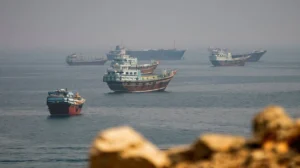
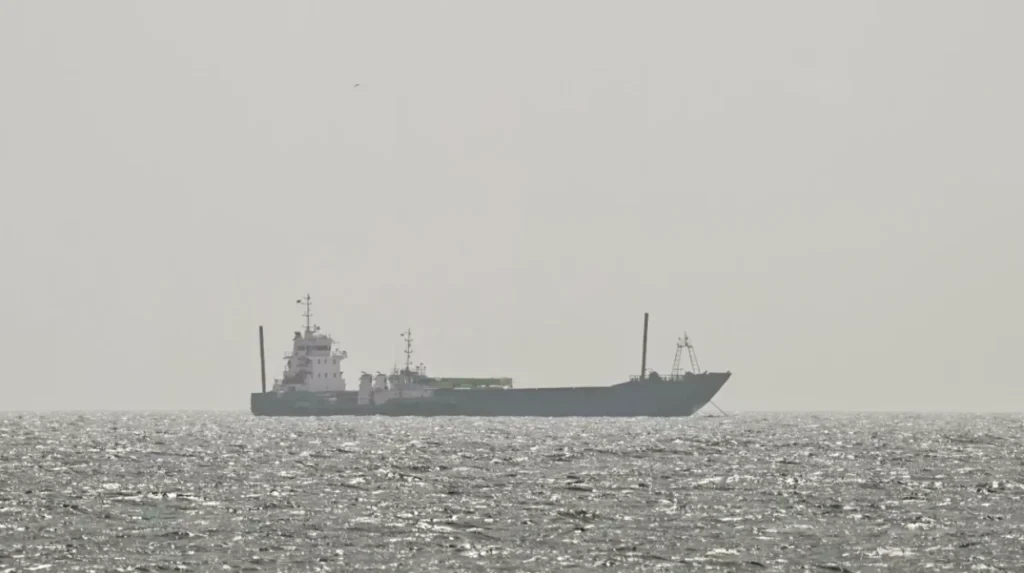
The Strait of Hormuz is not an ordinary shipping route. It is the main maritime exit for oil and gas produced by several Gulf states, including Saudi Arabia, Iraq, Kuwait, the United Arab Emirates and Qatar.
About twenty million barrels of oil flowed through Hormuz per day in 2024, equivalent to roughly one-fifth of world petroleum liquids consumption and more than one-quarter of world maritime oil trade. An additional twenty percent of world LNG trade utilized the strait. This effect would have been confined to Asia. About eighty-four percent of crude oil and condensate that traveled through Hormuz and eighty-three percent of LNG cargo had destinations in Asia.
China, India, Japan and South Korea were hence highly vulnerable to such an Iranian embargo of access to the strait. The prohibition against vessels from the United States and Israel could have affected third party shipping as well. Cargoes of energy products are normally shipped under elaborate commercial agreements, and an American or Israeli connection to the ship carrying oil to China or India could classify it as an enemy ship. The effects of the embargo would have gone beyond those of oil and gas. Higher prices of fuel would increase the cost of land transportation, aviation, electricity generation, production processes, and agriculture.
A prolonged restriction could also affect container shipping. Although Hormuz is primarily associated with energy, commercial vessels carrying machinery, food products, chemicals and manufactured goods also use regional ports. If insurers classify the strait as a high-risk zone, shipping lines could suspend services or impose emergency surcharges.
Energy prices would react first
Oil markets react promptly to the looming threat of disruption as traders account for the risk of supply in the future. A partial ban on oil tankers may increase oil prices due to fears that restrictions may not remain limited only to American and Israeli ships and include ships belonging to the nations. Oil futures closed more than $3 higher as per a report of Reuters after it was revealed that a parliamentary committee of Iran was discussing a draft that may restrict passage. The move may delay the re-opening of the strait and cause difficulty in restoring pre-conflict levels of shipping activities.
While a complete closure would mean a much greater crisis situation, a formal ban on specific ships would also lead to disruption in the form of reduced traffic, higher insurance costs and use of alternate routes for transportation. There can also be another problem for energy markets as a possible interruption in the supplies of LNG from Qatar as Qatar is one of the largest exporters of LNG in the world and it exports most of its LNG to Asia through Hormuz.
That competition could raise spot LNG prices and increase electricity costs in countries that depend heavily on imported gas. In developing Asian economies, the effect could be particularly severe because higher LNG prices can quickly affect power generation and industrial production.
Shipping companies warn of a dangerous precedent
The international shipping industry has warned that compulsory payments would undermine established rules governing maritime chokepoints. Eight leading shipping organizations sent a letter to United Nations Secretary-General António Guterres and International Maritime Organization Secretary-General Arsenio Dominguez opposing charges for passage through Hormuz.
The organizations said,
“Introducing compulsory charges for transit, or service fees that are a toll in all but name, through the Strait of Hormuz would represent a significant departure from established international practice.”
They noted that the establishment of an effective toll system would result in increased energy costs and inflation. It was also stated that internationally recognized navigation rights must not be used in broader political negotiations. However, the problem does not affect only Iran. If Tehran succeeds in introducing politically motivated payments for transit via Hormuz Strait, other countries may start doing the same.
The idea that the state would receive some kind of compensation from the ships owned by its rival nations prior to permitting transit via strategic waterway may become reality. However, this would create another element of unpredictability in global trade. Shipping is based on the assumption that access will not be refused to commercial vessels on political grounds.
The meaning of the U.S.-Israel ban
The proposed prohibition is designed to distinguish Iran’s enemies from countries that Tehran considers neutral or friendly. A ban on U.S. and Israeli vessels would allow Iran to claim that it is not closing Hormuz to all international shipping.
That selective approach could make the proposal more politically defensible inside Iran, but it would not eliminate the risk of disruption. The United States has extensive commercial links with global shipping, and Israeli-related cargoes may be embedded in wider supply chains. Determining which vessels qualify for access could become a source of repeated disputes.
The ban could also affect vessels belonging to U.S. allies. Iran’s draft reportedly extends restrictions to other countries it labels hostile or to states that have harmed Iran. The definition could include countries that imposed sanctions, assisted U.S. operations or supported Israel.
As a result, the proposal could expand beyond a U.S.-Israel measure into a broader political screening system. The more countries included, the greater the potential disruption to global trade.
Legal and military risks
These restrictions could provoke opposition from the point of view of international maritime law. The UN Convention on the Law of the Sea states that international straits can allow for transit passage and that this type of passage should not be impeded or interrupted. Neither Iran nor the USA is party to UNCLOS; however, many countries consider some rules of navigation to be part of customary international law. The nationality restriction and the cargo value tax could be claimed discriminatory restrictions of transit passage.
The legal dispute would have no relevance compared to the enforcement dispute in case of Iran’s attempt to prevent a vessel from proceeding. If the ship were owned by the USA or Israel, it could be accompanied by warships, and there would be a direct conflict between the Iranian military and American troops. Even in the absence of the shooting incident, there would always be a threat of seizure or detention, which would force shipping companies to avoid the route.
Global trade faces prolonged uncertainty
Iran’s reported plan has placed the future of Hormuz at the centre of global trade concerns. The immediate issue is whether Tehran will formally ban U.S. and Israeli vessels and impose charges on other ships. The larger issue is whether access to a vital international waterway will become conditional on political loyalty and compensation payments.
For Iran, the suggestion will be an opportunity to put pressure on Washington, Israel and other nations participating in the conflict. For the United States, adopting the plan will imply the need to give Iran the opportunity to create a precedent of regulating the international transit. For Oman, it will be important to preserve maritime security without having to control the controversial Iranian system. For the world markets, even partial implementation of the plan implies higher prices for energy resources, shipping, insurance and the increase in inflation rates.
The total ban will be much worse for the world, but the suggested selective ban can become dangerous in terms of slowing down trade because of the emergence of fear, confusion and potential war. The key outcome is that the Strait of Hormuz will not be regarded anymore as a predictable trading route by the shipping companies. In case of adoption of the Iranian plan, every ship will have to think about not only cargo and destination, but also about its affiliation, insurance and relations with the states regulating entry to the Strait of Hormuz.