The U.S. decision to tighten the duration of visas for foreign students, cultural exchange visitors and journalists marks a significant escalation in how Washington manages cross‑border mobility in an era of sharpened geopolitical rivalry. The move, unveiled on Thursday by U.S. authorities, shifts key visa categories from more flexible, “duration of status” admissions to rigid, time‑limited stays, with a particularly sharp change for Chinese journalists, whose permitted period in the country is now being shortened to 90 days at a time. For many observers, the measure is not just a technical regulatory tweak; it is a fresh front in a broader contest over security, influence and narrative control between the United States and China.
At the center of the disagreement lies the gap in perceptions between the U.S. security-based approach to the matter on one hand and the way in which the move was perceived by Chinese authorities as a political and discriminatory one. While the U.S. officials claim that the changes are necessary because of the abuse of the visa system, prolonged stays in the country as well as possible espionage threats posed by strategic technologies and critical infrastructure in the most delicate cases, Chinese officials argue that the policy represents yet another step in the use of immigration/visa policy as an element of rivalry, affecting ordinary students, scholars, cultural exchange participants, and even media people who have little influence over foreign policy.
What Changes in the U.S. Visa Framework
The new regulations make the U.S. turn its back on the previous tradition of giving many foreign students, scholars, and cultural exchange participants the right to stay throughout the duration of their program as long as they were performing well. Instead, a new time limit model is adopted. In case of foreign students, it is a visa granted for a certain period, after which a new one will have to be obtained through another application and not automatically as was the case previously. In terms of foreign cultural exchange participants, a similar restriction is put into effect.
The most political change, however, is seen in the way foreign journalists are treated. As far as the Chinese journalists are concerned, the United States of America has made up its mind to reduce the validity of the stay of the Chinese journalists by 90 days. The reason behind this move is that now they will have to keep renewing or extending their visas if they want to work as journalists from the U.S. territory. In fact, the previous visa system for foreign journalists used to allow them one year and above of stable life in terms of visa validity.
With regard to regulation, the changes make the foreign students, exchange visitors, and media more like the way that many other classes of non-immigrants are regulated, with their period of stay being well defined and strict control by the immigration services over their status and duration of stay. However, this kind of policy is not independent of the larger political context in which it is made. Practically speaking, the changes will affect most those citizens of those countries that send lots of students and media people to America – and China is often one of those countries.
China’s Charge of Discrimination and Politicisation
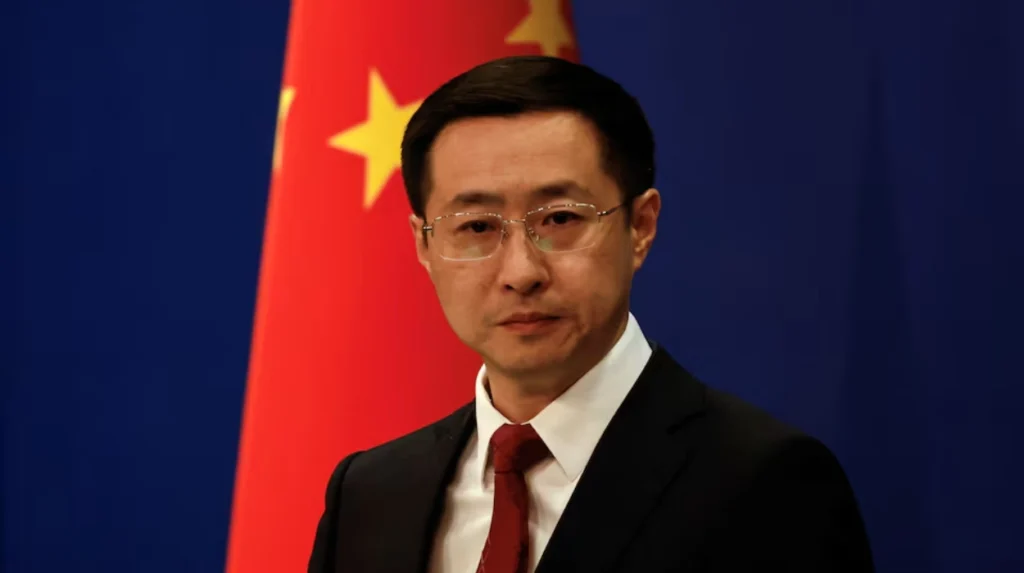
Beijing’s response has been swift and unambiguous. China’s Foreign Ministry has publicly rejected the decision and called on Washington to reverse course. In heavily signalled remarks, the ministry framed the measures as unfair and targeted. Chinese officials stressed that these changes would harm legitimate exchanges rather than protect security. One prominent line from the ministry condemned the decision, saying
“these new measures are discriminatory in nature and seriously harm the lawful rights and interests of Chinese students, scholars and journalists”
– Chinese Foreign Ministry spokesperson. By using the language of rights and discrimination, Beijing is positioning itself as the defender of ordinary citizens, and not just an aggrieved state actor.
In a carefully calibrated warning, Beijing has also stressed that it “reserves the right” to respond. Officials have pointedly signalled that China may take reciprocal or “corresponding” measures if Washington does not revisit the rules. Another statement underscored this, noting that
“China urges the United States to immediately withdraw these discriminatory visa regulations and stop politicising normal people‑to‑people exchanges”
– Chinese Foreign Ministry spokesperson. The choice of words is deliberate: it connects the U.S. policy not merely to bilateral tension but to a broader narrative about America falling short of its own self‑image as a country open to ideas, talent and free information flows.
Crucially, Beijing is not just talking to Washington; it is talking to a global audience of students, researchers and journalists weighing where to study, work or base their operations. By casting the U.S. rules as discriminatory and damaging to cooperative ties, Chinese officials seek to argue that such policies undermine the United States’ long‑standing soft power advantage in education and media openness. It is a reminder that visa rules, once a technical space dominated by lawyers and civil servants, have become a front‑line tool of strategic messaging.
U.S. Security Logic and Domestic Political Drivers
As far as the United States is concerned, the reduction in visa duration has been happening within the context of a multi-year trend of looking at the issue of access by foreigners, particularly those from strategic rivals, in terms of security. U.S. government departments and many members of Congress have become increasingly worried about the issue of “non-traditional collectors” of confidential data who, in the eyes of Washington, could be under pressure to pass on the knowledge or data to their respective governments.
Domestic politics also plays a key role. Across multiple administrations, but especially in recent years, immigration and border control have been central issues in U.S. political debates. Moves to tighten, scrutinise, or cap foreign visas resonate with constituencies that are anxious about jobs, security, or the pace of globalisation. In the context of China, congressional hawks and security‑focused officials have repeatedly pushed for more aggressive screening and reduced exposure in sectors such as advanced technology, biotechnology and critical infrastructure, arguing that traditional vetting mechanisms have not kept pace with sophisticated state‑linked collection.
In case of journalists, the logic of Washington often revolves around the notions of reciprocity and competition in the informational space. US authorities for a long time have been pointing out that while the media of the People’s Republic of China or state-linked media get relatively extensive opportunities to operate in the US, American media struggle with severe restrictions, threats, and visa issues when operating in the People’s Republic of China. Within this context, such steps as restricting the duration of stay of Chinese journalists in America can be perceived in Washington as bringing the balance. However, this cannot resolve the issue of intimidation and use journalism as a means of confrontation.
Implications for Students, Exchanges and the Knowledge Economy
In the case of foreign students, especially those coming from China, the result of these policies will most probably be an increase in administrative hassle and confusion. With shorter periods or caps on time spent, there will definitely be a need for constant contact with immigration agencies, increased paperwork, and higher expenses in terms of both money and law. In the case of students carrying out lengthy research or multistage education, the fear of potential delays or rejection in prolongation of visa period can influence their decision on whether to enter U.S. colleges or not.
Universities and research centres stand at the frontline of this shift. For years, American higher education has relied heavily on international students for financial stability, research output and global reputation. Chinese students, in particular, have formed a large cohort in STEM, business and graduate programs. If they perceive the United States as less welcoming or more unpredictable in terms of immigration status, some may look to alternatives in Europe, Canada, Australia or even regional hubs in Asia. That could gradually erode the U.S. advantage in attracting global talent, even if top institutions remain highly competitive.
Exchanges between cultures and educational institutions will certainly not escape the effects of this trend. Exchanges that rely on sustained relationships and cooperation will find themselves hard pressed to make plans in light of the rushed time frames and frequent review of visas. Exchange organizers from both America and other countries will perhaps be forced to modify their programs in order to accommodate a decreased time frame, thus limiting the impact or feasibility of their cooperation projects.
Media Freedom, Information Flows and Reciprocity
The 90‑day limit on Chinese journalists epitomises how media has become a proxy battlefield in U.S.–China relations. Frequent renewals introduce an implicit leverage: reporters are left operating in a permanent probation‑like state, where their ability to remain in the field is subject to repeated bureaucratic decisions. Even if most renewals are granted, the uncertainty alone can shape editorial choices, the willingness of organisations to invest in bureaus, and the personal calculus of reporters considering U.S. assignments.
This sits on top of earlier cycles of expulsions, caps and retaliatory measures between the two countries. In previous rounds, Washington restricted the number and visa categories of staff at certain Chinese state‑affiliated outlets; Beijing responded by expelling or restricting staff from leading U.S. media organisations. The result has been a reduction in on‑the‑ground reporting capacity on both sides, at a time when accurate, independent information about each country’s politics, society and economy is more critical than ever.
With China hinting at a reciprocal response, there is likely to be additional tightening. With Beijing adopting the American 90-day visa regime for the United States, the U.S. media operating in China could find itself in a situation where it needs to apply for a visa repeatedly through the same revolving-door procedure. Not only will this hinder quality journalism, it could also make journalists more cautious about their work for fear that too strong an article could jeopardize future entry into the country.
Strategic Signalling and the Future of People‑to‑People Ties
Beyond the immediate regulatory shifts, this episode serves as a signal about where U.S.–China relations are heading. For decades, both governments at least rhetorically insulated people‑to‑people exchanges from the sharpest edges of strategic rivalry. Students, scholars, cultural programs and journalists were seen as bridges that could survive turbulence at the official level. The tightening of visa durations, and the language used to justify or condemn those changes, suggests that even those bridges are now considered legitimate targets in a rapidly hardening rivalry.
According to the viewpoint of Beijing, the depiction of the U.S. as discriminating against citizens of China will enable the country to rally domestic opinion behind its own restrictive measures as well as create the story that Washington is becoming closed and less multilateral for the international audience. As far as the viewpoint of Washington is concerned, being tough on visas, especially when dealing with a rival power, will enable the country to present this approach as a pragmatic measure to protect its security interests.
The danger here, however, is that regular students, budding researchers, artists, and journalists are all the victims of this struggle. It is their futures that are altered through reduced time periods, denials of extension requests, and opting for a fresh chance somewhere else. If these developments persist, the result may be a slow estrangement of not just the supply lines and technological know-how, but also the human relationships and experience that have traditionally worked to mitigate direct conflict between the two countries. Such a development will complicate any attempts at future reconciliation between the two sides.