The latest surge in violence between the United States and Iran has pushed the Gulf back to the edge of a wider regional war, with both sides now trading attacks that are testing a fragile interim arrangement meant to end hostilities. What began as a dangerous cycle of strikes in and around the Strait of Hormuz has now expanded across the Persian Gulf, drawing in regional states and raising fresh concerns over shipping, energy flows, and the survival of diplomacy.
As per the reports published in the Associated Press, the immediate cause for the current escalation of tensions is due to the launch of fresh airstrikes on Iran by the United States, which in turn led to Tehran’s retaliation against countries in the Gulf region. Practically speaking, this implies that the current battle zone is not restricted only to the direct military confrontation between the U.S. and Iran. Instead, the fight has moved over to the larger regional theater of security in the Gulf region.
Why the Strait matters
The Strait of Hormuz is one of the major maritime choke points of the world and an obstruction in its free passage could have far-reaching implications for the global energy markets. The impact would be an increase in the oil prices, tighter shipping insurance market conditions, and immediate pressures on the economies dependent on a steady energy flow. Oil prices have already been raised by more than 2% due to the tensions in the Gulf region, according to Reuters. This is the reason why the current conflict between the two countries is not only a military issue. It is an international economics issue, an international diplomacy issue, and a security issue as well. As soon as the Strait of Hormuz becomes the theater of confrontation, each strike will bear a set of serious consequences that go way beyond the military target.
The sequence of attacks
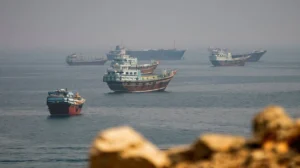
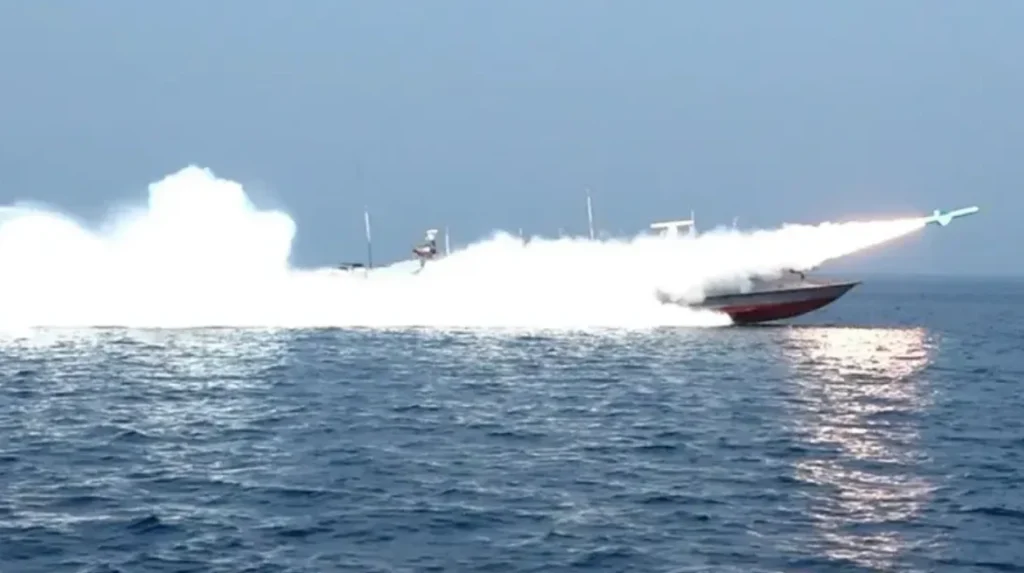
The U.S. conducted attacks on various military and port facilities in Iran following Iranian attacks on cargo ships near Oman in the Strait of Hormuz. Iran retaliated against the attack by striking against Bahrain, Kuwait, and Qatar, expanding the crisis from a purely U.S.-Iran one to other areas in the region. This is especially important because it indicates that Iran would be ready to bear costs in the Gulf region, and not just the ones belonging to the U.S. This latest confrontation comes on the heels of several others that have occurred during the past few months. As Reuters had earlier noted, the Strait of Hormuz was still inaccessible for more than three months after previous attacks on Iran by both the U.S. and Israel.
The pattern is familiar but no less alarming: one side strikes, the other answers, and each response widens the zone of risk. In this case, the conflict has moved from targeted military action to broader regional signaling, with Gulf countries now caught in the crossfire. That makes the crisis harder to contain and far more difficult to resolve through quiet diplomacy alone.
Interim deal under pressure
At the center of the current reporting is the fragile interim deal intended to help end the war. AP said the latest exchange again threatened that arrangement, while Reuters described diplomacy as showing minimal progress. The language matters because it reflects a ceasefire that exists more as a temporary pause than as a durable peace settlement.
The problem is that interim agreements require restraint, which is precisely what is lacking in the equation. When either party feels that the other is not complying with the spirit of the agreement, there is a justification for retaliating against the other. As both parties become increasingly more entrenched, there is less leeway for any compromise. This is the scenario that the United States and Iran now find themselves in. According to Reuters, initial talks were concerned with halting the hostilities and reopening the Strait of Hormuz, but there was no final agreement reached yet. The Middle East is therefore stuck in a precarious gray zone, where it’s neither at war nor in peace.
Trump’s warning and U.S. position
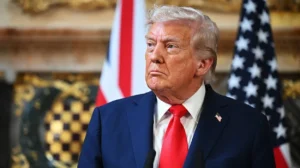
President Donald Trump has taken a sharply confrontational line in the latest phase of the crisis. AP reported that Trump said recent Iranian attacks on ships in the Strait of Hormuz signaled the end of the fragile ceasefire. That statement matters because it suggests the White House sees the maritime attacks not as isolated acts, but as a direct rejection of the deal’s basic terms.
The stance taken by the U.S., according to the reporting, is that the moves by Iran warrant military action and that there will have to be sustained pressure against Iran because of these actions. The administration in Washington is working to put forward the picture that the conflict is a result of Iranian aggression where shipping and Gulf security is under threat. From the standpoint of strategy, this is deterrence in action where the U.S. intends to convey a message to the effect that any attack on shipping and other regional allies will not go unchallenged. Deterrence in an unstable situation can itself become the cause for escalation, where if Iran finds the American military attacks as proof that diplomacy does not work, they will increase their retaliatory efforts through military means.
Tehran’s retaliation strategy
Iran’s response appears designed to demonstrate both capability and reach. By targeting Bahrain, Kuwait, and Qatar, Tehran is sending a message that the conflict cannot be contained to Iranian territory or to direct clashes with American forces. It is also signalling that Gulf states aligned with U.S. security interests are not insulated from the conflict.
This approach raises the stakes considerably. It introduces uncertainty for governments across the region, many of which are already anxious about maritime safety and border stability. It also complicates efforts to keep the crisis limited, because once neighboring states are targeted, the political pressure for broader countermeasures intensifies.
Reuters also reported that Iran had tied broader peace efforts to ending hostilities in Lebanon, showing that Tehran’s demands are not confined to the Persian Gulf. That wider linkage suggests Iran is using the conflict as leverage across multiple arenas of regional diplomacy. In other words, the Gulf fighting is part of a larger contest over influence and security architecture in the Middle East.
Regional and market consequences
This could have as much of an impact economically as militarily on all involved if the conflict escalates further. Markets tend to be sensitive to the situations in the Strait of Hormuz, as any disruption, however small, will cause a spike in prices and worry amongst investors. The increase in the oil price by over 2% reported by Reuters in earlier flare-ups highlights the concerns already priced into the market. From the standpoint of Gulf nations, the first priority is the safe passage of vessels through the region and safeguarding of infrastructure. From the perspective of importing nations, their focus is on costs and supply stability. From a global markets perspective, it is whether this conflict broadens into a shipping crisis.
The crisis also has a psychological dimension. When ships come under attack and ports are struck, regional confidence deteriorates quickly. Investors grow cautious, airlines alter routes, and governments begin contingency planning. That kind of environment is difficult to reverse because the perception of danger can linger long after the guns fall silent.
How the rhetoric shapes the crisis
These public pronouncements made by both sides are not just rhetoric; rather, they are part of the battlegrounds. Trump’s declaration that the ceasefire has died, AP’s news item about the United States making fresh airstrike moves, and Reuters’ focus on diplomatic breakdown indicate that there are more ominous developments taking place. Such announcements create expectations, and those expectations in turn influence actions. In conflict journalism, words become policy. When one talks about the ceasefire being dead or pointless, one lowers the cost of going back to war. By saying that one is retaliating against violations, one hopes to gain the higher ground morally and legally.
That is why the exact wording matters. AP’s description that the exchange
“again threatened an interim deal intended to help end the war”
captures the fragility of the moment. Reuters’ description of “minimal advancement” in diplomacy reinforces the sense that the political track is losing ground to the military one. Taken together, the reporting suggests a conflict that is not merely intensifying, but hardening.
There is always a chance of retaliation. In case the United States decides to continue their military campaign and Iran starts retaliating through Gulf-related objectives, then there is a great possibility that the situation will be extended and become more complicated. Second, there is the threat of the maritime crisis in the Strait of Hormuz in case of an attack on the ship, which may cause even greater participation of other countries in the crisis. The next risk is related to the failure of the temporary ceasefire, after which it is already hard to talk about any peace initiative.
The U.S. is applying pressure through strikes, Iran is answering through regional retaliation, and the Gulf is absorbing the consequences. The interim deal that was supposed to end the war is now being tested by the very violence it was meant to contain. The deeper concern is that this crisis now has all the ingredients of a wider regional shock: strategic waterways, energy markets, neighboring states, and a ceasefire that may not survive the next exchange. Until the attacks stop and diplomacy regains traction, the Gulf will remain on a knife-edge.