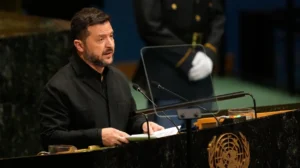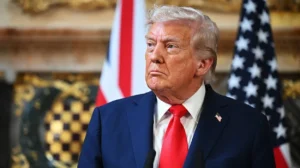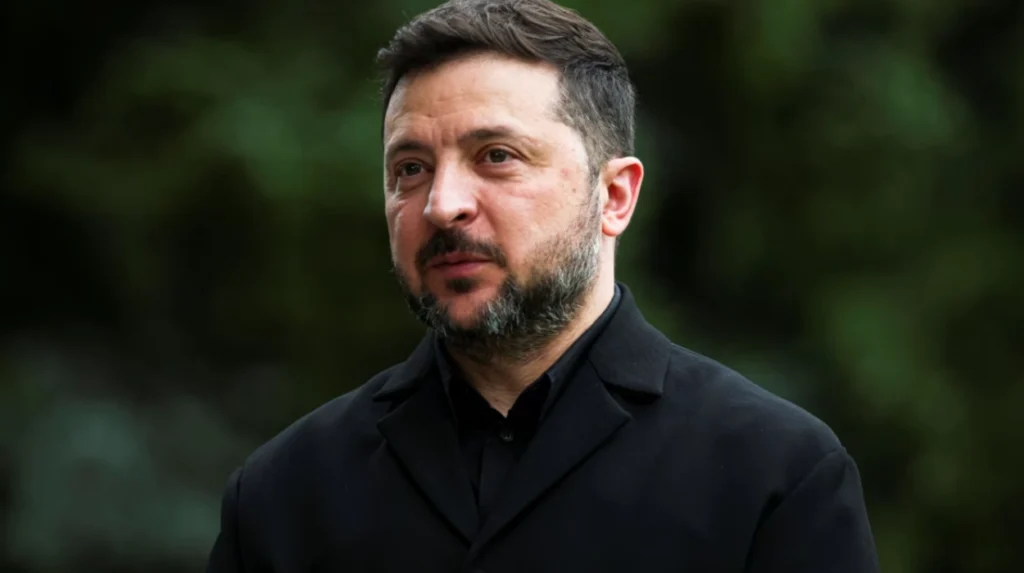
US President Donald Trump is scheduled to meet Ukrainian President Volodymyr Zelenskyy on the sidelines of the NATO summit in Ankara, Turkey, on Wednesday, 9 July 2026, as part of a renewed U.S. effort to bring Russia’s war in Ukraine to a decisive end.
The event takes place against the background of a crucial diplomatic encounter of all 32 member countries of NATO in Turkey, which is perceived by the USA as an attempt to break through several months of battlefield impasse into a diplomatic compromise. The timing of the meeting is crucial since Russia and Ukraine have been involved in an ongoing battle that lasts more than four years, with the frontline being 1,200 km long and “largely frozen” according to U.S. sources. In anticipation of the NATO meeting, the death toll of Russian strikes on Ukraine amounted to 11 casualties.
A Second Summit Encounter After a Year of Pressure
It is not the first time that both Trump and Zelenskyy have met during a NATO summit. Trump and Zelenskyy had a personal meeting at the 2025 NATO summit in The Hague, and in the discussion, Trump had stated that a rise in defense spending by NATO and putting constant pressure on Vladimir Putin could end the war. Trump had convinced the NATO countries last year to increase their defense spending and that too is an important part of his agenda during this summit.
The summit in 2026 represents continuation of Trump’s policy of diplomacy combined with hardline stance on increasing European defense expenditure. It appears from Washington’s point of view that the perfect venue for the delivery of such a message is the NATO summit, because while Russia is considered to be a threat to Euro-Atlantic security, the U.S. is ready for a negotiated solution to the Ukrainian war.
According to a senior U.S. official,
“Trump wants to end the war quickly and feels urgency after a prolonged Kyiv–Moscow stalemate”.
That urgency is reflected in the timing of the meeting, which is scheduled barely days after Trump reportedly engaged in a “lengthy call” with Putin, offering to help find a solution to the Ukraine conflict. The Kremlin aide described the exchange as an attempt to explore possibilities for de-escalation, though no concrete agreement has been announced.
The Strategic Logic Behind the Trump-Zelenskyy NATO Meeting
The strategic logic behind the Trump-Zelenskyy NATO meeting is twofold: first, to signal to Moscow that Washington is actively pursuing a diplomatic track alongside military pressure; and second, to reassure Kyiv that the U.S. remains committed to its security while pushing for a negotiated settlement. For Trump, the summit offers an opportunity to demonstrate that his “America-first” posture does not mean abandoning allies but reorienting them toward greater self-reliance.
The summit offers a high-value diplomatic moment for President Zelenskyy to bring his country’s concerns to Trump directly. Indeed, he has spoken about the need for “real peace, not just a temporary ceasefire,” as well as of actions to safeguard the Ukrainians from further military attacks by the Russians. The NATO summit provides an additional platform to strengthen the position of Ukraine as an informal ally of the North Atlantic Alliance, despite the fact that its membership is currently being disputed politically.
In terms of Trump’s wider NATO agenda at this summit, he plans to encourage the alliance member states to boost their military expenditures and make sure of it “in person.” The President has already said that NATO assistance in defending Ukraine can be used to reach the goals concerning the share of defense expenditure as part of GDP, up to 5%.
Zelenskyy’s Priorities: Air Defense, Joint Production, and Ceasefire Talks
Zelenskyy’s stated priorities in the Trump-Zelenskyy NATO meeting are clear and specific. He has emphasized the need for strengthened air defense to protect Ukrainian cities and military infrastructure from Russian attacks, a topic that has dominated recent battlefield developments. Ukraine has suffered repeated strikes on power grids, energy facilities, and civilian areas, and Kyiv views expanded U.S. and allied air defense support as essential to sustaining its war effort and civilian resilience.
In addition to air defense, there has been an exchange of ideas on the cooperation of production of armaments by both countries, involving drones and other advanced weapons. This long-term approach is part of the overall Ukrainian strategy to develop its defense industry capabilities, along with the strengthening of relations with strategic allies. Production of weapons together will help in overcoming some logistics issues and ensuring that ammunition will be supplied to Ukraine on time. One more important item on the list of Zelenskyy’s agenda is trying to organize a ceasefire agreement between Ukraine and Russia. The leadership of Kyiv has already expressed its readiness for talks but has not got a positive response from Moscow. Recently, in a conversation with Trump, Zelenskyy called the talk about the 1,200 km frontline “very good”.
In the context of the Trump-Zelenskyy NATO meeting, Zelenskyy has articulated his expectations clearly. He said, “We talked about how to achieve a ceasefire and establish genuine peace. We discussed measures to protect our citizens. We value the attention and readiness to help bring peace closer”. This statement underscores Kyiv’s dual focus: ending the war while ensuring that any settlement is durable and does not leave Ukraine vulnerable to renewed aggression.
Trump’s Stance: End the War, But on Conditions
Trump’s stance on the Ukraine war, as reflected in recent statements and reported positions, is shaped by a desire to end the conflict quickly while maintaining a firm position toward Russia. He has said that
“Putin really has to end that war”
and that he would speak to Putin again to try to get it ended. This language reflects a blend of personal diplomacy and pressure, consistent with Trump’s broader approach to international conflicts.
During the 2025 NATO summit, Trump labeled the conflict as “a mess for Putin,” adding that the increase of defense budgets in NATO along with alliance consolidation may help deter the future aggression from Russia. Moreover, Trump added that Zelenskyy was “couldn’t have been nicer” to him, and they did not even touch upon the ceasefire matter during their talks. In turn, the next year’s summit is going to be much more focused on the topic of ceasefire negotiation due to the different situation on the battlefield and pressure of the US on reaching an agreement. Also, Trump has already made it clear that he is going to use the NATO summit to drive home the idea that Europe should bear more responsibility for its own defense. He will state it “in person” to NATO leaders, encouraging them to increase defense budgeting and keep up with their past promises.
In the context of the Trump-Zelenskyy NATO meeting, Trump’s position is likely to be that the U.S. will continue to support Ukraine’s defense, but that Kyiv must also be prepared to engage in serious negotiations if Moscow shows willingness. This stance reflects a pragmatic balance between supporting Ukraine and avoiding an indefinite escalation that could deepen U.S. involvement without a clear exit strategy.
Battlefield Realities and the Urgency for Diplomacy
The battlefield realities underscore the urgency of the Trump-Zelenskyy NATO meeting. The frontline remains largely static, with neither side able to achieve decisive breakthroughs despite sustained fighting. U.S. officials describe the situation as a stalemate after months of Kyiv–Moscow inaction, with entrenched positions and heavy artillery exchanges dominating daily operations.
Russian attacks on Ukraine continue to cause significant casualties and damage. On the eve of the NATO summit, Russian strikes killed 11 people, according to Ukrainian authorities. Zelenskyy had warned of a likely attack ahead of his meeting with Trump, suggesting that Moscow planned to increase pressure as leaders gathered to discuss peace pathways. These incidents highlight the continued risk of escalation even as diplomatic efforts advance.
The combination of a frozen battlefield and ongoing attacks reinforces Trump’s reported sense of urgency. A senior U.S. official said that
“Trump wants to end the war quickly and feels urgency after a prolonged Kyiv–Moscow stalemate”.
For Kyiv, the stalemate also means that military gains are increasingly difficult to achieve without significant new resources, making diplomatic options more attractive.
Implications for NATO, Europe, and the Wider Region
The Trump-Zelenskyy NATO summit is significant not only to both leaders, but also for NATO, Europe, and the entire region. In relation to NATO, the summit is an occasion where the alliance will be able to reassert its dedication to collective defense, while facing the Ukrainian war as one of the major challenges. The demands made by Trump regarding increased military expenditures may contribute to the debate within the alliance about burden sharing and resource distribution. With regard to Europe, the summit is an indicator that the USA is still actively involved in the Ukrainian conflict, despite the efforts to balance its security policy.
For the wider region, the outcome of the Trump-Zelenskyy NATO meeting could influence Security dynamics in the Middle East, the Balkans, and beyond. A successful push to end the Ukraine war could reduce the risk of escalation and set a precedent for negotiated settlements in other conflicts. Conversely, a failure to break the deadlock could prolong the war and increase the risk of broader instability.