The latest round of US-Iran Doha talks has opened a fragile but important diplomatic channel at a moment when both sides appear under pressure to prevent a broader regional escalation. The discussions in Qatar are being held indirectly, with Qatari and Pakistani mediators shuttling between delegations rather than the American and Iranian officials meeting face to face. That format alone says much about the political sensitivity of the moment: neither side is ready to stage a direct encounter, yet neither appears willing to let the channel collapse.
What is more important about the talks themselves is not the nature of their results, but rather the very fact of their occurrence. According to Reuters, CNN, Al Jazeera and other media sources, the Doha contacts are described as low-profile, technical and mediated, which means that the U.S. and Iran both are trying to see whether it is possible to come to some agreement on a smaller scale before attempting anything bigger. In other words, the Doha meeting ceased being a venue for instant diplomatic action and turned into a safety valve for the parties involved.
What the Doha channel means
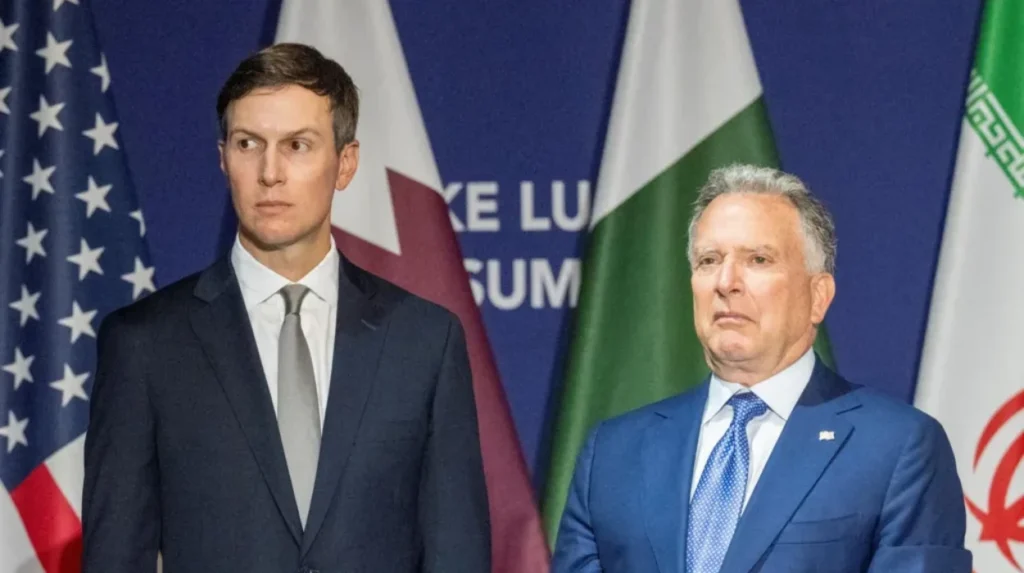
The form of the talks also matters. According to Qatar’s foreign ministry, the two American negotiators Steven Wittkoff and Jared Kushner came to Doha to meet the mediators and the Qatari officials, but not the Iranian officials. The Iranians have made it known that there are no plans for any direct talks, as reported by Reuters, quoting Tehran’s claim that it will not meet the highest-ranking American delegates who arrived at the region. This is an example of indirect negotiations in which both parties can test positions without paying the cost of a symbolic shakehand or bilateral meeting.
The use of this format is quite insightful as well since the discussions are being carried out from a technical perspective. According to DW, the head of the Iranian team was none other than Deputy Foreign Minister Kazem Gharibabadi; meanwhile, according to other sources, the team members were technical people who were more interested in matters of implementation. This means that the immediate task ahead is a practical one and not a strategic one.
The use of mediators also highlights Qatar’s continuing role as a regional broker. Doha has long positioned itself as a place where hostile parties can keep channels open while preserving political distance. In this case, the Qataris are not simply hosting; they are actively shaping the diplomatic format, with Pakistani mediators also involved. That gives the talks more legitimacy for both sides, especially at a time when direct engagement could be criticized as weakness in Washington or compromise in Tehran.
Why both sides are there
The core reason for the talks is simple: neither side can easily afford a total breakdown. The region remains tense, shipping security is a live issue, and previous rounds of diplomacy have already been fragile and easily derailed. Reuters noted that the discussions are tied to de-escalation channels and the implementation of an interim understanding, while Al Jazeera reported that Iran is sending an expert delegation to follow up on the release of frozen funds.
It gives President Trump the opportunity to control the risks involved without making political concessions immediately. The involvement of Witkoff and Kushner reveals how seriously the US government takes the issue; however, its indirect nature means that the government does not have to deal with the negative publicity associated with summit talks with Iran. This is important as any attempt by the US and Iran to improve their relations becomes controversial from the very beginning.
For Tehran, the Doha talks appear equally tactical. Iran is seeking leverage on sanctions relief, frozen assets and maritime security, particularly in relation to the Strait of Hormuz. Reuters and other outlets reported that Iranian officials see the Doha track as linked to the release of frozen Iranian funds and to managing tensions around the shipping lane. That gives Tehran a concrete list of demands rather than a general diplomatic gesture.
Assets, Hormuz and leverage
The matter of frozen assets can be seen as the best example of what lies behind the ongoing negotiations. According to various media outlets, reports mention amounts of frozen assets ranging between $6 and $12 billion of Iranian funds that are being kept either in Qatar or other foreign countries. As was mentioned by Reuters, there was one senior Iranian official who noted that the United States was going to unfreeze some of the assets, whereas previous media reports had stated otherwise.
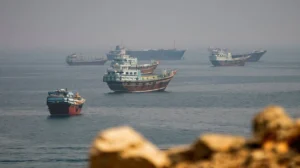
The second significant point of leverage is the Strait of Hormuz. This is more than a geographical point, it is a strategic one, being important for the movement of energy through this region and maritime security in general. According to Al Jazeera, the talks were tied to the implementation of the initial agreement which was meant to bring the conflict to an end, as well as to problems with the strait, whereas Reuters says that the agreement involved opening the strait and decreasing tensions. For Iran, the ability to control the strait is one of its most significant points of leverage.
This is why the talks matter even without a dramatic headline outcome. A limited arrangement on fund release, shipping norms or deconfliction procedures could reduce the chance of further military friction. But because the issues are tightly linked, progress on one front will likely depend on movement on the others. If the assets remain frozen, Tehran may resist concessions elsewhere. If Hormuz tensions intensify, Washington may become less flexible on financial relief. The negotiations are therefore not isolated technical exchanges; they are part of a broader balance-of-pressure game.
Diplomatic statements and positions
The public statements around the talks are nearly as important as the talks themselves. Qatar has tried to keep expectations restrained, with reporting indicating that no direct high-level meetings are planned and that the current process remains mediated. That is a deliberate signal that Doha is facilitating, not exaggerating, the process. It also protects Qatar from being seen as overpromising on an outcome it cannot control.
The statements emanating from the Iranian camp have been quite direct. As reported by Al Jazeera, the Iranians plan to send a team of experts to follow up the release of their frozen assets, while Reuters quoted them saying that they would not meet with the highest-ranking U.S. envoys. This dual message reflects the Iranian position, which involves participating in the dialogue channel, but at the same time avoiding giving Washington any direct diplomatic recognition. For its part, the Americans have conveyed their message through personnel decisions, rather than rhetoric. The fact that they are sending Witkoff and Kushner implies that Washington is serious about it, and even willing to employ high-level mediators, but the fact that the talks are indirect implies caution on their part.
The regional backdrop
The Doha talks cannot be separated from the wider regional environment. Reporting around the negotiations places them against a backdrop of conflict, uncertainty and repeated efforts to prevent another military spiral. Reuters described the Doha track as unfolding after earlier exchanges and amid efforts to build de-escalation channels. That broader context matters because diplomatic openings often emerge only when the cost of continued confrontation becomes too high.
The present situation also indicates that both parties are attempting to manage escalation rather than solve the whole issue. The mention of technical talks, mediators, and how these will be implemented indicates that a gradual process is being followed. This may be disappointing for those hoping for a revolutionary solution, but in such a volatile regional atmosphere, it is sometimes the only practical way. Even a small deal can have significance if it helps avoid misunderstanding or reduces the dangers of shipment.
At the same time, the fragility of the channel should not be underestimated. Reuters reported uncertainty about whether the delegations would even meet, and other reports made clear that direct talks were ruled out. That means the diplomacy is still vulnerable to last-minute breakdowns, political pressure or changes in battlefield dynamics. The Doha format is useful precisely because it is flexible; it is also vulnerable for the same reason.
The most important immediate indicators will be whether the mediators can turn the Doha contacts into a measurable step on assets, shipping or de-escalation. If the talks produce even a limited technical understanding, that could provide momentum for a broader round later. If they fail, the failure may be quietly managed, but the underlying tensions will remain unresolved.
Yet another important question is whether the parties will maintain the channel after the conclusion of the Doha talks. In view of the indirect character of the negotiations, there is relatively little transparency and ceremonial aspect involved. This may increase the sustainability of the negotiations, but it can also mean that the progress will be slow and hard to check. As it was noted by Reuters and CNN alike, the talks are still ongoing and not yet fixed on any form. There is also an open question whether the matter of frozen assets is used as a test case for the whole process. If a compromise is achieved there, it may show that the parties are able to make practical concessions. Otherwise, the negotiations may be merely a waiting game. In either case, Doha is currently the focal point of this dispute.
The larger takeaway is that the US Iran Doha talks are not a peace deal in themselves; they are a controlled attempt to reduce risk, preserve leverage and see whether limited compromises are still possible. The indirect format, the low-level nature of the meetings and the focus on assets and the Strait of Hormuz all point to a negotiation that is cautious, limited and highly transactional. But in a region where miscalculation can escalate quickly, even cautious diplomacy can carry outsized importance.