The agreement struck between the United States and Iran represents a major move, albeit one that is still tentative, in ending a very risky pattern of retaliation that had grown increasingly serious during the previous few days. Following a series of attacks and counterattacks, officials from both countries are now being cited as having agreed to “stand down” temporarily, while further negotiations take place in Doha on the toughest remaining topics, such as the Strait of Hormuz, sanctions, ship safety, and the Iranian nuclear program. What makes this important is not only the fact that this represents a temporary cessation of the fighting, but the fact that it came during an especially nervous time.
However, the main thing here is that this is not an attempt to create a peace deal. This is more like a short-term ceasefire, which will give the diplomatic process some time and won’t force the two capitals into a direct clash right away. This is significant because the statements of American officials clearly say that this ceasefire is only going to be temporary, not forever. According to reports connected to Reuters, the next step will be very pragmatical and not ceremonial at all.
How the latest crisis escalated
The present calm is preceded by an aggressive interaction between the two through their armed forces over the weekend. According to reports in CBS News, Iran attacked Bahrain and Kuwait using drones and missiles in retaliation against U.S. attacks, while the United States attacked Iran in its surveillance, communication, air defenses, storage of drones and minelayers. This point is relevant since it illustrates that the two sides were not just trading insults but were actually trying to incapacitate each other. The effect is an increasing danger of conflict which may disrupt global shipping lanes.
BBC reporting described the weekend fighting as a series of strikes that had already put pressure on an earlier ceasefire arrangement. In that sense, the new “stand down” language is being used in a context of repeated strain, not stable peace. That is why analysts will likely view the latest pause as a tactical breather rather than a strategic breakthrough. Both sides appear to recognize the cost of continued escalation, but neither side seems ready to abandon leverage completely.
Strait of Hormuz remains central
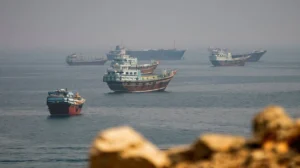
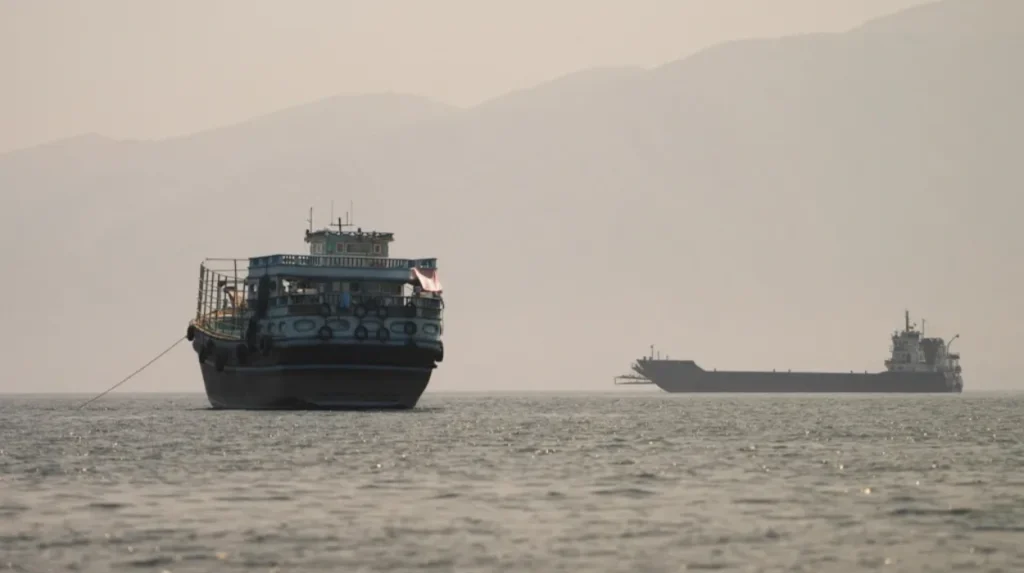
The center piece of the discussion revolves around the Strait of Hormuz, which is so vital that any small-scale military dispute there carries international significance. As reported by CBS and other news media outlets, the deal involves giving passage to ships through the strait, indicating that ship passage is one of the urgent issues being dealt with. The discussions according to ABC also involve wider issues regarding the channel, particularly the security of the ships passing through the channel.
This is why the current standoff is larger than a bilateral military matter. Any disruption in Hormuz affects global trade, energy supplies, insurance costs, and shipping confidence across the Gulf. That helps explain why the reported deal is being framed as a stand-down, not a victory. The immediate goal is to keep the sea lanes open and avoid a spillover that could pull in regional actors and damage commercial traffic well beyond the direct participants.
What the reported deal covers
Based on reports, the knowledge that exists is based on three major grounds, namely halting the attacks for the time being, ensuring shipping continues through the strait of Hormuz, and conducting technical discussions. According to ABC, the discussions will involve arrangements regarding Hormuz, sanctions, the U.S. blockade of Iranian ports, and the enriched uranium of Iran. The above agenda demonstrates the vast range of the topics despite the reduction of the military tensions.
The reported June 17 memorandum appears to be the broader framework behind the new pause. BBC reporting said that agreement was supposed to establish an
“immediate and permanent cessation of military operations across all fronts”
and require Iran to ensure safe passage for commercial vessels for 60 days. But the latest fighting suggests that the memorandum has already been tested almost beyond its limits. If a ceasefire can be shaken this quickly, then the real question is not whether a document exists, but whether either side is willing and able to enforce it under pressure.
Statements from both sides
Public statements from Washington and Tehran still reflect deep mistrust. On the U.S. side, a formal political message is that the parties should stop shooting and keep negotiating. CBS reported that a U.S. official said both sides would “stand down for now” and that talks would continue. That wording is careful and temporary, which suggests the White House or associated officials are trying to de-escalate without appearing to concede too much.
Iran’s messaging has been more conditional. CBS reported that Iran’s foreign minister warned that any “new or separate arrangements” outside the current memorandum would create complications and delay reopening the strait. The Revolutionary Guards also warned that violations could trigger a “complete halt” to ongoing processes. Those comments indicate that Tehran wants to preserve leverage while also placing blame on any future breakdown. The tone is defensive but firm: Iran is signaling willingness to pause, but not to surrender diplomatic control of the process.
President Trump also added pressure by warning that the U.S. military could “complete the job” if Iran failed to comply with the ceasefire. That kind of statement serves two purposes at once. It reassures supporters that Washington is not backing away, while also warning Tehran that further violations may invite even stronger retaliation. The result is a tense balance in which diplomacy and deterrence are operating side by side.
Casualties, damage, and maritime impact
Among the more interesting things about the reporting was the fact that although the strikes were quite extensive, CBS did not report any casualties on the side of American personnel from the attack. This point was significant because it could contribute to preventing further action from taking place. Nevertheless, it is true that the strikes still had some practical impact since the US announced that it managed to damage the capabilities for communication, air defenses, drones, surveillance, and minelayer facilities.
According to CBS, the UN maritime organization stated that 2,500 mariners had been evacuated from the Strait of Hormuz region within 3½ days, and 115 ships were removed from the Persian Gulf via the strait. This clearly demonstrates how fast the security issue became a maritime disruption operation plan. Any potential threat can have an effect on shipping, insurance risks, and supply lines. Therefore, the ability to use the shipping lanes is not just a subsidiary factor in this case but one of the main indicators of de-escalation success.
What happens next in Doha
The reported next step is a technical meeting in Doha, where negotiators are expected to work through the unresolved parts of the arrangement. That meeting is important because it shifts the crisis from battlefield logic to bargaining logic. In practical terms, the success of the stand-down will depend on whether negotiators can agree on procedures for maritime passage, security assurances, sanctions relief, and the nuclear file without triggering new escalation.
The challenge is that both sides are negotiating under pressure and from positions of distrust. Iran appears to want guarantees that shipments and maritime access will not become tools of coercion, while the United States wants compliance, restraint, and some measure of strategic confidence that attacks will not resume. That is a difficult combination. The stronger the rhetoric, the harder it becomes to convert a pause into a durable arrangement. Yet the mere fact that talks are continuing suggests both sides still see value in avoiding a much larger confrontation.
Why this matters beyond the immediate crisis
This incident is crucial since it is a rare event where military tension, security issue, energy risk exposure, and delicate diplomacy are all interwoven into one sequence of events. The decision to back off in the sea may not seem like much, but for the world economy and security situation it is extremely critical. The Strait of Hormuz is of too much strategic significance that it cannot be viewed as a bilateral issue anymore.
It also shows how quickly ceasefires can become conditional. The reporting suggests that the agreement is not being framed as a final settlement, but as a temporary pause built around mutual fear of escalation. That can work for a while, especially if both sides need room to regroup or avoid economic damage. But without enforcement, verification, and a clearer political path, the arrangement risks becoming just another short-lived interruption in a larger conflict cycle.