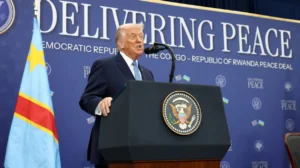
Donald Trump won the election and became the future President of the United States. His victory, supported by the Republican majority in Congress, shows a major shift in the political landscape of the US. His campaign got great support for the Republican Party by shedding light on the worries of both minority and majority groups. Trump and his followers use populist messaging to connect with voters on key issues, including economic challenges.
With deep analysis, his foreign policy approach impacted many voters, particularly in swing states. This raises concerns about how US foreign policy has shifted under the leadership of Donald Trump. How he handles the major global complexities and how Trump’s actions will change the current crises.
Nowadays, there are many uncertainties across the world. There are many issues that increase world instability. It includes China’s rise through the Belt and Road Initiative, challenges to American influence, the ongoing Gaza war, and fights between Russia and Ukraine.
The policies implemented by President Trump during his second term in office have the potential to significantly reshape the United States’ approach to complex challenges and its overall role within the realm of global politics.
It seems like this second-term presidency of Donald Trump increases instability in global politics. This is because, under Trump’s leadership, US foreign policy has become more forceful. Even though he promised to bring stability to the Middle East and end the Russia-Ukraine war, these goals are not possible to achieve easily. However, he never addressed Israel’s actions, and it may be possible that he expanded the “Abraham Accords.”In this way, he encourages neighboring Muslim-majority countries to support Israel, overlooking the Palestinian situation.
Trump is a great supporter of Israel. His past decision regarding recognizing Jerusalem as Israel’s capital is proof of this support. He also said that he supports Israel more than previous administrations. But at the same time, he emphasized peace in the Middle East. Thi highlights that his actions and opinions contradict each other, especially in the case of the Israel-Palestine war. This likely means that, under Trump, there would be little support for the Palestinian cause on the global stage.
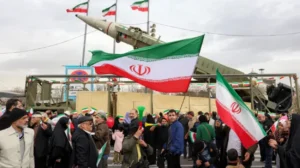
Furthermore, Trump’s success also proves harmful to Iran. Under his leadership, Iran faces many serious challenges. It may be possible that during his period there will be no progress on the Iranian nuclear deal. Iran should also rethink its Middle East policies, especially to avoid becoming a central conflict zone for both the US and Israel. Although the likelihood of a major war is low, the frequency of smaller conflicts in the region may increase.
In the case of the Russia-Ukraine war, Trump may end up supporting Ukraine. His administration seems to not agree to send more military aid to Ukraine. This step could force Europe or the UK to step up. This approach also pushes Ukraine to make a peaceful deal with Russia.
Trump’s main focus will likely be on countering China’s growing influence in areas like Asia, Africa, and Latin America. The US-China rivalry is likely to intensify, affecting trade, technology, and security. Countries in East and South Asia might feel the impact, while alliances like AUKUS and QUAD could play key roles in balancing China’s ambitions.
Trump’s Presidency starts in January 2025. This coming period may prove hard for Europe as it may face new security challenges. Trump’s success also weakened the NATO alliance. Furthermore, Europe may feel more at risk due to Trump’s close ties with Russia. This situation caused European nations to reconsider their defense. To handle these possible threats, European leaders might pay more attention to building up their security. It could greatly impact stability in the region.
The slogans such as “America First” and “Make America Great Again” may give confidence to far-right groups in Europe. They are fueling nationalism and anti-Islam feelings. This leads to straining foreign cooperation that plays an important role in bringing peace. So, during Trump’s presidency, Europe may need to protect its interests and strengthen its alliances.